















Maharashtra’s rich and powerful sugarcane lobby has had its way. The pro-farmer Chairman of the Commission of Agricultural Costs and Prices (CACP), T Haque, has been forced to quit for refusing to yield to pressure from the lobby. The officer has also opted for voluntary retirement from government service.
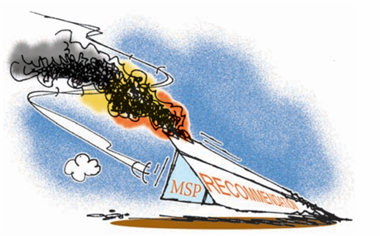
Trouble started when Haque recommended an all-time increase of the Minimum Support Price (MSP) of wheat to Rs 850 and Rs 1,000 per quintal for the last and the current year respectively, against heavy odds. Following that, about three months ago, the Chief Ministers of six states had written to Union Agriculture Minister Sharad Pawar requesting that the MSP of rice be brought on a par with that of wheat. The Minister refused. Haque then submitted his recommendation to make the MSP of rice Rs 1,000 for the current kharif season. No decision has been taken on the recommendation.
Meanwhile, Pawar mounted pressure on Haque to reduce the MSP for sugarcane from last year’s Rs 81 per quintal. This was obviously in the interest of the sugarcane lobby of his native state, though Pawar claimed it was necessary to rescue sugar mills from closure. Haque steadfastly opposed it on the grounds that the interests of the small and marginal sugarcane farmers should be kept in mind. In his report submitted in the third week of March, he recommended Rs 155 per quintal (inclusive of Rs 30 bonus) as the MSP of sugarcane. Then he resigned.
To undo his recommendations, a non-official CACP member, representing farmers, has been made to state in writing that the report was submitted in a hurry and he did not agree with the recommendations. The truth is that he had signed the report without a murmur of dissent. Sources say the Agriculture Ministry has submitted an affidavit to this effect in a case filed in the Allahabad High Court, Uttar Pradesh.
Patel’s double
broadside
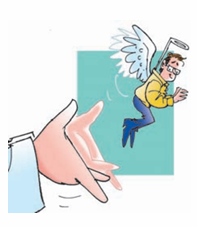
Now here’s a tale of a wily Minister killing two birds with one stone. The day Sanjiv Kumar, a 1988-batch IAS officer of the Union Territory (UT) cadre, took up his new job as Private Secretary to Minister of State for Petroleum and Natural Gas Dinsha Patel, the latter discovered he was a greenhorn. Sandwiched between an assistant who didn’t know the ropes and his towering Cabinet Minister, Murli Deora, poor Patel was reduced to a minister only in name. Deora controlled everything, without assigning any significant work to his junior colleague.
However, instead of criticizing Kumar openly, Patel resorted to a Munna Bhai approach to get rid of him. Whenever he met Deora, he praised Kumar for his efficiency, vision and capability to solve the intricate issues confronting the petroleum sector. The strategy paid off. Deora began to think well of Kumar. When his own PS, Dharmendra Sharma , also a 1988-batch UT-cadre officer, joined the Ministry of Home Affairs as Joint Secretary, he immediately took in Kumar.
Kidwai’s Mewat lesson

The Governor of Haryana , AR Kidwai, recently got a glimpse of what bureaucrats face throughout their careers. He has been evidencing considerable concern over the development of Mewat – the most backward region of the Green Revolution state. The region is virtually a stone’s throw from the capital of the country but has failed to reap the benefit of any development efforts since Independence. The reason is not far to seek, as His Excellency discovered.
Kidwai has held a number of meetings with senior bureaucrats of the state, including those from the Mewat Development Agency, to frame and implement policies for development. Senior executives of Indian Farmers Fertilizer Cooperative Limited(IFFCO) Foundation also attended. At one such brainstorming meet, an officer asserted that Mewat would never see the light of development regardless of any exercise undertaken. In the same breath, he added that the region could be developed overnight.
Intrigued, the Governor quickly ended the meeting and then later summoned the officer. The latter repeated his statement, saying that no one from any political dispensation in the state would allow Mewat to develop. If they would, it could be developed overnight – he signed off with a flourish. His weariness and resignation in the face of political will was apparent.


