



























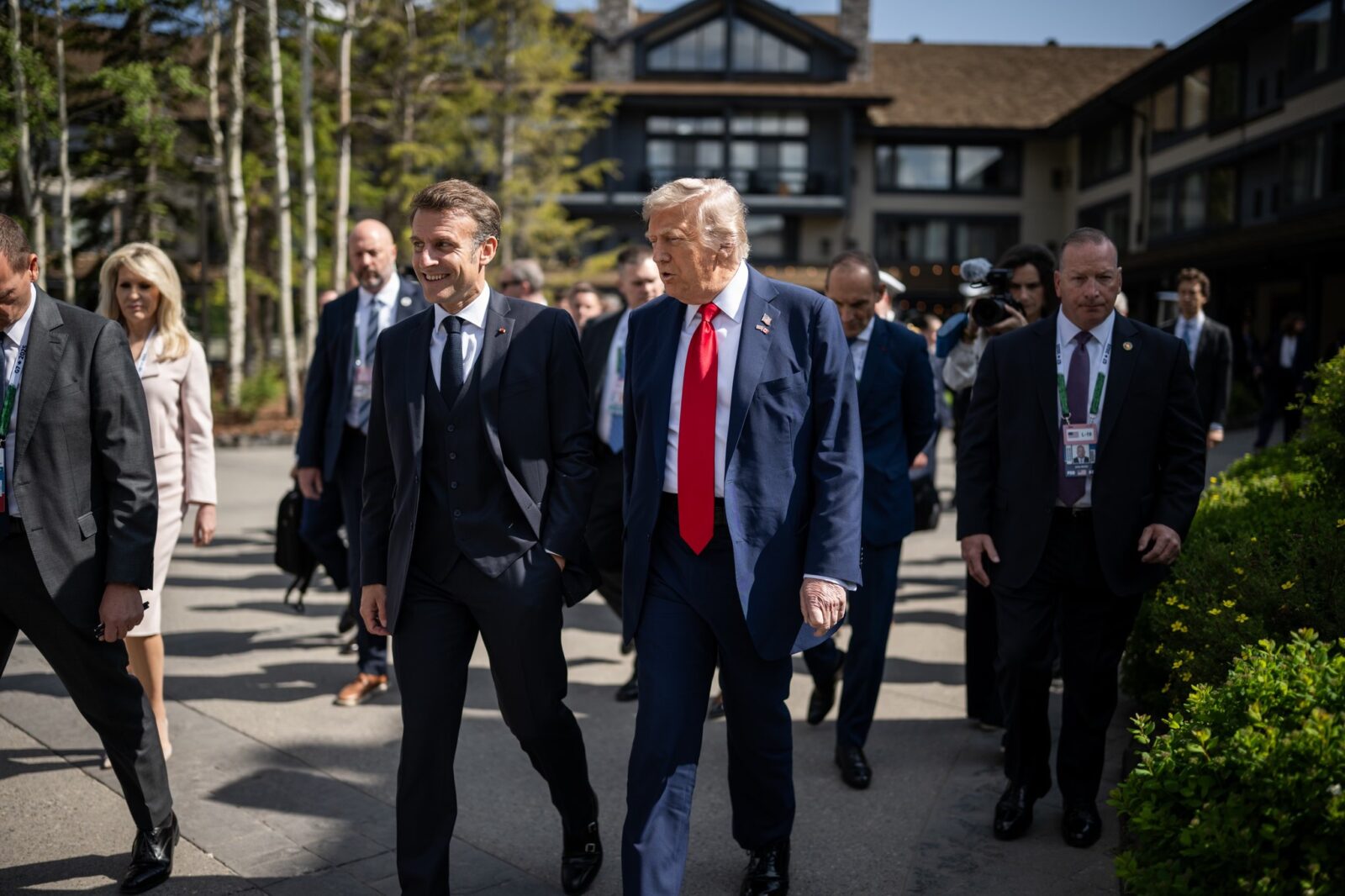
Face it. President Trump is a pacifist. Whatever his proclivities to win against his opponents, he may indulge in Tariff Wars to achieve a new global trade and economic order in favour of America. He may deport aliens by the thousands in chartered crafts to clean up his own country.
But war? He is not a democratic politician with ambitions of being the world policeman.
He simply does not want wars anywhere. Not in Ukraine, but adamant Russian President Vladimir Putin comes in his way of ushering in peace in that Crimea region. He has said so, war is ugly, it destroys people and beautiful monuments, and he wants to rebuild Ukraine.
Israel has always been a difficult country to deal with. With half the Jewish population in America and in New York alone outside of Jerusalem, America has to tailor its foreign policy to favour the Jewish community.
Israel under Benjamin Netanyahu has made it a policy to preserve its sovereignty and integrity against forces inimical to its threatened survival in a demography and geography where it is surrounded by Arab neighbours, not very peace loving.
The 7th October massacre of Israel soldiers was served on a platter for Israel to serve a cold dish of soup to extract vengeance it had been thirsting for long. United Nations, United States, India, Egypt, Saudi Arabia and UAE have all failed to usher in peace in the Gaza region despite thousands of Palestinians losing their lives in an extended conflict against the terrorist outfit Hamas.
This is the most definitive moment in Trump’s entire political career. He pulled out troops from Afghanistan; he does not like young American boys fighting a war where American interests are not directly involved. Under pressure from Israel, its strongest ally, Trump has to take calls against his conscience – to do or not to do. Whether it’s nobler in his mind to face the slings and arrows of misfortune or to take up arms against a sea of trouble as Hamlet says.
It’s the worst nightmare and the worst collateral damage to a community that has nothing to do with the terrorist outfits which is forcibly seeking refuge in the narrow enclave where nearly two million sought sanctuary when a homeland was missing for years.
With the Gaza war virtually coming to an end as the Hamas terror infrastructure has been dismantled, but the IDF has not succeeded in flushing out the cavalry of fanatical soldiers in the Hamas who will not bat an eyelid to behead a human being on a religious chant or a call.
Israel has a grudge against Iran. Iran was suspected of aiding Hamas by training their soldiers, supplying them with drones and missiles to hit Tel Aviv. So, Israel has now turned its attention to a more deadly enemy, which is seeking to build a nuclear arsenal to threaten the western powers. Iran put Israel under pressure with Hezbollah from Lebanon and Houthis from Yemen to distract attention from Gaza.
The US is most concerned about Iran going nuclear. It does not have an objection to Iran having a nuclear power plant but not an enrichment facility that delivers weapons grade plutonium.
US President Donald Trump undertook a trip to the Middle East with important allies he can count on in case the middle east theatre of war expands, which Israel is ensuring day by day that it dos, now by attacking Iran unprovokedly in the worlds eyes, but certainly provocative in its perspective with the perceived nuclear threat.
The US too fears the Iran nuclear threat. Israeli opposition leaders are issuing calls to the US to get involved in the Iran conflict as it can supplement its strike capability into areas where it cannot reach with its limited military arsenal.
This is the most definitive moment in Trump’s entire political career. He pulled out troops from Afghanistan; he does not like young American boys fighting a war where American interests are not directly involved. Under pressure from Israel, its strongest ally, Trump has to take calls against his conscience – to do or not to do. Whether it’s nobler in his mind to face the slings and arrows of misfortune or to take up arms against a sea of trouble as Hamlet says.
Getting directly involved in a war with Iran changes the entire dynamics of the geopolitical situation with a serious economic impact; one does not know how the Arab world would react to that as it contains more than half the oil reserves of the World, leave alone UAE and Saudi Arabia and Egypt, Qatar, the trusted allies.
If he gets involved, he angers the entire Arab world, if he does not, he alienates the entire Jewish community living in the US, potential voters.
If there is one lesson to be learnt from the early 21st century, it’s that war objectives and analyses of the Middle East drawn up in Washington almost always turn out disastrously wrong.
The idea that Iran’s brutal clerical regime could fall might be attractive. But the toppling of Saddam Hussein and the civil war in Syria show that Middle East nation can simply splinter when power vacuums open up.
The democrats got involved in the Middle East conflict but directly in the Ukraine war supplying some $162 billion worth of arms and relief supplies. Without which Volodymyr Zelenskyy could not have sustained the two year conflict against a mighty Russian army.
So, Why will it be hard for Trump to stay out of the conflict with Iran.
President Donald Trump is desperate not to fight a war with Iran.
But can he really avoid it? Compelling national security arguments and domestic political considerations mean it makes sense to stop short of direct US offensive operations in the long-dreaded conflict that Israel describes as a matter of preserving its own existence, claim defence analysts.
But powerful forces could suck America deeper into the conflict than its current role in helping to shield Israel from Iran’s deadly rain of missiles and drones, they say.
Media reports in the US claim that Trump rejected an Israeli plan to kill Iran’s Supreme Leader Ayatollah Ali Khamenei. But some of this is out of Trump’s hands.
Should Iran’s battered regime decide it has nothing to lose and attack US bases and personnel in the region, or US targets across the globe, Washington will be forced to respond hard to preserve credibility and deterrence.
Another possibility is that Tehran could create duress on Trump to rein in Israel by attacking international shipping in the Gulf or Red Sea and bring on a global energy crisis. This happened in the Gaza war, the Houthis from Yemen, supported by Iran, blocked the Red Sea route by attacking with missiles to strike fear to normal shipping liners ferrying infrastructure materials including crude oil to the western nations.
They had to abandon this route and take circuitous routes to ferry supplies at the instance of the insurers.
GOP leaders are mounting pressure on Trump from within the party for action that only the United States could carry out — a mission to destroy Iran’s subterranean site at Fordow, i.e It’s key to Iran’s nuclear program: the Fordow plant – in a mountain lair where hundreds of centrifuges, hidden possibly 90 meters underground, enrich uranium to 60%, which is believed to be beyond Israel’s airborne capabilities.
The logic of such a strike would be that Iran is now uniquely vulnerable, and a better chance may never come for the US to destroy the possibility of an Iranian nuclear weapon.
Why Trump might see a reason to join the conflict
White House team has reported that the President is deeply sceptical about throwing the United States into the fray. Such a move would be fraught with danger. It could lead to the expansion of the conflict beyond its current belligerents and lead to a gruelling open-ended war with no clear endgame, says Stephen Collison, an geopolitical analyst with the CNN.
If there is one lesson to be learnt from the early 21st century, it’s that war objectives and analyses of the Middle East drawn up in Washington almost always turn out disastrously wrong.
The idea that Iran’s brutal clerical regime could fall might be attractive. But the toppling of Saddam Hussein and the civil war in Syria show that Middle East nation can simply splinter when power vacuums open up. 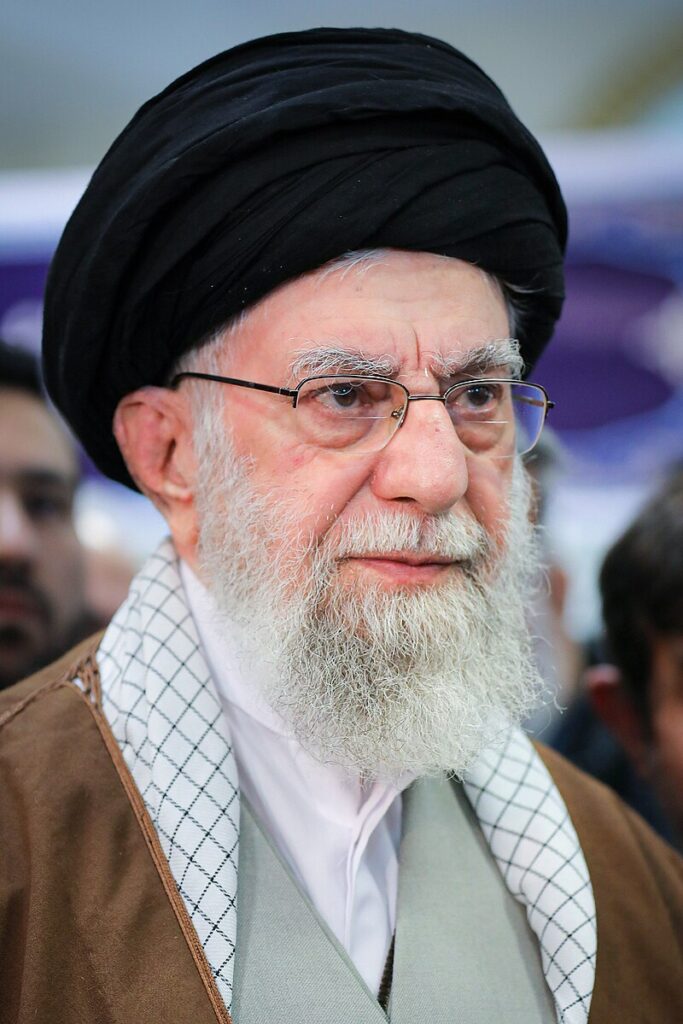
A US intervention would also widen deep strains in Trump’s political base and dismantle a core principle of his “America first” movement: that the United States should stay out of overseas conflicts and military interventions.
Trump faces the proverbial Hamletian dilemma – to get involved or not to get involved, either which way he faces negative outcomes.
More than a decade of involvement to oust the Russians from Afghanistan by arming the Taliban has only boomeranged, and much pain has been endured in chasing a false narrative that Iraq had weapons of mass destruction. It only ended in mass destruction of young lives in a conflict the Americans were not interested in and lost their children.
Hardly a fortnight has gone by since Trump launched his Middle East initiative visiting Arab countries which included recognizing the regime of a once terrorist leader in Syria that ousted the Assad regime.
“The so-called nation-builders wrecked far more nations than they built — and the interventionists were intervening in complex societies that they did not even understand themselves,” Trump said in a major speech in Saudi Arabia in May.
“A new generation of leaders is transcending the ancient conflicts and tired divisions of the past and forging a future where the Middle East is defined by commerce, not chaos; where it exports technology, not terrorism; and where people of different nations, religions and creeds are building cities together — not bombing each other out of existence.”
This is Trump’s vision of the new Middle East. Given this background, a new American war is utterly incompatible with such a vision. Still, hawks in Washington argue unequivocally that Trump has the opportunity handed out to him to remove the major impediments to his vision by eradicating Iran’s path to a nuclear weapon or even contributing to the toppling of its theocratic leadership under Ayatollah Al Khemeneni.
Presidents before Trump have often written in their memoirs about the definitive moments in their political careers where they had to make agonizing choices to deploy troops in foreign wars. Sometimes, however, a decision not to rush in even when it appears tempting requires as much courage, says Collison.
Trump faces the proverbial Hamletian dilemma – to get involved or not to get involved, either which way he faces negative outcomes.
Republicans argue the US may have no choice but to get involved.
Political heat is already mounting on the President to come off the sidelines even as the United States made clear that Israel’s decision to launch major attacks against Iran is its standalone decision and that Washington’s forces have no offensive involvement.
But there are also reports that Israel’s leader Benjamin Netanyahu kept the US informed of his decision to mount an offensive against Iran and that it had Washington’s nod. Israel was not dissuaded.
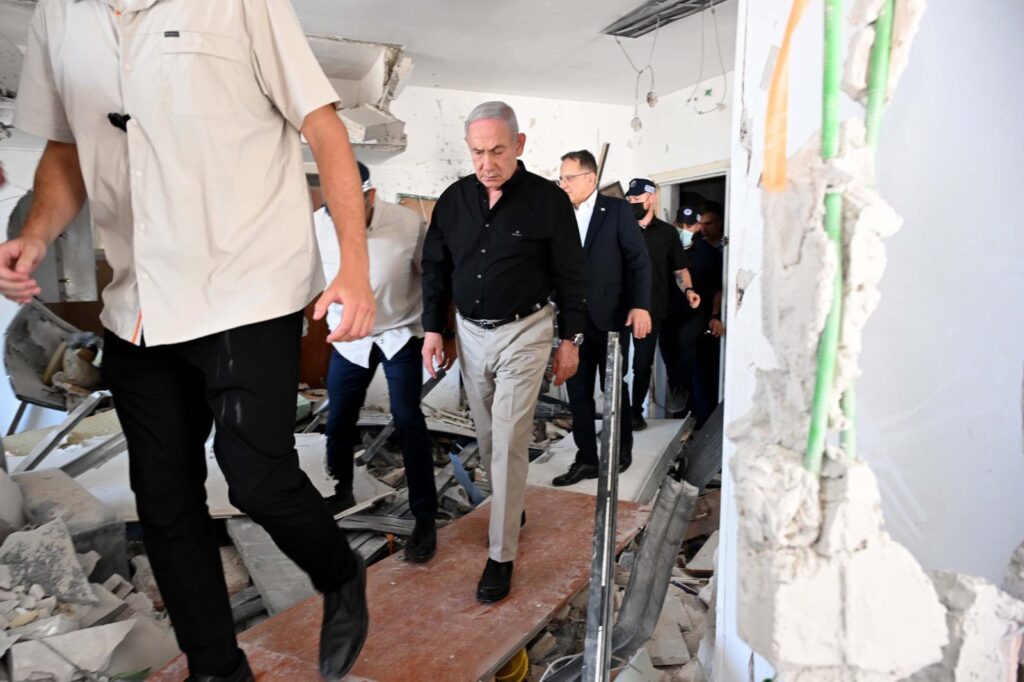
One of the complicating factors for Trump is that while Israel’s attacks seem to have been successful in taking out top military leaders and nuclear scientists, it remains unclear whether Israel has the capacity to eradicate Iran’s nuclear program itself.
Former Vice President Mike Pence said on “State of the Union” Sunday that if Israel’s attack doesn’t somehow convince Iran to make major concessions in Trump’s diplomatic attempt to end its nuclear program, then the United States should be prepared to join the conflict.
“Now, if the Iranians want to stand down, I think the president’s made it clear he’s willing to enter into negotiations. But there can be no nuclear program of any kind, no enrichment program of any kind,” Pence told CNN’.
“And at the end of the day, if Israel needs our help to ensure that the Iranian nuclear program is destroyed once and for all, the United States of America needs to be prepared to do it, because this is about protecting our most cherished ally.”
Republican Sen. Lindsey Graham argued the worst possible outcome of a conflict between Israel and Iran would be for Tehran’s nuclear capabilities — which it has long denied are designed to build a bomb — to remain.
“If diplomacy is not successful, and we are left with the option of force, I would urge President Trump to go all in to make sure that, when this operation is over, there’s nothing left standing in Iran regarding their nuclear program,” Graham, a key Trump ally, said on CBS’ “Face the Nation.”
“If that means providing bombs, provide bombs. If that means flying with Israel, fly with Israel.”
Trump risks a domestic backlash
Trump is also faced with a more complicated domestic backlash , should he intervene in the Israel –Iran conflict. His policies have already transformed the GOP into a more isolationist party. Now that means, he faces a different political scenario than the one before President George W. Bush when he went into Afghanistan and Iraq.
Some of the loudest voices on the right, including Tucker Carlson and Charlie Kirk, have already warned Trump against fracturing trust with the MAGA base by diving into a new Middle East war.
The President has always been extremely careful with his own complex coalition. Trump is not interested in taking decisions that might upset his voter base at home in America. An instance was his turnaround last week in halting deportation sweeps against agricultural workers — partly to avoid angering farmers and employers in the rural heartlands where he draws much of his support.
Trump’s authority has been flouted by three key leaders: Russian President Vladimir Putin, Chinese President Xi Jinping and Israeli Prime Minister Benjamin Netanyahu. And his “Art of the Deal” approach to foreign policy is a failure, proclaim diplomatic observers in the US.
The entire MidWest is comprised of the farmer belt. That’s where he draws his voter support from more than a dozen states as the entire west coast and east coast, the hub of industrial activity and tech services, is essentially blue supporting the democrats.
Trump’s foreign policy is unravelling
Trump has literally been pushed into a rabbit hole which he hardly wanted or anticipated, that too early in his presidency in the 2nd term. Trump was bullish with Iran to agree to a deal to peacefully end its nuclear program.
Trump started his second term vowing to be a peacemaker. But five months in, two major wars raging when he took office are worse and the dangerous new conflict with Iran promises the greatest test of “America first” restraint.
Trump’s authority has been flouted by three key leaders: Russian President Vladimir Putin, Chinese President Xi Jinping and Israeli Prime Minister Benjamin Netanyahu. And his “Art of the Deal” approach to foreign policy is a failure, proclaim diplomatic observers in the US.

Putin has ignored Trump’s efforts to end the Ukraine war. Xi has twice forced the US leader to fold in their trade war. And Netanyahu’s decision to launch the conflict with Iran that American presidents have long sought to avoid appears to have scuttled Trump’s Iran diplomacy — and is based on a bet that no American president could afford not to defend Israel even if he differed with its decisions.
At home, presidents must create public trust for their decisions to go to war. Here, Trump may struggle since he’s alienated millions of people with his searing approach to affairs at home. This includes his decision to deploy the military in California amid anti-ICE protests last week and warnings he plans to use troops everywhere.
Trump’s second term has already belied the notion that the weight of his personality, supposed respect for him among foreign adversaries, and what aides see as an almost magical deal making ability would change the world. The promised rush of trade deals shaken loose by his tariffs, for example, has not materialized.
Trump’s first peacemaking foray — in Gaza — failed. Hundreds of thousands of Palestinians are now facing starvation as Israel’s pounding of the Strip, triggered by Hamas’ attacks in October 2023, continues
Trump’s best efforts to end the Ukraine war in keeping with his election pledge that he would end it on day one of his presidency failed. The conflict only widened with his so-called buddy Russian President Vladimir Putin paying scant respect to his appeals to come to the table for peace talks.
The War has spread into Russia with Ukrainian raids on Russian bases that prompted Putin to launch vicious attacks on civilians in Kyiv and elsewhere. The White House made it known that Trump was getting frustrated with the Russian leader and set a two-week deadline to consider tougher sanctions on Moscow.
But nothing revealed the risible nature of that spin and Trump’s biased attitude to the war more than his excitement on Saturday that Putin had called to wish him a happy birthday, political observers said.
Events have overtaken Trump’s “American first” reticence to get involved abroad and exposed the shallowness of his statesmanship. Worsening crisis may offer a preview of a world that becomes more volatile in the absence of steady and constant American leadership.
The stormy sea is testing the rudders of an American ship of diplomacy and peacemaking across the globe.
Trump’s increasingly brittle domestic political grounding and his already questionable authority internationally will only complicate his dilemmas. In many ways the Iran conflict is the kind of international crisis with no easy answers that he avoided in his first term.
Now it could define his second.

Contributor, IANS - Washington DC/New York
Executive Editor, Corporate Tycoons - Pune, India
Executive Editor, The Flag Post - Bengaluru, India
Contributor, The Statesman, Hindu Business Line, Sarkaritel.com, Diplomacyindia.com
Former Economics Editor, PTI - New Delhi, India
Former Communications Advisor,
Alstom Group of Companies, SA - France/Belgium