




























Much like his first term, US President Donald Trump, after 10 months in office, has proved in his second stint in office that he might be a brilliant election campaigner but a below average administrator of the most powerful nation in the world.
Ten months into Donald Trump’s tumultuous second term, the United States finds itself at a familiar crossroads: deeply divided, uneasy about the president’s methods, yet unable to ignore his command of the political stage.
A new string of national polls released this week captures the paradox of Trump’s leadership. Aggregates from The New York Times (43% approval) and RealClearPolitics (45.3%) place him well below the majority threshold but broadly consistent with his first-term numbers. His disapproval ratings hover between low to mid-50s—a reminder that Trump remains a president whose very existence in office polarises Americans into hardened camps.
But numbers only tell part of the story. To understand the meaning behind these polling averages, one must compare Trump’s second-term struggles with the issues that defined his first term, his current position on policy and politics, and the country’s evolving perception of whether he is a reckless strongman or simply the shrewdest man in the room.

In early 2017, Trump’s presidency began with both turbulence and novelty. His approval rating at inauguration hovered around 45%, historically low compared to predecessors but high enough to reflect curiosity about the outsider who had just upended the American political order. The issues back then were immigration bans, health care reform, trade renegotiations, and an “America First” foreign policy.
Ten months into that first term, his approval had slipped down to the high 30s after bruising battles over repealing Obamacare, controversial executive orders on immigration, and the fallout of the Charlottesville violence. Yet, he also enjoyed moments of support on tax reform and military spending, with Republicans largely rallying behind him.
Fast forward to 2025, and the landscape is eerily similar, yet more combustible. Trump’s second administration began under the shadow of his improbable comeback, with supporters seeing vindication and critics warning of democratic backsliding. His approval today — low 40s — mirrors his first-term averages, but the issues defining public opinion are very different: tariffs and trade wars, inflation and rate cuts, the Russia-Ukraine conflict, executive orders bypassing Congress, clashes with world leaders like India’s Narendra Modi, Brazil’s Luiz Inácio Lula da Silva and Suouth African President Cyril Ramaphosa, adopting an aggressive posture Venezuela, and battles with Federal Reserve Chair Jerome Powell, among others.
During his first term, Trump’s political survival rested on audacity. He issued executive orders to bypass Congress on immigration, environmental regulation, and trade. He imposed tariffs on China and the EU, triggering global retaliation but securing concessions he touted as victories. He repeatedly clashed with Powell, accusing the Federal Reserve chief of sabotaging growth by refusing to cut rates aggressively.
His foreign policy was dominated by high-profile summits with North Korea’s Kim Jong Un and Vladimir Putin and the renegotiating trade agreements like NAFTA into USMCA. Critics called his diplomacy reckless, but his base saw it as strength: a president unafraid to defy convention.
The Second-Term Agenda: Tariffs, Troops, and Turbulence
By contrast, Trump’s second term has begun with a heavier hand.
Tariffs: His decision to impose 50% tariffs on imports of Russian crude — purchased by allies like India — has rattled global markets and triggered a trade standoff with New Delhi. While Trump frames tariffs as tools of economic leverage, polls show less than 40% support for his handling of trade and the economy. Inflationary effects have hardened scepticism among independents.
The Economy and Inflation: Rate cuts remain a battleground. Trump has demanded deeper cuts to stimulate growth, but Fed Chair Powell has been resisting, citing overheating risks. In polls, Trump scores only in the high 30s on the economy — a reversal from his first term when a booming stock market boosted confidence.
Ten months into that first term, his approval had slipped down to the high 30s after bruising battles over repealing Obamacare, controversial executive orders on migration, and the fallout of the Charlottesville violence. Yet, he also enjoyed moments of support on tax reform and military spending, with Republicans largely rallying behind him
Foreign Policy: On Ukraine, Trump touts his role as a negotiator, with 42% approval for his handling of peace talks. Yet scepticism persists about his broader foreign policy instincts, especially after strained exchanges with NATO allies. His fight with Modi over oil imports symbolises the complexity of managing nationalist leaders abroad who no longer bend easily to Washington’s will. His repeated assertions that he brokered the ceasefire between India and Pakistan during Operation Sindoor that India launched in the in wake of the Pahalgam terror attacks hasn’t gone down well with Modi.
National Guard Deployments: His controversial deployment of troops to Washington, D.C., has drawn more opposition than support in recent polls, with 56% disapproving. Critics frame it as authoritarian overreach, while Trump insists it is law-and-order leadership.
Executive Orders: True to form, Trump has leaned on executive authority to bypass a hostile Congress. From tariffs to deregulation, the pen remains his weapon of choice. But public unease about unilateralism feeds the narrative that he is less a president than a ruler.
The crux of the Trump paradox lies here: Is he a dictator in the making, or simply a master strategist who bends rules without breaking them? His critics argue that Trump’s frequent bypassing of Congress, his attacks on independent institutions like the Federal Reserve, and his aggressive use of federal power in states ruled by Democrats are signs of creeping authoritarianism. The Quinnipiac poll underscores this anxiety: majorities disapprove of his handling of democratic norms and institutions.
But to his supporters, Trump’s boldness is proof of competence in a political system bogged down by gridlock. They see a president willing to do what others could not like bring adversaries like Russia to the table, force trade partners to respect US interests, and keep crime under control with military muscle. In their eyes, he is not a dictator but the only adult in a room of dithering elites.
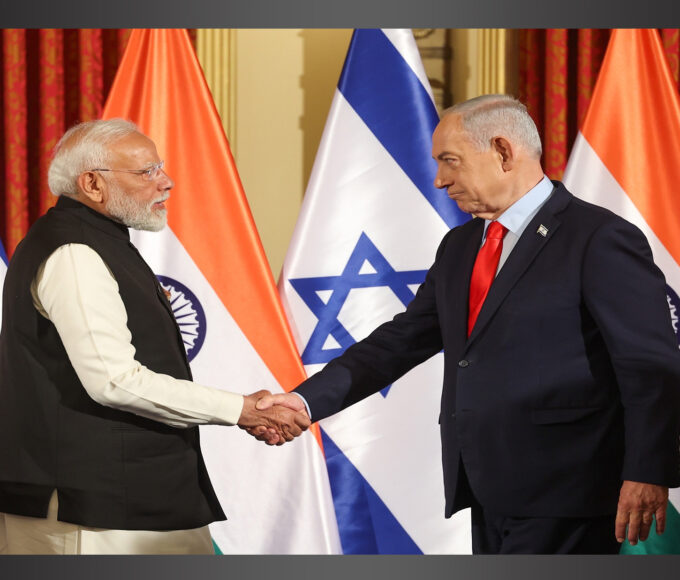
One of the most telling flashpoints of Trump’s second term is his clash with India’s Narendra Modi. By slapping tariffs on Russian crude imports—a major supply line for India—Trump has set off a diplomatic row. Modi, facing domestic political pressures, refuses to back down.
This episode illustrates the gamble of Trump’s tariff-first approach. Domestically, it pleases his base who equate tariffs with toughness. Internationally, it risks alienating allies and driving them closer to rivals like China and Russia. Polls show that while Republicans back his tariffs, independents and Democrats see them as harmful to the U.S. economy.

The Powell Problem
Trump’s ongoing feud with Fed Chair Powell also remains unresolved. During his first term, he lashed out at Powell for not cutting rates fast enough. Now, history repeats itself: Trump accuses Powell of “crippling American growth” while Powell insists on guarding against inflation.
Markets watch the clash nervously. While Trump’s pressure resonates with Americans frustrated by inflation, polling indicates that voters trust the Fed more than the White House on monetary policy. The perception of Trump as impulsive weakens his credibility in economic management.
If Trump’s first term proved anything, it was his resilience. Despite scandals, impeachment trials, and international controversies, his approval rarely fell below 35% and never rose above 50%. That ceiling-and-floor dynamic has returned in his second term. The issues have changed—from immigration and Obamacare in 2017 to tariffs, inflation, and foreign wars in 2025—but the basic pattern remains: Trump’s base sticks with him, Democrats reject him, and independents swing only narrowly.
The Road Ahead
Seven months into his second term, Trump remains a figure defined by contradiction. His polling numbers — mid-40s at best — suggest he has not gained new ground with sceptics. Yet his over 90% Republican support shows he retains a hammerlock on his party.
Is he a dictator? The evidence is mixed. His actions test the boundaries of executive power, but they are rooted in American legal traditions that give presidents wide latitude. Is he the smartest man in the room? Many in his base believe so, citing his knack for reshaping debates on trade, immigration, and foreign policy.
Ultimately, Trump’s presidency reflects America’s enduring polarization: a nation caught between admiration for strength and fear of overreach, between the desire for order and the instinct for liberty. His second term, like his first, is destined to be judged less by consensus and more by the balance of passion and division he leaves behind.

Contributor, IANS - Washington DC/New York
Executive Editor, Corporate Tycoons - Pune, India
Executive Editor, The Flag Post - Bengaluru, India
Contributor, The Statesman, Hindu Business Line, Sarkaritel.com, Diplomacyindia.com
Former Economics Editor, PTI - New Delhi, India
Former Communications Advisor,
Alstom Group of Companies, SA - France/Belgium


