

































Why there is no alternative to the Minimum Support Price policy
The government fixes minimum support prices for 24 agricultural commodities, based on recommendations of the Commission for Agricultural Costs and Prices (CACP). The main objectives are to provide incentives to farmers to adopt improved technology, develop a production pattern in keeping with national requirements, and rationally utilize land, water and other resources.
The Minimum Support Price (MSP) policy has been a key instrument, along with modern technology, in making us self-sufficient in production of food grains. The minimum support prices (MSPs) do not guarantee remunerative prices to all farmers for all crops, in all areas.
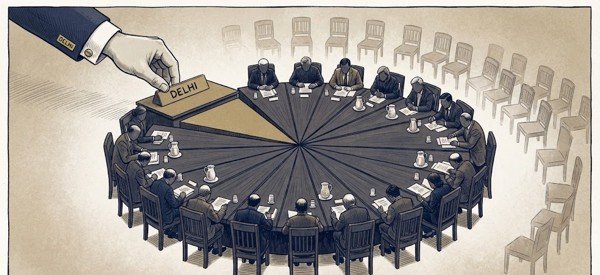
Farmers of several regions complain that MSPs do not cover production costs. Production costs vary widely from region to region and farm to farm, while the CACP considers all-India weighted average costs. Unless the government fixes differing MSPs for different regions and farmers, the existing methodology cannot guarantee remunerative prices to all farmers in all regions. But differing MSPs would affect efficiency of agricultural production and market integration, and pose the problem of implementation.
What is important is to ensure effective implementation of MSPs all over the country and announce MSPs well before the sowing season of each crop, so that farmers can allocate land and other resources to various crops.
What is important is to ensure effective implementation of MSPs all over the country and announce MSPs well before the sowing season of each crop, so that farmers can allocate land and other resources to various crops.
In the absence of well-coordinated policy support for technological change, effective implementation of the MSP policy and rationalization of import duties, mere increase in MSPs may prove counter-productive. Similarly, diversification in favour of horticultural crops would require an integrated support system, involving technology, pricing, marketing and processing, and export promotion.
As for linking to domestic or global prices, can we allow MSPs to fluctuate like market prices without defeating their purpose?
Accelerating the pace of diversified agricultural growth for poverty alleviation would require an integrated support system, including infrastructure, technology and appropriate price policy. At present there is no viable alternative to the MSP policy as the existing support system for agriculture is weak.
The rapid increase in our food subsidy bill is due not so much to high MSPs but more to rising costs of incidentals and food distribution. There is scope for reducing the burden of food subsidy through improvement in managerial efficiency of FCI at various levels and by adopting a well-designed decentralized procurement system.
Regarding the criticism that the MSP policy discourages the growth of private trade and distorts the market, the question is whether private trade can behave responsibly in an imperfect market situation. The MSP system should function in a way that allows competitive growth of private trade in agricultural marketing and also protects farmers’ and consumers’ interests.
(Abridged from a paper, “Agricultural price policy in the wake of economic liberalization”, by the Chairman, Commission for Agricultural Costs and Prices.)