






























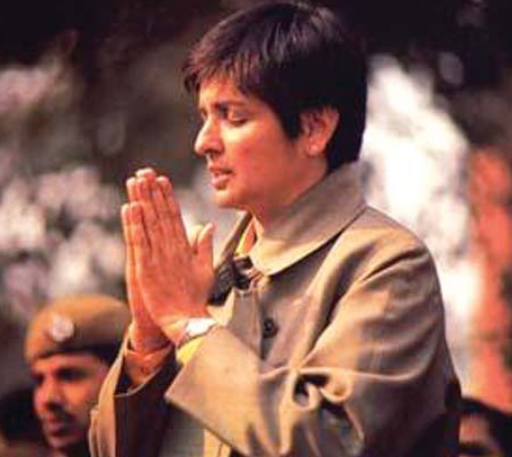
My first impression of Tihar jail, when I took over in 1993, was that I was myself imprisoned. As far as the jail administration was concerned, there was interference from everywhere, mostly from VIPs seeking favoured treatment for a friend or relative. Corruption was ubiquitous. Everything came for a price – meetings with friends or relatives, purchases from the canteen, food from outside. Even prisoners receiving gift packages from outside, basic items such as clean clothes, would have to part with money or even a portion of the gift package before receiving it.
So where does one start in order to effect any kind of transformation in a system riddled from top to bottom with callousness, corruption, cruelty, indifference? They all knew I had come from the Delhi Police. And betting was already on about how long it would be before I would request a quick transfer out of this hell. My immediate dilemma was, with whom could I work in order to get started? I had examined the confidential records of all the jail officials and staff and virtually none of them was clean. But if I did not work with them, where on earth would I find new people? So, like a CMD, I decided to go with what I was saddled with. There were few options. I had no choice but to try and transform them and put their abilities to test.
Human management consists of accepting the fact that everybody does not come out of the same mould. Everybody is not equal. A talented and experienced manager will recognize immediately who shares his philosophy, who is borderline, and who is intractable. To those who share your vision you give trust and extra work. You groom the borderline cases and try and carry them with you. But you have to show the tough, formidable side of yourself to those who are incorrigible. There are several facets of this formidable side. And, over a period, I used several rewards-and-punishment weapons in my arsenal. I rewarded a majority of people. I dismissed many. To some I gave voluntary retirements (actually this was compulsory retirement!), others I suspended, and some, who deserved exemplary punishment, I charge sheeted and made sure they went to jail.
Human management involves accepting that every body does not come out of the same mould. A talented and experienced manager will recognize who share his philosophy
Being compassionate does not mean that you can allow people to fool you or think they can get away with dereliction of duty or breaking the law. Never continue to look at everybody with the same eye. Understand who is who and place them accordingly and deal with the difficulties as they arise. For example, I had to tell one deputy superintendent to stay at home and collect his pay there because he was a negative influence in the jail. At first he was delighted that he had not been suspended and he could relax at home. He had no idea what was in store for him. As time went by, his children began to ask him embarrassing questions that struck at the roots of his manhood – Daddy, what happened? Your leave is over, how come you’re not going back to work? He finally came to me and requested that I call him back to work because the atmosphere at home was becoming unbearable.

The staff was also insecure. In fact, many of them lived in dread of the inmates – the thugs and gangsters – who constantly threatened them and their families with death in the outside world. In fact, the staff would repeatedly confide to me that they had no security cover to protect their homes and families from a violent attack by released prisoners or members of their gang. Attacks on the staff, even in prison, were common.
Luckily, I was able to document the transformations we started – the reform process – in the photographs I regularly took. Today, I treasure these slides.(blow up-editor) Some that I treasure most record how we reached out to adolescents through the Sampark Sabha (communication group) meetings. The initial steps in the process were to encourage some of our more motivated officials to talk to the young inmates – not as officials but as people interested in their lives and welfare and future.
The corollary to bridging the communication gap was the formation of voluntary, autonomous bodies – the panchayats. We had panchayats dedicated to education, festivals, hygiene, catering, canteen, discipline, depression management, you name it. We selected prisoners for specific panchayat leadership duties, trained them, and taught them the value of self-governance. They were taught to assume responsibility for their own lives as well as of their community. The goal was to develop a humane collective, corrective community.
Prisoners of Learning
The panchayats were gradually integrated into the prison management system. We told them that their environment was, indeed, a township like the New Delhi Municipal Corporation. Many moments are indelibly etched in my memory. They are living snapshots of prisoners at study in open classrooms under shady trees, the ground strewn with books and bags. The school bell would sound at 9 am every day. The attendance was phenomenal, almost 100 per cent. I would also begin my rounds at 9 am. I would put on a pair of comfortable tennis shoes, my pathan suit and a jacket, and visit all the classes for two hours, congratulating the students, asking questions, answering questions, thumping backs in a congratulatory fashion. And the responses were spontaneous. The prisoner-students would show me what they had written. The panchayat teachers would proudly show me the long attendance registers in which the Ps (for “present”) far overshadowed the absentees. The education panchayat would even conduct fortnightly tests.
What I found most gratifying – even touching – was that when prisoners were released the books they had been given in prison, even exercise books, were almost invariably the most precious part of the belongings they took with them. Prison officials were worried that this would deplete the institution’s book resources, but I encouraged people to take books away. In the books, they were taking home with them perhaps the most valuable experience of their lives. These books had been donated.
I was able to document the transformations we started–the reform process–in the photographs I regularly took. I treasure these slides
And I assured our officials that book donations would continue – I would make sure of that – and that our repositories of knowledge would always be full. And the books continued to pour in – from schools, from institutions, from individuals.
But this was not an inward-looking transformation. We began to link the jail with the outside world in line with our “C3 model” – corrective, collective, community-based. On Christmas, for example, we would invite groups from outside to entertain the inmates. Children sang songs. We brought in musical instruments so prisoners could learn to play them. On Christmas an inmate would become the official Santa Claus. Guru Purab was celebrated with great reverence. On Gandhi Jayanti, a prisoner was chosen to play the role of Mahatma Gandhi. And, when this role-playing Gandhiji, dressed in the traditional dhoti, walked in, prisoners began to touch his feet with reverence. This, more than anything else, was a signal that a transformation had taken root.
(Exclusively adapted from a closed-door interaction with government employees,Ms Bedi is currently Director, Bureau of Police Reform and Development )