






















In India, “good governance” is perceived as tinkering with civil services and constituting commissions for administrative reforms, pay and perks. There is hardly any effort to rejuvenate institutions and instruments of governance that have atrophied and lost capacity to govern. This is a continuing tale of the past three decades, beginning with the Emergency.
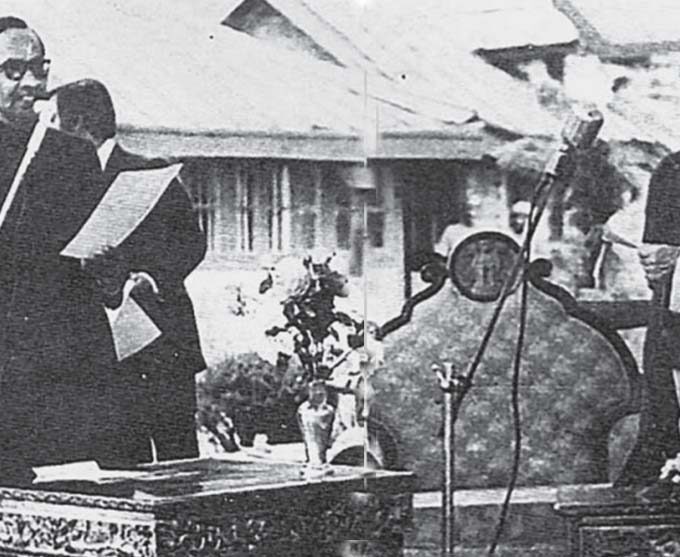
On the night of June 25-26,1975, the President of India signed a three-line proclamation:
“In exercise of the powers conferred by clause (1) of Article 352 of the Constitution, I, Fakhruddin Ali Ahmed, President of India, by this Proclamation declare that a grave emergency exists whereby the security of India is threatened by internal disturbances.”
I was then District Magistrate of Chandigarh. That night was one of high drama in the Union Territory, though on a scale much smaller than in Delhi. Nevertheless, the happenings reflected the depravity into which governance of the country was being pushed in the name of “security of India”.
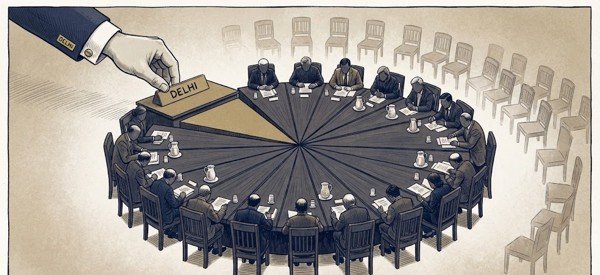
On directions from the Delhi durbar, the Chief Minister of Punjab had called up the Chief Commissioner past midnight to say that Emergency had been declared and the press should be severely disciplined. He was specific that The Tribune be sealed and not allowed to come out the next morning. The Chief Minister even wanted the editor arrested under the dreaded Maintenance of Internal Security Act (MISA)!
The Chief Commissioner passed on the instructions to the police chief who expressed inability to carry out the wishes of the Chief Minister. Nevertheless, he visited The Tribune premises and advised those on duty not to publish any news unpalatable to the “powers-that-be” and left it at that.
This did not have much effect and the morning newspaper was its usual self. This infuriated the Chief Minister of Haryana. In his inimitable style, he threatened that if the Chandigarh Administration was not willing to raid The Tribune, seal its premises and arrest its editor, he would get it done through the Haryana Police. For this purpose, he would not hesitate even to “take over” the media premises and buildings! Information was trickling in about the President’s Proclamation of Emergency without the Union Cabinet’s recommendation, and the detention of top leaders like Jayaprakash Narayan, Morarji Desai and Atal Behari Vajpayee even before the declaration was signed. The Tribune reported these arrests.
With rumours spreading like wildfire, there was a danger of law and order in Chandigarh getting out of control. Prompted by the Delhi durbar, both Chief Ministers were breathing down our neck and could virtually take over the Administration and seal The Tribune if they decided to gang up. To ward off these eventualities, I decided to take charge despite absence of any official communication from the Union Government regarding Emergency or any other instruction.
I got a copy of the presidential proclamation from the Intelligence Bureau and imposed prohibitory orders under Section 144 of the CrPC throughout the UT and got an Administration official appointed Censor Officer under the Defence of India Rules.
This was how the Emergency era commenced. During its 20-month run, the country’s hard-earned freedom was extinguished and a parliamentary democracy turned into personal dictatorship. Fundamental rights stood suspended. The press was muffled. People moved in hushed silence, stunned and traumatised by the draconian goings on. The bulk of the civil service crawled when asked to bend. The higher judiciary bowed to the dust and was willing to rule that, under Emergency, citizens did not even have the right to life. Politicians of all hues, barring honourable exceptions, lay prostrate. A compilation of activities of the President, Parliament, Judiciary and Executive during Emergency would reveal as to how governance and its institutions and instruments were ravaged and subjected to severe onslaught.
‘In exercise of powers conferred by clause (1) of Article 352 … I, Fakhruddin Ali Ahmed, President of India, by this Proclamation declare that a grave emergency exists whereby the security of India is threatened by internal disturbances’
With proclamation of Emergency, the President had suspended enforcement of Fundamental Rights under Article 14 (Equality before Law), Article 21 (Protection of Life and Personal Liberty) and several clauses of Article 22 (Protection against Detention). As if this was not bad enough, courts were barred from pronouncing on the validity of any presidential proclamation; MISA detainees were denied relief under common law and were not to be told the grounds and period of detention, and the PM was given immunity from legal proceedings.
The tragedy is that ‘centralized misgovernance’ persists! Unbridled corruption, criminality are the outcome; India has drifted towards ‘state kleptocracy’ since Emergency
The Emergency agenda has been aptly summarized by Nayantara Sehgal in her book on Indira Gandhi: “The
essence of Emergency was the pinnacle-power – a position above the multitude, unaccountable and unchallengeable – it sought to guarantee the Prime Minister.” The Shah Commission fully endorsed this view and said: “Mrs Gandhi, in her anxiety to continue in power, brought about a situation which directly contributed to her continuance in power and also generated forces which sacrificed the interests of many to serve the ambitions of the few.”
The Emergency was far more devious than just denial of personal liberty, arrest and torture of a few thousand individuals and forced sterilization by the State. It was about basic violations of democratic norms and crude attempts to legitimize a new type of regime and new criteria of allocation of rights and obligations. It was the abrogation of any
sense of boundary or restraint in exercise of power, and striking growth of arbitrariness and arrogance with which
citizens were turned into “subjects”. The Emergency ripped apart the delicately crafted and carefully nurtured fabric of India’s democracy. Governance was devastated by the imposition of a highly concentrated apparatus of power on a fundamentally federal society and the turning over of this centralized apparatus for personals survival and family aggrandizement.
The tragedy is that “centralized misgovernance” persists! Emergency excesses are benchmarked and have become reference points for gross violation of human rights by fascistminded “leaders” even today.
Unbridled corruption and criminality are the outcome and India has been drifting towards “state kleptocracy” since the Emergency. This is a system wherein ruling establishments arrogate the power and resources of the state and indulge in wanton misgovernance. State kleptocracy has rotted the moral fibre of the nation as a whole and institutions – legislative, executive and judicial – have been reduced to nullity. This is the real legacy of the Emergency and the root cause of inequity and injustice we are witnessing amid the country’s “GDP boom”! We can ignore this only at our peril!
(The writer, a former IAS officer, is managing trustee of SUSTAIN, a Chennai NGO for urban issues)

IAS (retd) with a distinguished career of 40 years - worked in Army, Govt, Private, Politics & NGOs.