











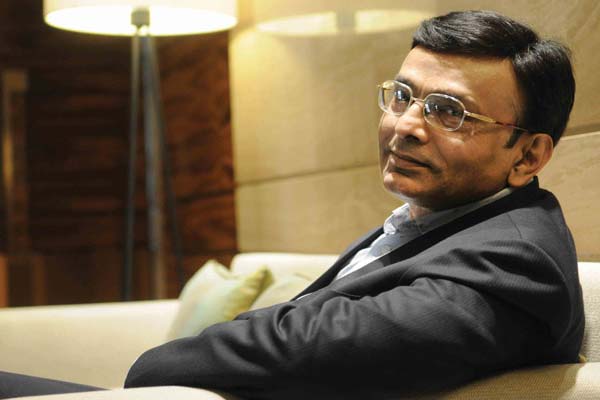

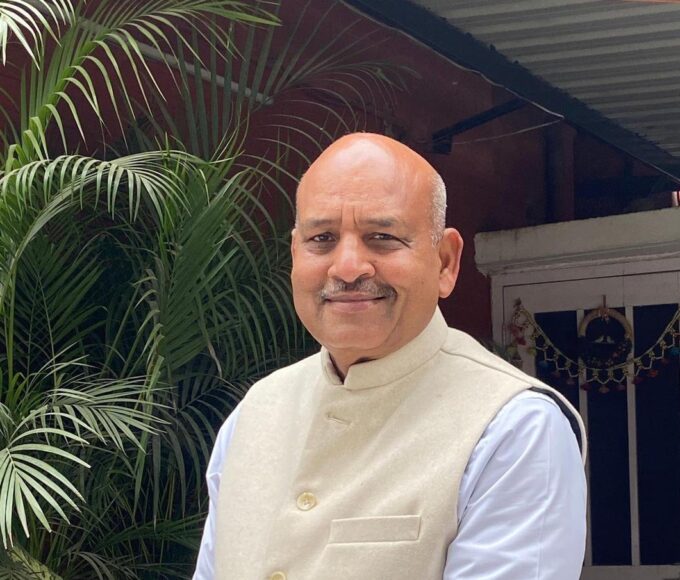






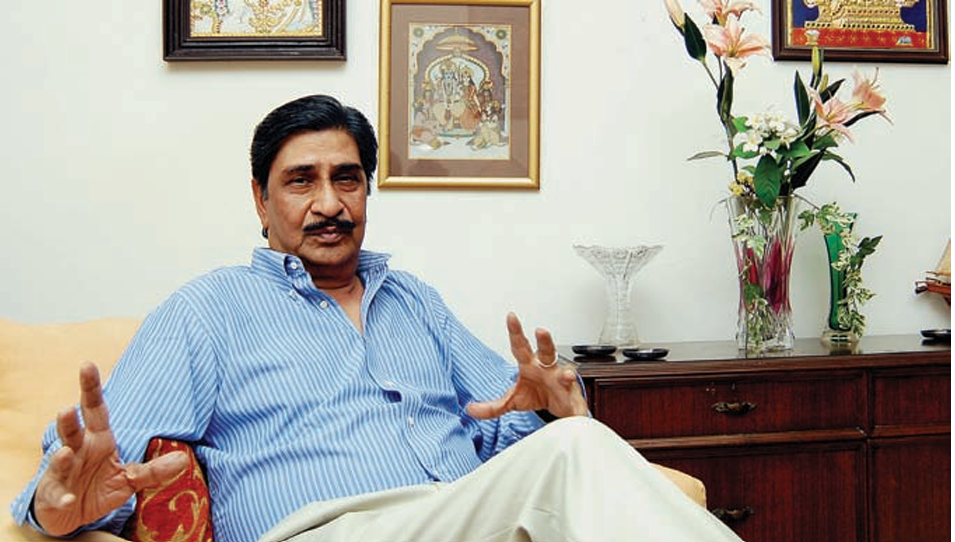
I took the civil service examination by chance. But I stood first in the country in the examination. During the interview, the UPSC chair man, KPS Menon, wanted me to opt for the Indian Foreign Service, but I preferred the IAS. I was a student of physics and mathematics with an inclination for research in elementary particles. My father was a director in the Post & Telegraph Services and wanted to see me grow as a civil servant. He asked me to appear for the civil service examination at least once and I could not say no. I took the exam and then suffered 40 years in the service.
My first posting was in eastern Uttar Pradesh – Mirzapur. During the late 1960s, India witnessed the great Green Revolution, and this luckily coincided with my posting in a remote district of Uttar Pradesh where I was putting three essential components of new agriculture technology – seed, fertilizer and water into use in villages. I worked hard for five years in rural areas and the landed class realized the benefits of the new agriculture technology In 1964 Sucheta Kriplani was CM of Uttar Pradesh. I got an opportunity to talk to her whenever she visited my district. I also worked in the most agriculturally prosperous district of Farukhabad which is the country’s largest potato producing district. President Zakir Hussain belonged to this district. But my most memorable posting was in Bundelkhand during 1966-67 with Lalitpur – the most backward district of the state – being its headquarters.
I have worked with five Chief Ministers – Banarsi Das, VP Singh, ND Tiwari, Mulayam Singh Yadav and Kalyan Singh. After Independence, the relationship between politicians and bureaucrats evidenced internal consistency and mutual respect.Politicians had the pulse of the people and knew ground realities, whereas bureaucrats were knowledgeable, honest, faithful and could implement the visions of politicians.This combination worked till the 1980s and then deterioration started.The politician thought he could be both a bureaucrat and politician which was a misconception. The bureaucrat was thus considered redundant. This caused a rift and mutual suspicion during the 1980s. It took a toll of governance. However, during later years, bureaucrats and politicians compromised and connived for mutual benefit. I often admired many of my seniors like PS Appu, Director of the National Academy of Administration, KF Rustamji, Chief Secretary, Madhya Pradesh, NK Mukherjee, Srinivasan Vardarajan and especially Bhagwant Singh who was a tough task master.
The most memorable part of my career was my stint in the Ministry of Home Affairs. There was the Kashmir problem and the Sikkim issue. Installation of Sheikh Abdullah as Chief Minister of Kashmir and merger of Sikkim with India were wonderful experiences. When posted in UP, I was appointed Chairman and Managing Director of UP Textile Corporation. Banarsi Das was CM. He called me and said he wanted to see UP on the textile map of India. I said I would do the job provided no one interfered and influenced my work. He let me go and work freely. Nobody interfered in my work until VP Singh became CM. His Cabinet had a corrupt industry minister. He wanted to purchase some unnecessary machinery. I refused. He threatened that he would get me transferred. I went to the CM and expressed my inability to work with the corrupt minister. The CM said I was making a serious allegation against his Cabinet colleague and wanted me to give it in writing. I did so. In the next Cabinet reshuffle, the minister was transferred. I stayed with the Corporation which soon made a profit of Rs 300 crore.
I remember another incident. Chief Minister Mulayam Singh Yadav called me and asked me to favour one of his partymen. As it required ignoring the rules, I politely refused. I was subsequently transferred to an unimportant department. Time flew by and I came to the Central government on deputation. One fine morning, I got a call from Mulayam Singh Yadav that he wanted to see me in Delhi. I met him that very day. After exchange of pleasantries, he
The politician thought he could be a bureaucrat and politician which was a misconception
recalled the incident and said,“You were right in refusing the favour to that man. Though his work was done after your transfer, he turned out to be unreliable. He joined a rival party soon after.”
The biggest challenge and contribution of the bureaucracy is to keep India unified. Not with standing the fact that it has done a good job for the country,I call the past 50 years a period of shame for our governance. The basic concept of the Constitution, the right to live with dignity, has not been realized; 25 per cent of our population is still living below the poverty line.The senior bureaucracy is to blame. It could not be people-friendly. Politicians are to blame for the ill health of all public institutions. Businessmen and corporate houses have created corruption in the government. Professionals like media have tried to corner the fruits of development unscrupulously. Small entrepreneurs have begun avoiding taxes. Agriculture is still being neglected. The total orientation for development needs a change.
Prabhat Kumar (1963 batch) was Cabinet Secretary, Governor of Jharkhand and Chairman, IC Centre for Governance