










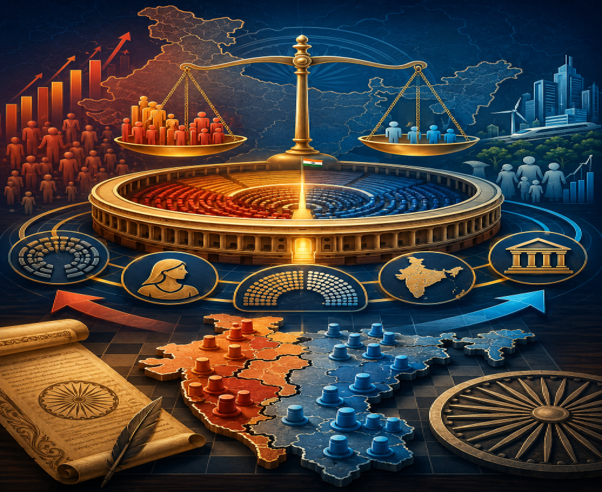









My parliamentary constituency is rural. It is crucial we bring growth across the board. No longer can India survive in terms of islands of prosperity. No longer can we afford to have regional inequalities of growth. Today, we have a divide. It is like an equator that runs across the centre of India. There is, for example, a north-south divide. The southern states are growing much faster than the northern states and if we don’t arrest this divide it will lead to major issues in the future.There are state-state divides. There are divides within states with one portion being more prosperous than another. A key parameter of qualifying as a superpower and galvanizing economic activity is to plant seeds of growth at a young age.When I tour my constituency, I like to dwell on a home truth:if a farmer does not receive requisite electricity, water, and fertilizer, the seeds he plants will never mature into a harvestable crop.
Similarly,the seeds for our next generation need to be nourished with universal healthcare and education.
Fifteen years ago, the National Institute of Information Technology performed an experiment in rural Madhya Pradesh.They set up a makeshift podium beside a road in the middle of a village. On the opposite side they built a shack with a one-way mirror through which a scientist could observe the experiment. On the podium they set up a computer with a mouse and some basic software with video games like tennis and ping-pong. For three days a handful of village kids would stop near the computer and examine it. On the fourth day, five illiterate boys began playing around with the mouse and figured out that there were bats to strike with and balls that bounced from one side or the other. The next day they were playing the game! A day later they opened up the Hindi version of Microsoft Windows, but couldn’t figure out the alphabets because they were illiterate. This was dramatic testament to the ability of Indian youth to be creative, to compete and succeed. That is the Indian USP. We thrive in any environment.We have a 25 million-strong diaspora in 115countries. They have earned the respect of the world. They are the ambassadors of Brand India.Yet a third of India’s children– 35 million of them– between the ages of six and 10 don’t go to school.The average Indian employee has only an average education of 1.8 years.
There is no magic solution, no short-term solution. But there has to be new thinking, new articulation and new implementation. And we politicians have to stop thinking about what is going to happen to us at the end of four or five years. We are going to go back to the electorate. But we cannot escape from long-term plans. Whether we get re-elected or not we should think about positive steps we have taken that will sustain growth, development and equity for the long-range future.
To groom leaders we must make them face challenges and ensure they fail as it is from failure that you learn
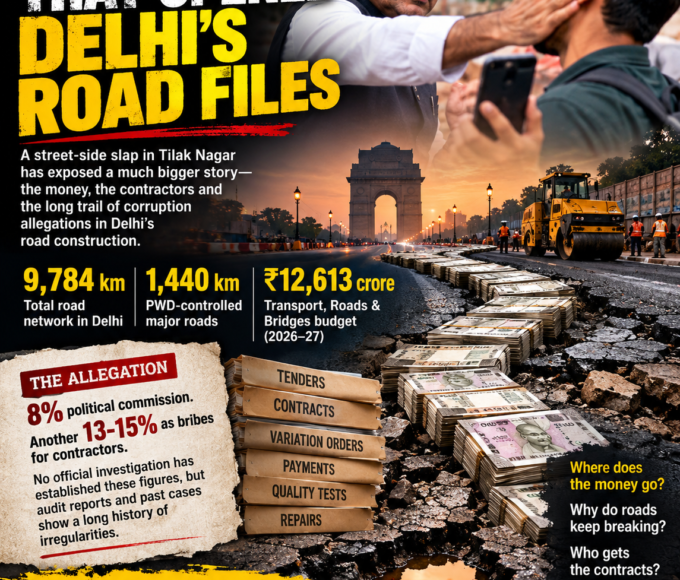
I don’t think leaders are necessarily only born.Leaders need to be groomed.Leaders need to be trained.Leaders need to be exposed. Leaders need to be given opportunities. You only become a leader when you have made many mistakes. Many of us are very appre hensive taking a call, taking a decision, taking up a challenge– what if we fail! But I believe that today if we need to groom leaders we need to ensure that we make them face challenges, make them face opportunities and make sure they fail as it is from failure that you learn. Then there is the challenge of infrastructure. Look at ports, roads, highways. Our ports are clogged. Cost of production goes up by 30 per cent because of that one single roadblock. Because of bad roads our motor vehicle tyres survive only 50 per cent of their projected longevity.We have 100,000 MW of installed power capacity in our country and our require ment is 200,000 MW. How are we going to cross these hurdles? Only through new thinking. We need monumental, incremental changes.
Let us take the example of the recent airport privatization or airport development. It should have been done 20 years ago. Many times people ask me to describe India. I don’t describe India necessarily as a tiger. We are not like the West, or Southeast Asian economies, which are way ahead of us in reforms, maybe sometimes too quickly. I describe India as an elephant. We take slow, sure steps.
(This article is adapted from a closed-door interaction with government employees)