

















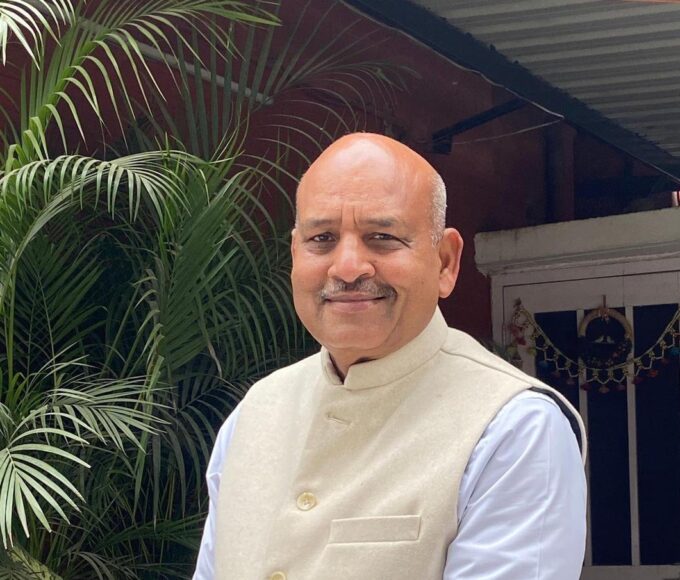













I WAS a babu, but am no longer one. Having spent about four decades in the corridors of government, I may have become a little insensitive, but certainly not anti-national. I too believe in an ideal state of governance, in the rule of law. In that pursuit, I have joined the IC Centre for Governance, a humble non-governmental organization that endeavours to work towards improving public governance.
The heroes of the Right to Information (RTI) initiative, who are close to attaining sainthood, are up in arms against the government’s decision to amend the RTI Act, 2005. It is immaterial that the Act was conceived, drafted and piloted in Parliament by two successive coalitions diametrically opposed to each other. All the major political parties are shareholders in the process of empowering the people with RTI. It may be recalled that the Freedom of Information Bill was drafted at the level of bureaucrats in 1999-2000. It was discussed threadbare in the Committee of Secretaries chaired by the Cabinet Secretary. The officials expressed different views and a draft was put up for consideration by a group of ministers headed by the Home Minister.
I do not recollect any pressure from or agitation by social activists that might have prompted the government to bring about legislation on the right to information. It would, therefore, be presumptuous for a certain activist to claim to being “the architect” of RTI. The fact is, it was felt by the people running the government that the time had come for introducing greater transparency in its functioning. It was an idea whose time had come.
The heroes are now on the warpath regarding the proposed amendment to keep the notings on files in some sensitive matters out of the purview of the RTI Act. The situation has arisen allegedly because of the anxiety of some NGOs and their leaders to examine the acts of the Central Government in selection, appointment, posting and transfer of senior bureaucrats. It is mentioned in the press note and memoranda of the National Campaign for People’s Right To Information thatIf file notings are exempted, it is a sure method of obfuscating the existence of arbitrariness in the decision-making process, which enables fixing accountability on specific officers. It will encourage corrupt and arbitrary practices and be a sure way to kill the spirit of the Act.
Bright young men and women make
an attempt to join the civil services
and many unsuccessful candidates
turn into critics of civil servants
In this context, it is also interesting to quote the activists:…The trail of responsibility and accountability is what the babus do not want disclosed…. Although the Cabinet decision came without a warning, it has been part of a design. This is revealed by a close examination of the consistent extra-legal efforts of the bureaucracy to keep file notings opaque. Right through, from the period of the formulation of the Right to Information Acts at the Centre and in the states, the bureaucracy steadfastly fought against allowing access to file notings….”
In their speeches and verbal statements, these heroes have been more eloquent about the conspiracy of the civil servants. Incidentally, they have not criticized the politicians on this count. They have praised them for removing the earlier deficiencies through the parliamentary process.
Whether file notings be made public should be decided after taking into account all aspects. Highest consider
ation should be national interest
The discredited serving babus cannot talk back. They are prevented from joining issues in the public domain because (a) service conduct rules prohibiting them from expressing their views in public have not yet been brought in synchronization with the RTI Act, and (b) they run the risk of being reprimanded and penalized by the overbearing members of the political executive who are the real bosses, (c) they are obviously at a severe disadvantage when it comes to the media which is avowedly anti-civil services for reasons of its own, and (d) they are aware that the political executive is the ultimate arbiter of what will prevail and there is no point in voicing one’s personal views in public on contentious subjects.
It is, however, an admitted fact that most bright young men and women make an attempt to join the civil services, and many of the unsuccessful candidates turn into critics of civil servants.
At a recent felicitation function for a Magsaysay awardee – who is also spearheading the RTI movement in Delhi – I saw speaker after speaker attacking the babus for their nefarious attempts to kill the Act. One of them shouted full throated, “Hum ladenge (we will fight)” to thunderous response from the audience, and “Hum jeetenge (we will be victorious).”
There was no discussion. It was the fiat of the leaders. They spoke very well, appealed to the emotions of their followers. The audience hailed them. There was no room for dissent. They spoke like political leaders.
If they blame the babus for trying to destroy the RTI Act by drafting the amendment Bill and managing to get it approved by the Union Cabinet, surely the same babus must be credited with drafting the Freedom of Information Bill way back in 1999 in the first place. Curiously, the heroes claim that credit themselves and accept the applause with great humility. These champions are gaining all the glory of being honoured with prestigious awards – which they disdain, saying they are more of a headache than honour.
They are a clever lot, as they know they can get away with condemning civil servants. Criticizing the political bosses, without whose approval no significant decision can be taken, may boomerang against their cause. So driving a wedge between the lawmakers and the babus is the best policy.
Be that as it may, the point is whether creating an area of conflict is going to be conducive to good governance. If one believes the heroes, the Cabinet Secretary is guilty of extra-legal activities. So are the Secretary of the Department of Personnel and all the Secretary-level officers of various ministries represented on the Committee of Secretaries. The moot question is whether condemning the entire bureaucracy is a healthy trend for RTI. They blow hot and cold. When the Central Information Commissioner gives a ruling against them in appeal, he becomes an incompetent retired civil servant to be publicly humiliated. When he gives an order in their favour, he turns into a god. They do not realize that it is also an accusation against the Prime Minister and members of the Union Cabinet that they are not in control of the situation. They seem to say that whatever happens in government, whether good or bad, is because of the corrupt babus.
PR Dasmunshi, when queried about the “draconian” Broadcast Bill, conveniently shifted the blame to the babus, saying it was merely a draft prepared by the minions and political approval was yet to be taken. He called a meeting with media barons and allayed their fears by saying the “draconian” clauses would be suitably toned down. This is the reality of our system of governance.
I have not gone into the merits or demerits of the proposed amendment nor do I intend to take sides on the issue. Suffice it to say that in principle I believe in total transparency in governance. But whether file notings ought to be made public should, in my opinion, be decided after taking into account all aspects of the issue including its desirability and practicality. The highest consideration should, however, be national interest. It would be more prudent if the matter were not decided on emotions alone.