



















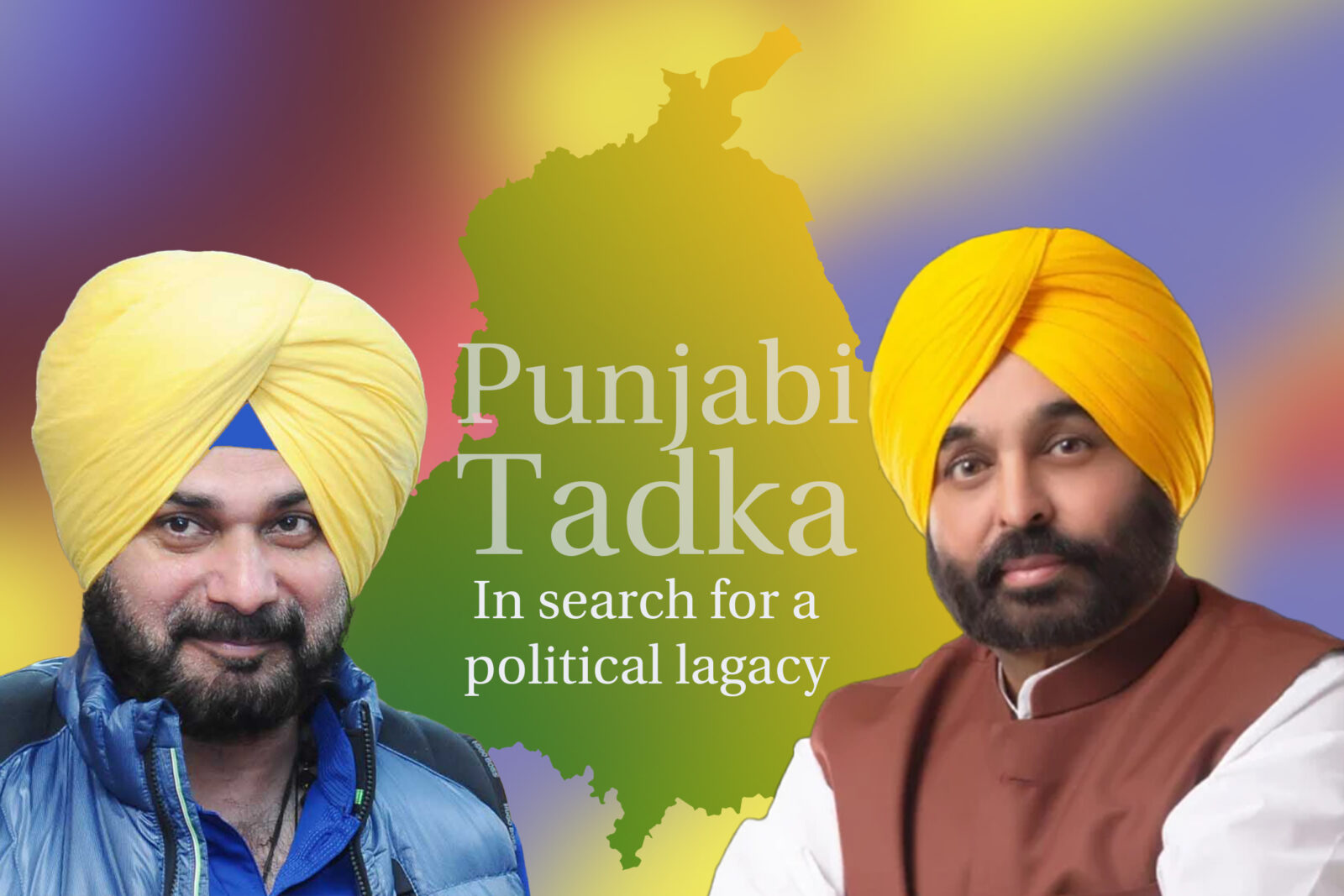
Navjot Singh Sidhu and Bhagwant Mann’s entry into politics in the early 2000s marked the arrival of celebrity politics in Punjab. Both emerged from popular culture—Sidhu from international cricket and television, Mann from mass comedy and political satire—and carried extraordinary public visibility into the political arena. Two decades later, however, their political destinies could not be more different. While Bhagwant Mann today occupies the pinnacle of Punjab politics as Chief Minister, Sidhu’s political career appears all but exhausted.
Yet, had one played the soothsayer 15 years ago, Sidhu would almost certainly have been the safer bet for long-term success. Sidhu was the bigger celebrity—an international cricketer, star commentator, television personality, and flamboyant orator, famed for his” Sidduisms”, sartorial flair, and booming rhetoric. His appeal was pan-Indian, urban, and middle-class. More importantly, he made a spectacular political debut as Member of Parliament from Amritsar and emerged as a rising star in the BJP before later joining the Congress—two national behemoths with deep organisational roots and electoral heft.
Bhagwant Mann, by contrast, was a local celebrity—a popular Punjabi comedian and satirist with a grassroots connect among rural and lower-middle-class audiences. His political entry was through regional and fledgling outfits like the Lok Bhalai Party and the People’s Party of Punjab, and his debut election from Lehragaga in 2012 ended in defeat. Where Sidhu strode into politics through the front door of national parties, Mann entered through the margins.
Despite these contrasting beginnings, the two shared striking similarities. Both were master communicators, natural performers, and instinctive combatants who relished taking on entrenched power. Sidhu, flamboyant and impulsive, took early aim at “Munni” Sonia Gandhi and “Pappu” Rahul Gandhi, later trained his guns on Modi and Yogi, exposed the Badal–Amarinder nexus (75:25), and ultimately felled the seemingly invincible Captain Amarinder Singh.
Mann, armed with devastating folksy wit and emotive satire, played a pivotal role in dismantling the Badals’ aura of invincibility and puncturing their dream of “25 years of rule.” His 2014 Lok Sabha campaign—epitomised by the immortal line Dhindsa Manjh taa—will endure as one of the most memorable political campaigns in Punjab’s history.
Mann’s ascent was even more deeply rooted in the post-Jio era, as smartphones and low-cost data carried his humour and relatability deep into rural Punjab. WhatsApp forwards, Facebook Lives, and short video clips made him a daily presence
The rise of both men was inseparable from the spread of social media and cheap digital data, which fundamentally altered political communication in Punjab. These technologies weakened the monopoly of traditional party structures, print media, and television, empowering charismatic individuals who could bypass intermediaries and speak directly to voters. Sidhu’s sharp soundbites, flamboyance, and television-honed persona translated seamlessly into viral content.
Mann’s ascent was even more deeply rooted in the post-Jio era, as smartphones and low-cost data carried his humour and relatability deep into rural Punjab. WhatsApp forwards, Facebook Lives, and short video clips made him a daily presence—especially among younger voters and lower-middle-class audiences alienated from elite political discourse. Social media rewarded authenticity, emotion, humour, outrage, and performance—areas where both Sidhu and Mann excelled—while allowing attention to travel faster than policy detail.
Both also benefited from their Jatt Sikh identity, a politically dominant community in Punjab with long-standing electoral clout. This social location provided immediate cultural legitimacy across large swathes of Punjab. Crucially, however, their appeal was not reducible to caste alone. Both projected themselves as honest, self-made outsiders—men who had risen through personal talent rather than lineage—standing in sharp contrast to a political class widely perceived as dynastic, venal, and self-serving. Their non-hereditary image strengthened their credibility as agents of change. Their secular outlook and ideological pragmatism further allowed them to navigate Punjab’s plural social fabric with ease, broadening their appeal beyond narrow identity politics.
Sidhu’s limitations were also personal. Despite a long political career, he lacked the work ethic and stamina required of a full-time politician. He was easily distracted by his celebrity pursuits and prone to prolonged sulks after setbacks
Yet despite these commonalities, critical differences in personality, political temperament, and institutional location explain their sharply divergent outcomes.
Sidhu, despite the early advantage of national parties, was ultimately circumscribed by both the BJP and the Congress. Beyond election campaigns, these established, hierarchical, faction-ridden, leadership-driven parties offer little patience for mercurial individualists. Discipline, deference, intrigue, and compromise are prized virtues—precisely the qualities the impulsive, moralistic, and confrontational Sidhu lacked. He was temperamentally unsuited to the slow grind of party politics.
Mann, on the other hand, enjoyed the advantage of being the principal leader who rooted the Aam Aadmi Party in Punjab after 2014. His sidelining as the face of the party in 2017 arguably cost AAP that election. Unlike Sidhu—who played an auxiliary role to Amarinder Singh and Prashant Kishor in 2017—Mann was the single biggest factor in building AAP’s political platform in Punjab.
Despite sustained attempts by Kejriwal and the Delhi leadership to manage Punjab from afar, Mann tenaciously guarded his position within the party, eventually compelling them to concede the Chief Ministership to him in 2022. At the same time, he displayed tactical flexibility—often aligning with Kejriwal to outmanoeuvre and neutralise internal rivals such as H.S Phoolka and Sukhapal Singh Khaira, clearing his own path. Unlike Sidhu, Mann demonstrated discipline and a willingness to defer to party hierarchy when required.
AAP’s dependence on Mann in Punjab far exceeds Congress’s dependence on Navjot Sidhu. No leader has emerged within Punjab AAP who rivals Mann in popularity, whereas the Congress has historically fielded leaders—Amarinder Singh, Charanjit Singh Channi—who matched or exceeded Sidhu’s mass appeal.
Sidhu’s limitations were also personal. Despite a long political career, he lacked the work ethic and stamina required of a full-time politician. He was easily distracted by his celebrity pursuits and prone to prolonged sulks after setbacks inflicted by seasoned operators like the Badals and Amarinder Singh. He remained largely absent from Parliament during multiple Lok Sabha terms, proved indecisive as a minister, and was disastrous as Punjab Congress president. He struggled to translate vision into execution, not merely because of external resistance but due to his inability to build a team or faction of his own.
Mann, by contrast, became a full-time politician the moment he entered the field. He emerged as a competent and effective MP, contributing both within Punjab and nationally. His shortcomings—whether personal habits or organisational limitations—were cushioned by AAP’s disciplined structure and professional social media machinery.
Fate and timing also played their part. Sidhu was thrust into leadership of the Punjab Congress at its lowest ebb, after Amarinder Singh’s non-performance, while AAP unleashed Mann at the crest of an unprecedented anti-incumbency wave. Even then, Sidhu squandered the moment—spending more energy undermining Charanjit Singh Channi’s government than marshalling his forces for battle.
Sidhu’s career as an elite politician effectively ended after the 2022 elections. His imprisonment, subsequent drift back to celebrity platforms, and the ill-advised public outbursts by Dr Navjot Kaur Sidhu have only cemented his marginalisation.
The contrasting careers of Sidhu and Mann ultimately highlight the limits of celebrity-driven politics when unaccompanied by organisational discipline, political patience, and institutional loyalty. Celebrity may open the door, but endurance demands restraint. Sidhu remained personality-centric, episodic, and confrontational. Mann subordinated flamboyance to structure, timing, and collective purpose—allowing popularity to mature into power.
Punjab’s recent political history offers a clear lesson: fame may bring entry, but authority is built through organisation, adaptability, and control.

Prof Harjeshwar Singh
Prof Harjeshwar Pal Singh is a veteran writer on Punjab History and Politics. Director, Punjab Thinks


