





























Whimsy, paranoia and favouritism have often dictated the government’s decisions on non-desi spouses
FOR nearly 40 years since the establishment of the Indian Foreign Service, the Government of India has been applying dubious rules to govern marriages of Indian diplo-mats. In the early years, women in the service had to resign if they intended to get married. Since at that time there was little awareness or sensitivity about issues of gender equality, everyone meekly accepted the rule.
Another rule was that no diplomat could marry a foreigner without per-mission of the government. However, officers belonging to other all-India services like the IAS, the police and the armed forces had no such restrictions.
One can only speculate about the ori-gin and need for such a rule.Presumably, it was meant to protect young, innocent Indian diplomats venturing out into the wide world from falling into honey traps laid by evil foreign agencies. One justi-fication for this lack of self-confidence was our suspicion of anything foreign following the long subjugation to colo-nial rule.Wags quipped that the real reason was an ingrained Brahmanical attitude that considered going abroad polluting! In practice, the application of the rule was not uniform. Some were lucky to get permission to marry for-eigners, while others had to quit the service for love and marriage. There were a few cases where the issue was allowed to linger so that some of them had, for want of a better phrase, techni-cally been living in sin. Some who had to quit were helped to get assignments with UN agencies. In my own case, I had to apply for permission to marry since my fiancée, though of Indian ori-gin, was technically a foreigner since she was a British national.
No reasons were ever given for the ministry’s negative rulings on applica-tions for marriage to foreigners. It was, however, assumed that this had some-thing to do with reports from IB and later RAW on the suitability or other-wise of the foreign spouse-to-be. The inputs for these intelligence agencies generally came from their counterpart services in the countries of origin of the spouses-to-be. In other words, the spouse had to be in the good books of his or her government to get a favourable report.
The story of arbitrary application of the rule got curiouser, when some agi-tated honourable members of Parliament complained against one of the foreign wives who, it is believed, was quite forthright and occasionally rude in criticizing Indians’ bad habits.The min-istry promptly decided to impose a ban on marriages of Indian diplomats with foreigners.
Shortly thereafter,a senior ambassador informally sounded out the ministry about his intention to marry a foreign national who was a very prominent the-atre personality in her country.The min-istry did not respond but gave a vague indication that permission would not be forthcoming without assigning any rea-son. It is believed that a Minister of State who earlier was a member of the Foreign Service categorically told the ambassador that they did not want for-eigners in the service.
Faced with this situation, the ambassador informally consulted a High Court judge and a prominent constitu-tional lawyer. Both said the ministry’s rule was bad in law and Constitutionally untenable. He informed the ministry of this and even sent a handwritten note to the then Prime Minister, Rajiv Gandhi. There was no response from the ministry.
Finally, he took the matter to court. There it came to light that the ministry had been operating this rule since 1947 without once seeking legal opinion from the Ministry of Law as required under Government of India rules of business. The court ruled that the Ministry was bound to give proper reasons in all cases where any application for marriage with a foreigner was denied.
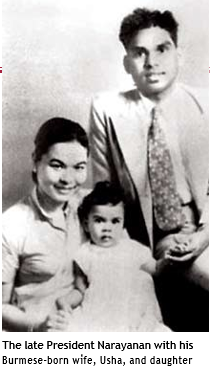
It now seems that there is no stringent bar on Indian diplomats of either gender marrying foreigners.Yet,the person who was responsible for effecting this change never got permission till he retired; and, to add insult to injury, he was harassed and denied promotion. It is strange how this rule was brought in and applied selectively when we had a President, a Prime Minister, and a Foreign Secretary with foreign wives.