



















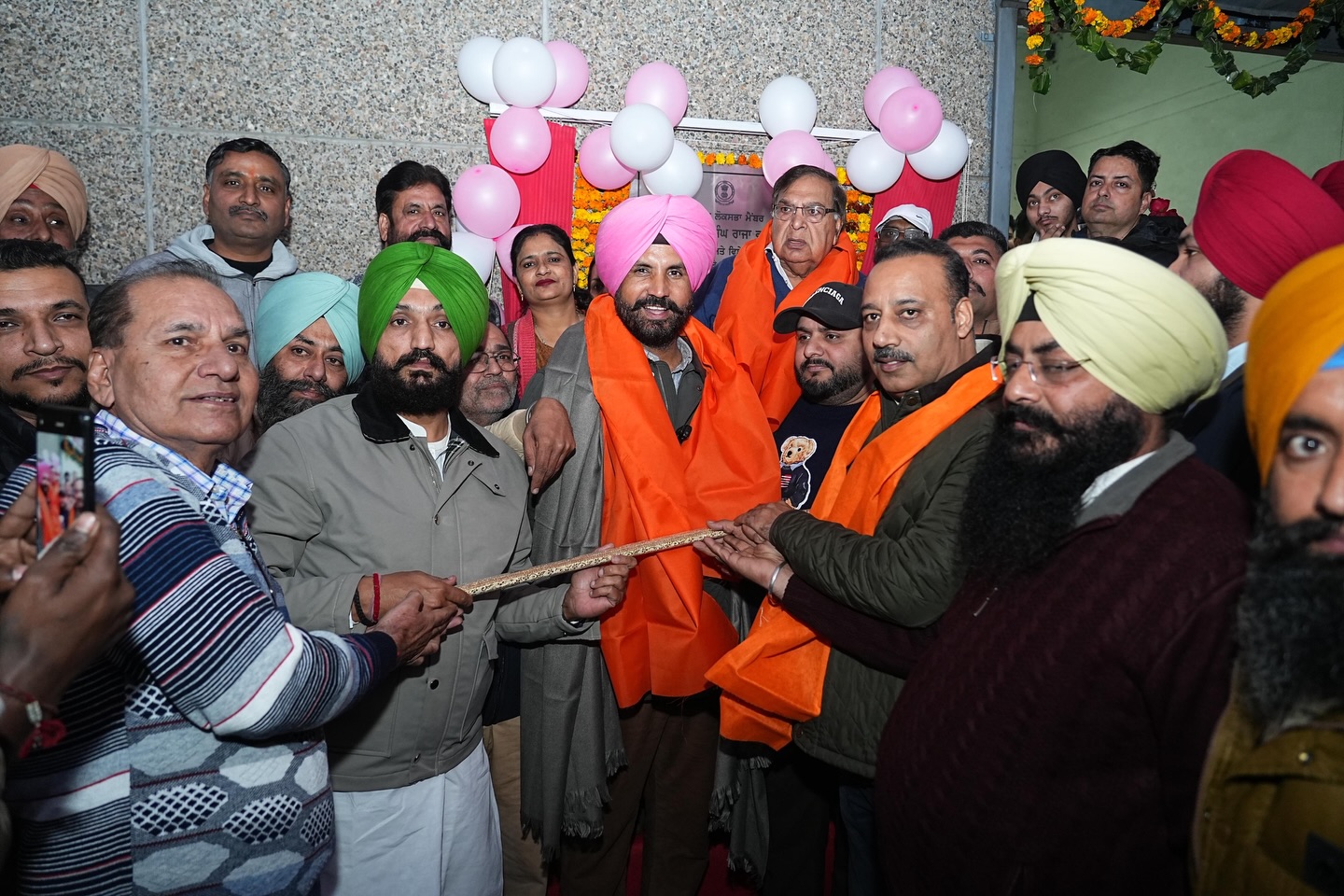
Muktsar stands for sand, swag and bluster. Amarinder Singh Raja Warring embodies the temperament of this harsh, restless land. Rising from adversity, dressed in designer kurta-pyjamas, speaking in bombast, and yet often timorous before entrenched authority, Warring is both a product of his region and a reflection of its contradictions.
The semi-feudal belt of Muktsar has long produced a distinctive breed of politicians—men shaped by scarcity, rivalry and long memories. The tallest among them was Parkash Singh Badal, who combined guile, relentless hard work and ruthlessness in equal measure. Harcharan Singh Brar was regal and aloof, a politician who wore power lightly but guarded it closely. Jagmeet Brar emerged as the charismatic orator and eternal rebel, thriving on confrontation and defiance. Amarinder Singh Raja Warring carries traces of all three—the energy of Badal, the swagger of Brar, and the charisma of Jagmeet. Unlike them, however, Warring rose from outside established political families, a rarity in the dynastic politics of Southwest Malwa.
The Badal Order
0Raja Warring’s ascent must be understood against the backdrop of the overwhelming dominance of the Badal family. For more than five decades, the politics of Southwest Malwa—encompassing the Bathinda, Muktsar and Faridkot belt—could be reduced to a stark binary: the Badals versus the rest. They were not merely electorally successful; they became the region’s most enduring symbol of power.
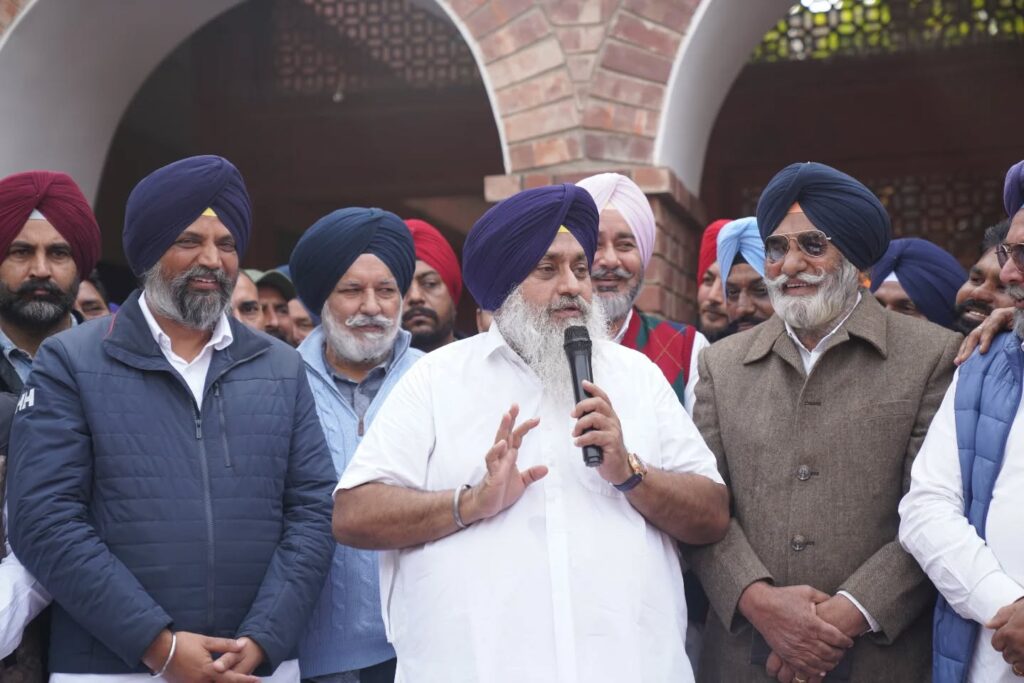
Power in this belt was accumulated, carefully hoarded and selectively dispensed. As a five-time Chief Minister, Parkash Singh Badal—and later his son, Sukhbir Badal—exercised authority that often bordered on the absolute. Loyalists were rewarded handsomely; adversaries paid a steep political price.
In rural Malwa, where ideas of honour, revenge and loyalty run deep, political exclusion acquires a moral dimension. Unsurprisingly, any politician who dared to challenge the Badals acquired a romantic and enduring appeal.
Few rivals were allowed to grow unchecked within the Badals’ twin citadels of Lambi and Gidderbaha and later as their power grew over the whole Southwest Malwa belt. Harcharan Singh Brar, after mounting an early challenge, was eventually accommodated through a tacit division of political territory—Muktsar for Brar, Lambi–Gidderbaha firmly retained by the Badals.
This prolonged monopoly ensured that large sections of the electorate remained permanently excluded from power, breeding resentment that simmered beneath the surface. In rural Malwa, where ideas of honour, revenge and loyalty run deep, political exclusion acquires a moral dimension. Unsurprisingly, any politician who dared to challenge the Badals acquired a romantic and enduring appeal.
The Jagmeet Template
Western Malwa has historically responded to leaders who fight from the front, display fearlessness, and refuse to compromise. For nearly four decades, Jagmeet Brar embodied this oppositional impulse—charismatic, confrontational and perpetually at odds with the ruling establishment. His politics was less about governance and more about resistance, and in a region shaped by memories of exclusion, this was enough.
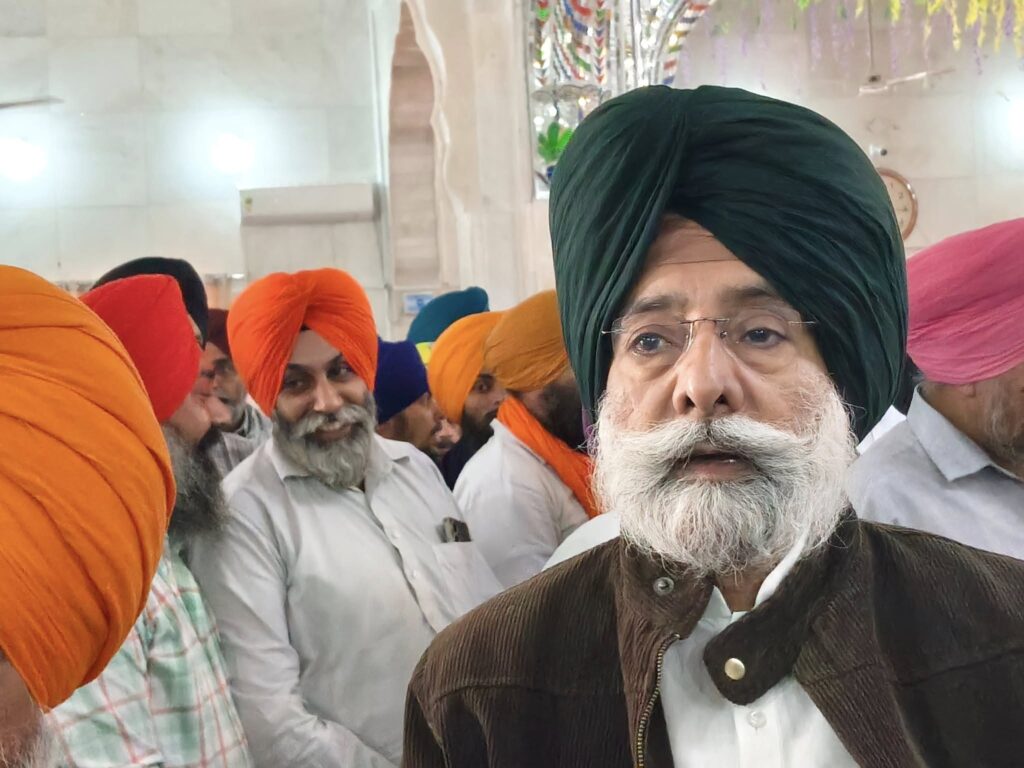
Jagmeet Brar’s eventual political decline left behind a vacuum—not just organisational, but emotional. The region needed a new standard-bearer for defiance, someone who could inherit both the political territory and the symbolic role of challenger. That space was gradually occupied by Brar’s political protégé: Raja Warring.
Warring inherited not just Jagmeet Brar’s area but also his political grammar—confrontational speeches, public grandstanding, and an instinctive hostility towards entrenched power. In a landscape shaped by long memories and inherited loyalties, his rise was less an accident of timing than the continuation of a political tradition—one that rewards defiance against monopolised authority.
The Meteoric Rise
Raja Warring’s rise was swift, almost meteoric. Tall, telegenic and ambitious, he was a first-generation politician who emerged from the grassroots and consciously modelled himself on Jagmeet Brar—in speech, manner and posture. His big break came in 2008, when the Congress, notoriously dominated by dynastic “kakas”, experimented with internal democracy through elections to the Youth Congress in Punjab.
Warring was the biggest beneficiary of that experiment. Finishing second behind Ravneet Bittu, he caught the attention of Rahul Gandhi, who was then attempting to democratise the party’s internal structures. What followed was a rapid climb: MLA from Gidderbaha in 2012, National Youth Congress president in 2014, Cabinet minister in 2021 under Charanjit Singh Channi, and finally, at the age of 45, Punjab Congress president in 2022.
Loyalty to the high command, relentless drive, social media savvy, and an unrelenting hostility towards the Badals all aided his ascent. Along with his telegenic wife, Amrita Warring, he was widely seen as part of a new power couple—young, assertive and upwardly mobile.
The Presidency Test
If Warring’s rise was impressive, his tenure as Punjab Congress president has been far less convincing. Promotion, as the Peter Principle famously notes, often elevates individuals to their level of incompetence. For Warring, the party presidency proved a position one rung too high. He resembled a company commander suddenly elevated to the rank of general—energetic, enthusiastic, but ill-equipped for strategic command.
Warring did little to help his own cause. His fondness for SUVs, designer clothes and security cavalcades projected an image of privilege at odds with a society that has grown increasingly intolerant of VIP culture.
His inadequacies soon became apparent. A lack of vision, a tendency towards arrogance, and a visible timidity in dealing with entrenched authority undermined his leadership. Senior Congress leaders—long accustomed to factional warfare—openly defied him, accusing him of insecurity, arrogance, promoting loyalists, and ignoring established figures. He was also criticised for failing to mount a sustained and effective opposition to the Bhagwant Mann government, despite multiple opportunities.
Warring did little to help his own cause. His fondness for SUVs, designer clothes and security cavalcades projected an image of privilege at odds with a society that has grown increasingly intolerant of VIP culture. In a Punjab shaped by agrarian distress and political cynicism, such displays grated. His habit of surrounding himself with lightweight loyalists further diminished his credibility.
Stalling Momentum
The Congress’s relatively strong performance in the 2024 Lok Sabha elections—driven largely by Rahul Gandhi’s national campaign, the continued Akali-BJP divorce, and widespread disillusionment with the AAP government—bought Warring some breathing space. Yet setbacks continued to mount. His wife’s defeat from Gidderbaha, and his own marginalisation during the Ludhiana West by-election campaign due to factional opposition, eroded his authority.
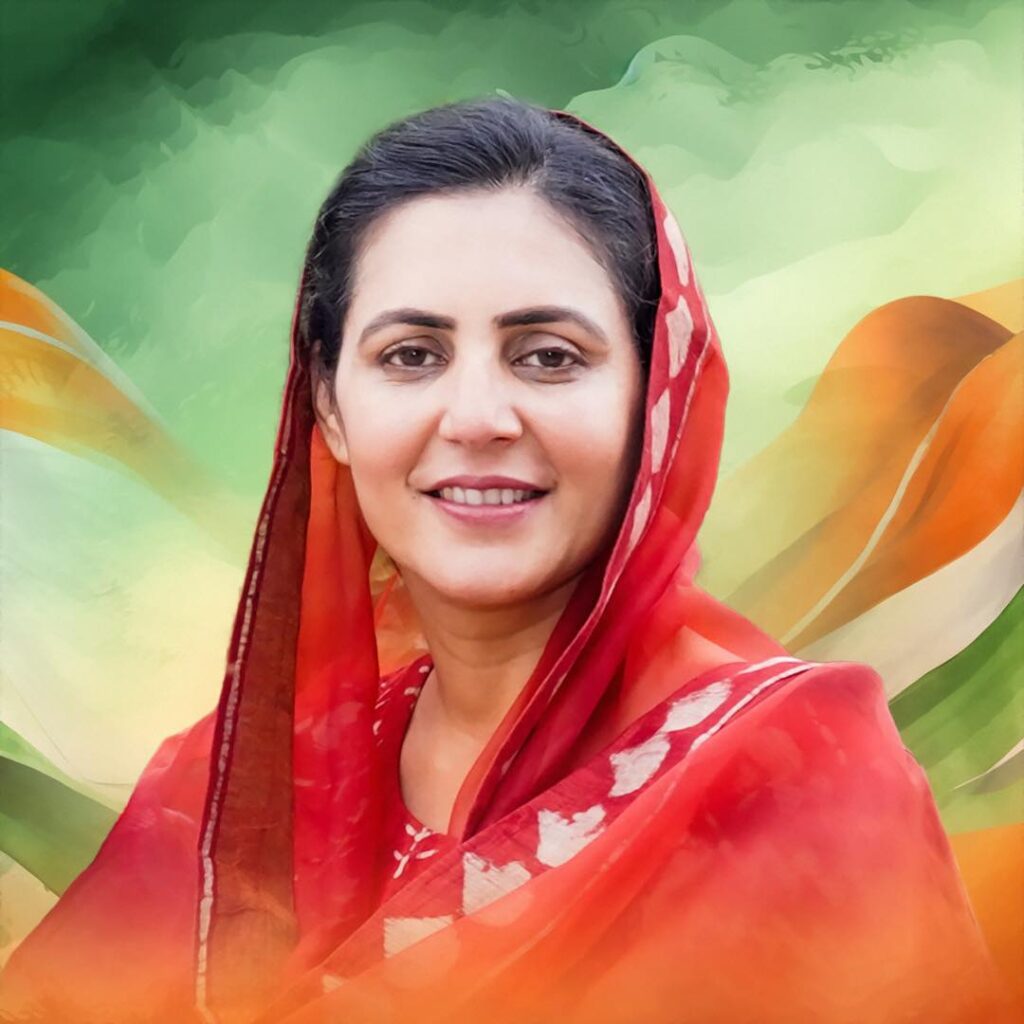
Critics also pointed to his provocative rhetoric on sensitive issues like “Khalistan” and blamed his “anti-Dalit” statements for Congress’s humiliating defeat in the Tarn Taran by-election. Poor performance in rural local body elections in Muktsar further weakened his position. Increasingly, voices within the party began to argue that despite being Punjab’s strongest party in terms of Lok Sabha numbers, Congress was saddled with the weakest state president among major political parties.
Compared to Bhagwant Mann’s populist connect, Sukhbir Badal’s swaggering confidence, or Sunil Jakhar’s gravitas, Warring appeared lightweight—more performer than strategist.
An Unfinished Story.
Yet it would be premature to write Raja Warring off. Despite speculation about his replacement, he retains a firm grip over large sections of the party organisation and continues to enjoy a workable relationship with the Congress high command. Age remains on his side, and among current Congress leaders—bar Charanjit Singh Channi—few match his drive or ambition. His rise in a conservative, hierarchical and dynastic party remains remarkable. Whether he can convert ambition into authority, and charisma into leadership, will determine whether Raja Warring becomes a footnote in Punjab’s political history—or its next enduring figure.

Prof Harjeshwar Singh
Prof Harjeshwar Pal Singh is a veteran writer on Punjab History and Politics. Director, Punjab Thinks


