




















MANY factors go into the formulation of the foreign policy of a country. As a determining principle, foreign policy cannot be foreign to the country itself and the basic objective has to serve national interest and relate to the regional, international, political, economic, industrial and technological situation of the country. This is particularly so for a country like India with an ancient, uninterrupted civilization, the second largest population in the world comprising followers of all the major world religions, generous natural and human resources that have been exploited by over two centuries of foreign rule and that has achieved independence from the greatest colonial empire the world has ever known through the moral force of non-violence. Thus, India’s foreign policy is a very intricate interplay of many factors.
We emerged into independence at a time when the world also entered a new era. The Second World War had ended and the nuclear age had commenced. The Allies who fought the Nazis had become adversaries and embarked on a feverish nuclear arms race. Two opposing groups had emerged. The nuclear era, however, demanded that the peoples of the world learn to live together as otherwise they would die together. India’s achieving independence triggered a domino effect that dismantled the colonial era. The creation of Israel introduced instability in a strategic area on which the world depended largely for its energy requirements.
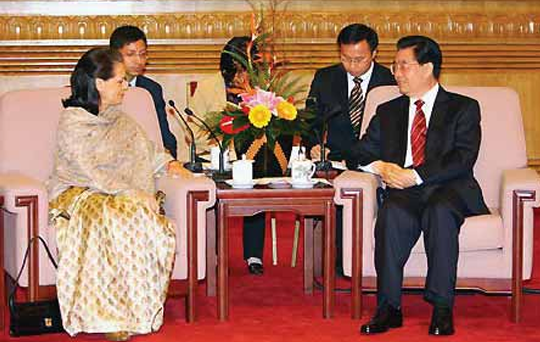
In our neighbourhood, the partition of India on religious grounds and the Kashmir issue injected bitterness and hostility amongst the two largest neighbours. With China, the most important in the neighbourhood, we had links going back into the dark periods of history. Regardless of differences that could arise, the mutual imperative was and remains cooperation. and not confrontation. India’s foreign policy thus had to be fenced in by some basic criteria. We were too large to become a client or subservient state – hence our keeping out of the opposing groups and the non-aligned movement (NAM) of which India was the main pillar and cementing force. We spearheaded the fight against apartheid and the process of decolonization. We espoused the cause of global peace, co-existence, and disarmament. Support for the Palestinian cause arose out of our fight against injustice and past historical links with the Arabs and West Asia.
The world has changed beyond imagination and expectation in the last 60 years. While the basic parameters remain the same, with changing times and situations our national interests and priorities have also undergone changes. It has been a process of continuity with change.
Apartheid is finished and a new South Africa has emerged. India can take pride that we played a decisive role in this respect, particularly the contribution of Rajiv Gandhi in the final stages. The colonial age is now history with the only issue remaining being that of Palestine. The Cold War is long over, diminishing considerably the role of NAM. Our relations with the US and Russia continue to be based on merit and not at the expense of relations with the other.
We have so much in common with the US that we should build upon this to mutual benefit. We do have differences, arising out of the fact that we are on opposite sides of the world. They are the world’s strongest economic power and we are a developing nation. We have to build upon the positives and not let the differences impact our cooperation.
We cannot forget the relations that existed with the erstwhile Soviet Union and have to develop them even further as Russia is also an Asian power and has always been supportive of our strategic concerns. It is a country of the future.
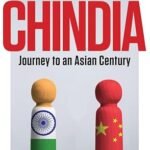
In the neighbourhood, we are hopefully erasing the tension with China that has persisted after the 1961 war. The border dispute is no longer the core issue and is on the back burner to be settled through dialogue and negotiation. Relations with Pakistan have eventually come on the right track of negotiations with a commitment that war is not a solution.
With the other neighbours, our relations are settling to a situation where each understands and respects the other even though there are still areas where we have trans-border problems. We had a tendency to look West and neglect the East – a region India has so much in common with both historically and culturally. This has been set right and the prospects for the future are bright. The same applies to Europe, which we had ignored due to our bias for the English-speaking.
We cannot forget the
relations that existed
with the erstwhile
Soviet Union and
have to develop them
Looking at the future, we must continue to give top priority to our neighbours. We should do all we can to ensure that a cold war does not start in Asia. We can be com petitive but not confrontationist. General and complete disarmament becomes an even greater imperative given that technol ogy is developing so fast that a weapon of mass destruction may well be produced in a backyard. West Asia can become the cause of the next global war. Given our good relations with the US and Israel, and our credibility amongst the Palestinians and the Arabs, India needs to play a much more effective role in resolving the seem ingly intractable problem.
“One World” is no longer a dream, but an inevitable prospect and India is a micro example of it. We can show that there can be unity in diversity globally just as we have achieved in our unique country