










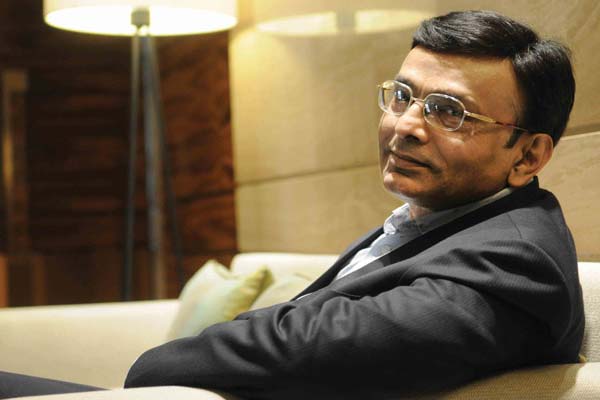


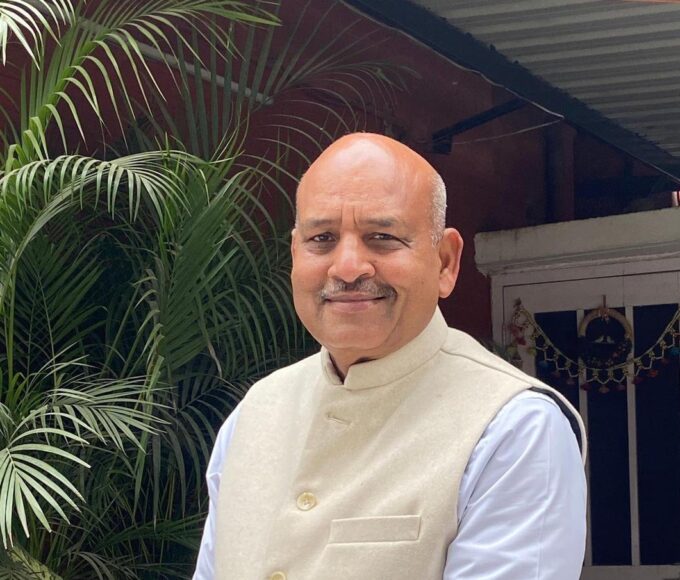










Raghav Sharan Pandey, belonging to the 1972 IAS batch from Nagaland, is from Champaran, Bihar. After securing the second position in the BSc exam from Patna University, he appeared for the IAS exam. His career began as a Sub-Divisional Magistrate in Tuensang, Nagaland in September, 1974. Not only a thinker and visualiser, Pandey is equally a hardcore implementer of ideas. As Chief Secretary of Nagaland, he conceptualized, secured political approval, and implemented the “Imagine Nagaland” programme which promoted community participation in management. He won the nation’s top civil service award – the Prime Minister’s Award for Excellence in Public administration for it in 2007.
The soft-spoken bureaucrat has served in the education and agriculture sectors. The Election Commission made him adviser to the Nagaland Governor to manage the recent elections in the state. Pandey has also authored books and articles. As Secretary for steel, he has transformed the Steel Ministry, launching the National Steel Promotion Campaign, His vision is to make India’s steel sector the world’s second largest producer of steel by 2015.
gfiles: What is the present world steel scenario?
Raghav Saran Pandey: The consumption level of steel indicates whether a country is developed, developing or underdeveloped. For developed countries, the consumption benchmark is about 400 kg per capita per annum. In India, it is 46 kg per capita per annum. China has reached 250 kg, the US 400 kg, and Japan and Korea have touched 600 and 900 kg per capita per annum, respectively. Since we have the vision to become a developed nation, we should strive hard to increase the consumption of steel.
gfiles: What do you mean by per capita consumption?
RSP: It means the quantity of steel consumed in the country divided by its population.
gfiles: What is the world’s production level of steel?
RSP: At present, world production has crossed 1300 million tonnes annually out of which China’s share is 36 per cent. India is the fifth largest steel-producing country. We produce 53 million tonnes of steel annually.
gfiles: Natural resources like manganese, coking coal and iron are used to produce steel. Are these resources being exploited judiciously?
RSP: Natural resources are being exploited judiciously. But I want to emphasize that 30 per cent of global steel requirement is being covered by scrap. In India, it is about 12 per cent. China is upgrading low-quality iron ore to high quality before feeding the blast furnaces and we have to follow suit.
‘Demand-supply gap and abnormal increase
in global export prices has led to the hike
in prices. World prices have rocketed’
gfiles: As per the study of the National Council of Applied Economic Research (NCAER), natural resources required to produce steel will completely deplete in the country in the next 20 year. What then?
RSP: Yes, the study says over 62 iron ore resources will not be available after 20 years. We have to conserve the natural resources. We need to develop and adopt the techniques which can use lower-quality iron ore and convert it into high-quality iron ore for making steel.
gfiles: In India, 35 per cent of our steel is produced by the public sector and 65 per cent by the private sector. Is the private sector milking the natural resources optimally?
RSP: In the private sector, only Tata Steel and, to a limited extent, JSW have captive iron ore mines. The rest depend on the market for iron ore requirements. For coking coal, to a limited extent, Tata Steel has the captive mines. All of them buy coking coal from abroad.
gfiles: What about the supply-demand gap in the country?
RSP:Till last year, India was a net exporter of steel. This year, because of higher consumption growth than production, we have become a net importer. We have a gap of about 2 million tonnes approximately. We require 55 million tonnes as against our production of 53 million tonnes. The rate of growth of consumption is over 10 per cent as against 6 per cent growth rate in steel production. To bridge the gap of 4 per cent, we are importing 1.7 million tonnes more than we export to meet market demand.
gfiles: Do you then consider this the reason for the price rise?
RSP: Yes. The demand and supply gap along with the abnormal increase in international export prices in the last three months has led to the increase in prices. It has also forced us to import steel. World prices have rocketed. And steel producers charge the import parity price or, in different words, the “opportunity price”. They argue that, owing to increase in cost of raw materials, the price hike is inevitable. However, the fact of the matter is that they have raised the price much more than the increase in cost of production. Because of increase in import prices, they have tried to maintain parity between import and local price and that has caused the recent price hike. This happened particularly during February and March 2008.
gfiles: What is the motive behind the increase in steel prices by private producers?
RSP: It is a free-market economy. We import and export steel to and from the free market. The natural motive is to maximize profit.
gfiles: Steel is an essential commodity. How can you afford to be a silent spectator to the price rise?
RSP: Steel was taken out from the essential commodities list last year. Since then, it is in the free market. Nobody is to be blamed in case the price is fixed on import parity basis. In my opinion, they should not have attributed increase in steel prices to the input prices. The industry should not take advantage of the shortage of steel due to supply-demand imbalance. Rather, it should take a long-term view which is positive.
gfiles: All your Public Sector Undertakings (PSUs) like SAIL, Kudremukh, RINL produce steel. Have you done any study on the cost of the input, ie the raw material?
RSP: We have. Take the case of Rashtriya Ispat Nigam Limited (RINL), the public sector company which procures iron ore and coking coal from the market. The cost of production between April 2007 and March 2008 increased by Rs 5,000 per tonne, whereas the net sales realization increased by Rs 12,000 per tonne. We agree with the producers that cost of production has increased but the price rise in steel is not commensurate with the increase in input cost. It is much more.
gfiles: Steel is produced by manganese, coking coal and iron ore. Of these three inputs, which has registered the highest price?
RSP: Cost of all these inputs has increased globally. We import 70 per cent of the coal due to lack of quality coal in India. Iron ore price has more than doubled in the last three years. This year, it is set to increase by another 70 per cent over last year’s price. Coking coal prices have more than trebled this year, compared to last year. We have quality coal mines at Jharia which should become operational at the earliest.
gfiles: TheSteel Minister said in Kolkata recently that he does not see any rationale in the import duty on scrap being reduced from 5 to 0 per cent and excise duty to 2 per cent. Yet the prices are increasing. Why?
RSP: The minister is right. As I said earlier, the import price of steel has increased globally, which is the reason for the present rise in steel prices.
gfiles: Should we not regulate the steel sector in the national interest?
RSP: In my opinion, regulation of the steel sector should be the last resort. If you fetter it, it would be a deterrent to the industry. We are now living in a different era marked by a liberalized economy. There are other options available to control the prices.
gfiles: What are those options?
RSP: To control the price, we have to invoke some fiscal measures. Adjusting import, export and excise duties are measures to be tried. But these are immediate and temporary. We have to increase steel-producing capacity in the long run.
gfiles: How much can our capacity be?
RSP: We plan to have a capacity to produce 124 million tonnes of steel annually by 2011 and, hopefully, 270 million tonnes by 2020.
gfiles: Where lies the problem?
RSP: Steel production is not an instant affair. It requires three to four years of gestation. To achieve capacity, we require land acquisition, mineral linkage, railway track linkage. Also, a large number of Memoranda of Understanding (MOUs) have been signed between various state governments and investors which need to be implemented in letter and spirit. It is a long-drawn process.
gfiles: What will be the demand in India in 2020?
RSP: We will have a little surplus if we produce as per our plan and make the right efforts in this direction.
‘Adjusting import, export and excise duties are measures to be tried. But these are immediate and temporary. We have to increase steel-producing capacity in the long run’
gfiles: The general observation is that the private steel producers are not heeding your call to reduce steel prices….
RSP: It is not for the government to issue diktats in a free market economy. But the government will take appropriate measures to control prices. Of the many options the government has, one is to reduce Counter-Veiling of Excise Duty (CVED) which is 14 per cent. We have the option to make it 0 per cent. But this too is not the solution. If the import price increases by another 14 per cent, reduction in CVED will not bring any positive result. So we have to focus on more production.
In the last four months, the international price of steel has increased by 60 per cent as compared to 30 per cent increase in Indian steel prices. Even so, the temporary solution to augment supply could be reduced import duty, increased export duty and reduction in CVED.
gfiles: These are short-term measures. What about long-term solutions?
RSP: In a way you are right. If fiscal measures fail to bring results, then what next? But the government is determined to control the price rise. I hope the regulatory measures do not become necessary.
gfiles: Are you planning to ban export?
RSP: I don’t know. We are planning to import more and export less to maintain demand-and-supply equilibrium. To what extent import duty will be reduced and export duty imposed and whether export will be banned, I am not in a position to disclose. [Subsequent to this interview, the government hiked excise duty on steel export by 15 per cent]. But steel prices will not be left to the mercy of some profiteers. We are here for the citizens of this country and all necessary measures will be taken for their welfare. There has to be a win-win situation for the producers as well as consumers.