
































The Indian markets corrected due to turmoil in global markets. So the beginning could be said to have involved a foreign hand but the focus has now shifted to domestic issues, more so because of the government’s actions in the recent past. The withdrawal of STT benefits under Section 88-E is beginning to show its impact in the form of a tremendous slowdown in the intra-day activity thereby taking a heavy toll on volumes. Trading turnover in cash and derivative markets have fallen by roughly 50 per cent. However, a part of it can be attributed to the general risk aversion due to change in sentiment. But a lot is due to rise in transaction cost as an implication of STT. We should not forget that volumes in the market are the only way to discover realistic price levels. The measure has also put significant pressure on margins of arbitrageurs thereby reducing liquidity at the same time.
Coming to the general economic scenario, the recent IMF projection predicts a dramatic slowdown in investment growth in India. The GDP growth rate is expected to remain well below 8 per cent. This may get accentuated due to the high rate of inflation, much above the comfort level of the Reserve Bank of India. Since the main cause of inflation is raising global commodity prices, the domestic measures may hardly prove effective. The recent hike in CRR by the RBI may not be very successful because the origin of the current inflation lies in increase in food and oil prices. In an economy where growth and prices are pulling in opposite directions, such measures will not increase food supplies or lower the prices of oil.
The RBI is not allowing the rupee to rise as this is a relatively inexpensive measure to deal with inflation. The central bank’s attempt to not allow the dollar to decline below the 40 mark shows its concern for exporters. However, other measures may prove costly for the economy since they come at the cost of sacrificing growth rate and are therefore bad for equity markets. This may suggest the compulsions of the government also which in an election year will have to choose between a higher growth rate and lower inflation – the choice obviously is the latter. Inflation, despite all these measures, is likely to remain at 7-8 per cent and due to limited efficacy of fiscal policy measures coupled with additional expenses caused by the farm loan waiver and recommendations of the Pay Commission, the fiscal deficit is likely to burgeon in days to come.
Coming to the corporate sector, the last quarter results for the financial year 2007-08 has not been all that encouraging. Due to rising costs, the margins have come under pressure. Moreover, one of the very significant heads of income – other incomes – for quite a number of companies has either disappeared or actually gone negative. This has occurred due to the exposure a number of companies had in derivative instruments as also their exposure to other investments, including stock markets which have been beaten down in the recent past. The corporate profitability is likely to remain under pressure for some more time, thereby eluding the markets for a positive trigger in the short term.
The valuations have become relatively sensible and the risk-reward ratio appears to be in favour of investors. The leveraged positions have been reduced to minimum and most of the negative news seems to have been discounted. But any further negative news in the domestic as well as global fronts may make the markets correct sharply. But it will be a wise strategy to select fundamentally strong stocks that have corrected sharply with a long-term perspective. Though the IT sector as such may not be recommended but, due to heavy beating it has received in the recent past, the sector has started appearing attractive. Interest-rate sensitive sectors such as banking, real estate, auto etc. may continue to remain under pressure. FMCG and pharma are considered relatively safer bets. Hence, this time I am recommending pharma stocks for investment.
Sanjivani Parenterals
CMP Rs 32
Sanjivani Parenteral (SP) is a Mumbai-based manufacturer and marketer of generic pharmaceuticals specializing in contract manufacturing of injectibles. SP has products in the antibiotic injectible space (anti-inflammatory, microbial, emetic, allergic and spasmodic) with products like Ceftrimax, Ivimax, Piptaz, Cefepime, C-Bactum, Methylcoblamin and Tranexamic Acid. Its clients include Zydus Cadila, Alkem, and government hospitals.
The company has launched a new product, Sancidal, that is used for bird flu, lassa fever, HIV, Hepatitis B and yellow fever. The product has a worldwide market worth about $3 billion. It has already been launched in the domestic market and negotiations are on with MNCs for the global market. The company has entered into a supply contract with the government of Maharashtra for nine products to more than 100 civil hospitals and medical colleges in the state.
Shareholding pattern
Promoters – 14%; Tata Mutual Fund – 3.5%; IL&FS Investmart – 2.1%; Sharekhan – 2.7%
SP is available at just a P/E of less than 4 on its trailing 12 months EPS with a price to book value of just one. The fortunes of the company may undergo a sea change, if Sancidal clicks. The low promoter stake makes the company an attractive takeover target – a la the Orchid affair, and can give a further trigger to its stock price. The stock can be a real multi-bagger.

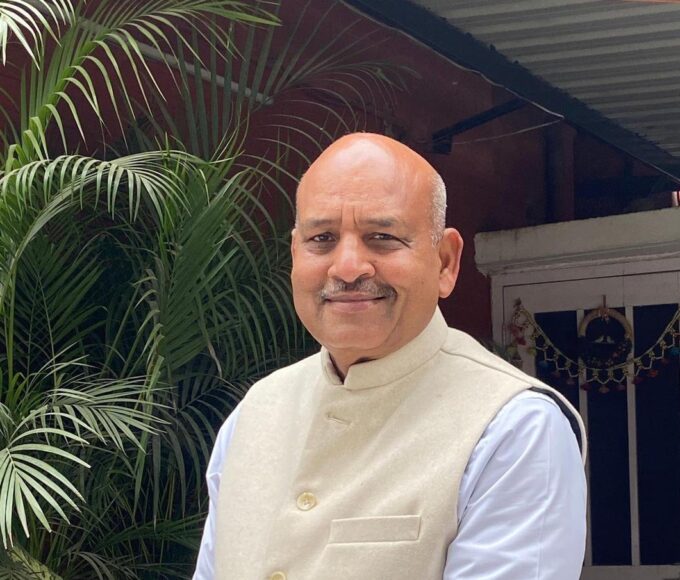
The author is retired as Professor from the University of Delhi in 2024. He is an alumnus of IIM Indore and holds a PhD from the Delhi School of Economics. An investor activist and former member of various SEBI committees. He taught Capital Markets and Investment Banking at leading business schools of India.