























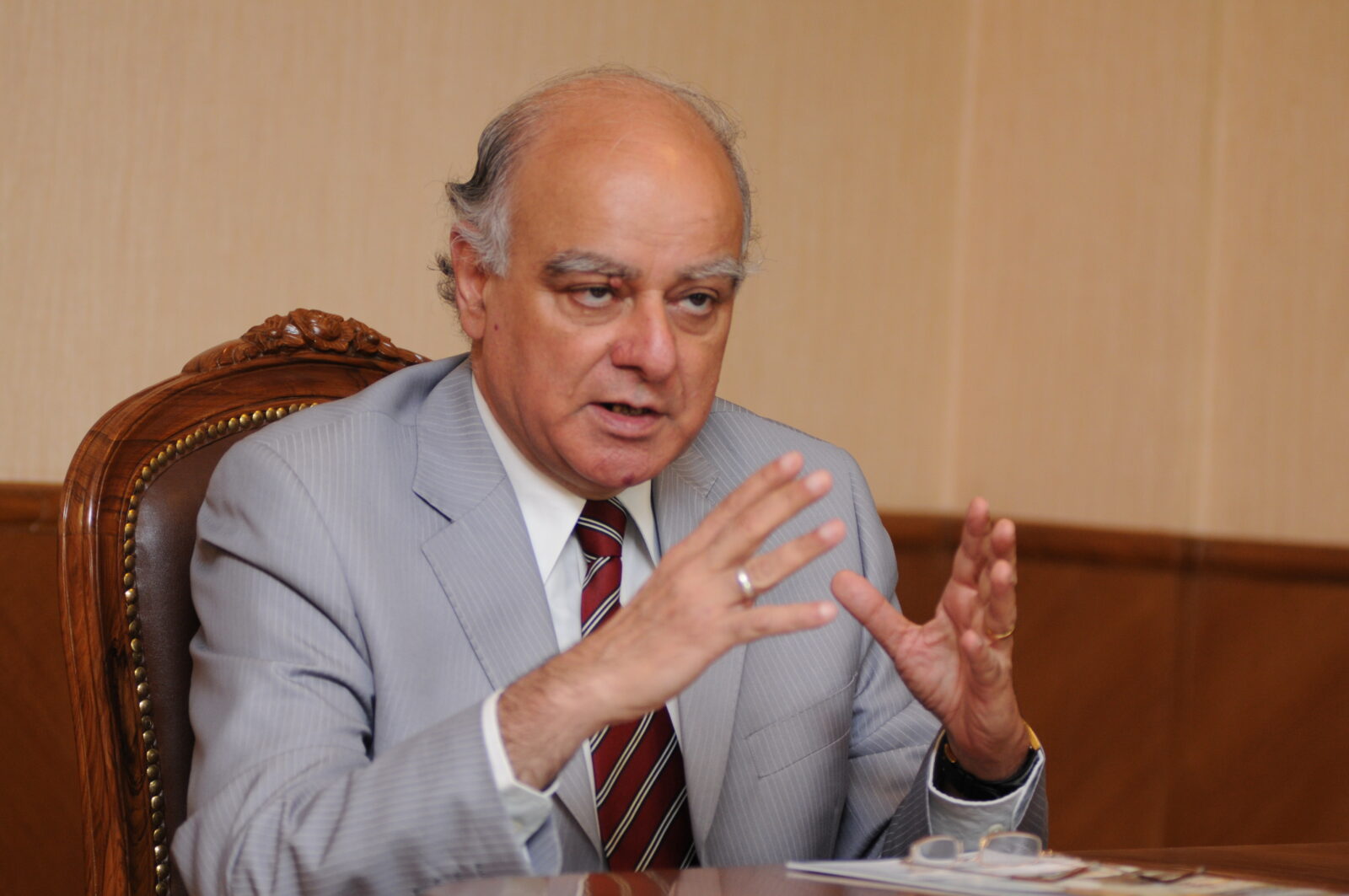
Though Anil Razdan belongs to the 1973 batch from Haryana, because his parents settled in the state, his family is originally from Delhi. His grandfather retired in 1935 as Postmaster-General of India. After doing Physics Honours at St Stephen’s College, Delhi and then LLB at Delhi University, he worked briefly under Justice BN Kirpal. He began his IAS career with the Land Revenue Management and District Administration in Chandigarh on July 1, 1977. He has worked with all of Haryana’s Lals – Devi, Bansi and Bhajan.
Reputed as a civil servant who knows his subject, wherever he may be placed, Razdan has been Director/Joint Secretary with the Department of Atomic Energy, and Joint Secretary, Ministry of Power, as well as Additional Secretary and Special Secretary, Ministry of Petroleum and Natural Gas. He has also been Financial Commissioner and Principal Secretary, Government of Haryana in the Power, Irrigation and Public Works Departments.
In 1994-95, while at the University of Oxford, he worked on “Energy and Sustainable Development: Global and Indian Perspectives”. He has been associated with negotiations for setting up 1000 MW nuclear power reactors and non-proliferation issues in the Department of Atomic Energy. In the Ministry of Power, he has tackled issues relating to energy conservation, hydro-power, transmission, rural electrification operations management, policy planning and external assistance/international cooperation. His honesty is cited as exemplary among Haryana’s civil servant fraternity.
gfiles: Everyone wants to ask the Power Secretary why there are power cuts every day, somewhere for an hour, elsewhere for five hours or 15 hours.
Anil Razdan: It is a very straightforward situation. Demand exceeds supply. The economy is growing at about 9 per cent. People can afford more electronic and electric gadgetry. Industry is expanding. Farmers want more water. Somewhere the water table is going down. So we need more power to extract that water. It is generally felt that the rate of growth of the electricity sector should be more than the rate of growth of the farm sector.
gfiles: What is the rate of growth now?
AR: Generation has been increasing at about 6-7 per cent which is not satisfactory for the need of the situation. The country needed to add much more capacity in the last two or three Plans than it did. For example, in the last Five-Year Plan.
gfiles: You mean the Tenth Plan?
AR: In the Tenth Plan we had a modest target of about 41,000 MW capacity addition. We ended up achieving 50 per cent of this.
gfiles: How much should we be adding?
AR: About 20,000 MW every year. That will happen only if you are placing orders.
gfiles: We have planned to add 78,000 MW in the Eleventh Plan. You are saying it should be 1,00,000 MW.
AR: I am looking at anywhere close to 80,000 MW for the time being. But we need to develop a tempo by which we should be placing orders for about 20-25,000 MW new generation capacity every year. Once this becomes a cycle, we can assume that four years from now we will be adding that much capacity every year.
‘We have got 9,263 MW added in the first year of the Eleventh Plan. And about 60,000 MW is already under construction. In the capital power sector, we had orders placed for another 5-6,000 MW’
gfiles: To achieve this, how much money is required?
AR: For generation, you require approximately 4 to 5 crore mega watts. And a corresponding figure is required for transmission and distribution. The investment is normally in the ratio of 2:1:1. If two rupees are invested for generation, then one rupee for transmission and one rupee for distribution. Share generation capacity addition of 80,000 MW will cost around Rs 320,000 crore. Hydro projects tend to cost more for installation, but they are cheaper to run.
gfiles: We require this amount for generation.
AR: Yes. And an equal amount for transmission and distribution.
gfiles: That comes to….
AR: Close to Rs 7,00,000 crore, for one Five-Year Plan. Otherwise generation will be there but we will not be able to transmit that power or evacuate that power , as we say, and ultimately distribute it to the consumer reliably.
gfiles: But do we have this money?
AR: We have to find it. That is why we are creating a conducive environment for generation, transmission and distribution. In the generation sector, we are happy with the enthusiasm that has been shown in the first year of the Eleventh Five-Year Plan.
gfiles: By whom?
AR: By investors. We have got 9,263 MW added in the first year. And about 60,000 MW is already under construction. In addition, in the capital power sector, we had orders placed for another 5-6,000 MW. About 11,000 MW is under construction there. I am told we placed orders for close to 30,000 MW in capacity addition in the first year of the Plan. This is a result of a concerted drive by us, talking to all the states to encourage investors.
gfiles: But you have a plan to provide power for all by 2012.Will you achieve it?
AR: We are attempting to do it with a very vigorous rural electrification programme. We want access to electricity for everybody. The government is satisfied 28 crores in the first phase of the Rajiv Gandhi Grameen Vidyutikaran Yojna during the Eleventh Plan. Our concerted effort is to try and ensure that this happens by 2009. And that will require a lot of mobilization, because you need contractors, materials in adequate quantities. But this opportunity of about 80,000 MW capacity addition in five years spread over two plans (the Eleventh and Twelfth Plans), is a unique and unprecedented opportunity – for capacity-building and also for investment in the country.
gfiles: If one reads the documents of Central Electricity Authority (CEA), it is a phenomenal opportunity. No country can possibly get this opportunity that we are getting through the power sector.
AR: That’s what I keep telling people. We have joined the working stream. People who are technically qualified were going abroad for employment opportunities. So many bright IIT people, engineers had to migrate abroad for jobs. This is a huge opportunity for a manufacturing base in India, for employment in the power sector, in construction and operation.
gfiles: You are going to spend Rs 7,00,000 crore. You need steel, cement, other raw materials. Can you face this challenge and at what price?
AR: First, we begin with generating equipment. We need to expand power-generating capacity immediately. BHCL has some expansion plans. There are at least two or three major equipment manufacturers in the country. We are looking at adding about 20,000 MW in a year which means that equipment manufactures should also be of that capacity otherwise we have to import. There is a lot of scope for expansion today. In manufacturing, people are placing orders for equipment from foreign suppliers also. But we would like to pursue a policy for at least the high-end technologies in years to come. The equipment manufacturing base will be set up in India. Bharat Heavy Electricals Ltd (BHEL) has tied up with Siemens, Larsen & Toubro with Mitsubishi. There are other equipment manufacturers also like Toshiba, Ansaldo. I am told they are keen. But I would prefer they set up their manufacturing base in India and through progressive indigenous manufacturers we can supply equipment to our industry.
gfiles: Are we competent to build the capacity you are talking about? Cement, steel, transport will be required?
AR: It will be possible. Look at the way the construction industry is picking up in the country. It too requires steel and cement for highways, flyovers, Metro construction. It is a boom period for the economy. When there is a demand for a product, there will also be a consequent opportunity for that particular industry to set up shop and there will be an investment opportunity which gives you a market. It is a unique situation. When some countries are facing the threat of slowdown of the economy or recession, we should not let this opportunity pass. We have this very clear possibility for cascading growth in various sectors of the economy. You mentioned steel, cement. I would mention equipment manufacture too.
‘This is a huge opportunity for a manufac
turing base in India, for employment in the
power sector, in construction and operation’
gfiles: You need cables, transformers, small transformers, switchers, gears, so many other things. You don’t have them. If you see the Plan, they have identified the areas where we have a shortfall.
AR: We got a study done last year and we had a series of meetings with industry, various chambers of commerce. I have been going around the country also, addressing them, saying these are our needs, get into the act for equipment manufacture for this industry. You need transformers, you need conductors, you need insulators, you need structural steel, you need balance of plant equipment which is not so sophisticated technology. Like demineralized water. You need cooling towers.
gfiles: We don’t have cooling towers?
AR: We need more players to install the signal, to install the requirement for the power sector which is a unique opportunity. So we have been talking to industry, we have had meetings in regional centres also like Chennai, Kolkata, Chandigarh, Delhi. We intend to go soon to Mumbai and possibly Nagpur and Ranchi so that we are able to galvanize entrepreneurs into meeting this demand. My appeal to the chambers of commerce and industry is, don’t confine your search to large and medium. It is a huge opportunity for small and medium. There can be feeders. A large number of people who can certify that certain manufacturers need their requirements, their specifications. So we can have that ancillary kind of industry development with the major manufacturer. BHEL can play a very important role, develop balance of plant equipment manufacturers. BHEL and National Thermal Power Corporation (NTPC) have recently entered into a joint venture. We are looking at forging castings for equipment , a commodity which is in very short supply, orders are booked in advance. Here is an opportunity for Indian industry to come and set up the best forging and casting facilities. NTPC has entered into a joint venture with Bharat Forge, one of the leading companies in this. So we are looking at upstream and downstream opportunities. Simultaneously, for manpower development, we had a meeting last year.…
‘We have decided that every project devel
oper should adopt or build a new Industrial
Training Institute (ITI) in his vicinity’
gfiles: You need around 1,63,000 trained people?
AR: We need trained people and we have decided that every project developer should adopt or built a new Industrial Training Institute (ITI) in his vicinity. Or, if there is already an upgraded ITI, establish immediate liaison with them, inform them of his needs for manpower. This should be done simultaneously as he is beginning to build a project or even before that. And it would be advisable that the first recruitment be from that ITI. Whoever can be picked up. People who are trained specifically for the trades that the particular project is looking for in the construction phase and also in operation management subsequently. These ITIs can be a huge opportunity for our youth in the country to find semi-skilled jobs or lower-end technology jobs. If we can get them from the areas where the projects are located, this should provide a symbiotic relationship between the people of that area and the plant. Till now, we have mostly been looking at unskilled labour from project areas. We’ve got to graduate from that. We have to look at skilled personnel, get the local people the skills and opportunity to join the mainstream foremployment. When these employment opportunities are in those remote areas, it is all the more desirable that people from those areas are educated, trained and brought up for employment in those very provinces.
gfiles: State Electricity Boards are basically managed by private players or the government. How do you deal with them while managing the electricity?
AR: Electricity is a concurrent subject. Supply of electricity is a state subject, primarily. In fact, before the central generating stations started coming up in the 1970s, power was being generated by the states through private or public companies and being distributed locally. While we would continue to give as much support as we can from the central sector companies, we would certainly look forward to more active involvement and engagement by the states in generation, transmission and distribution. First of all, accelerated capacity addition. Second, reduction of the AT&C losses as we call them. Third, rural electrification. Fourth, getting down to open access for power to move across the national grid in the regions. Fifth, energy efficiency boom in the country. We engaged all the Chief Secretaries in the states in a discussion last year. Then we had a conference of Chief Ministers chaired by the Prime Minister, at which these issues were highlighted and a concerted effort was to be made to try and place as many orders as we could – virtually all – by the end of last year or March this year. The working group on power for the Eleventh Five-Year Plan had suggested that we could place the orders till September 2008. But we were making efforts to complete the orders earlier.
We also decided at the conference that we would try to reduce the AT&C losses to 15 per cent. For that, we are bringing out a revised Accelerated Power Development and Reform (APDRT) programme, to be conducted in two phases. In Phase I, IT-enabled apparatus will be placed which will keep track of electricity being given out and consumed. You have to improve customer services. You have to improve commercial operations and pinpoint accountability: who is overdrawing, who is diverting so that there is theft control and there is GIS mapping of consumers. And you can also see which system is operating properly, where is the breakdown and what is the problem. Now this is a compulsory part of the programme and we may be willing to give the entire cost provided there is third party verification that the system has been installed. Then there is the component of improving the hardware, improving transformation capacity and providing for division of feeders in rural areas with heavy load, putting up separate feeders, and the high voltage distribution scheme for rural areas. Some states have done it already. They have separated agricultural load from domestic load in rural areas. And they are giving 24-hour power supply in some areas which are disciplined.
And there also we will try and watch for five years. If you have brought down your losses to 15 per cent, then 50 per cent of the loan could be converted to grant. If we attain this objective of 15 per cent AT&C losses, it will improve the commercial viability of the distribution system. There have been some good experiments in appointing franchisees also. It could begin with collection-based franchise. So this again will open up employment opportunities for local people. And we have got reports that some very well qualified people have picked up these assignments on rural feeders.
gfiles: What about quality of power?
AR: Quality of power has certainly got to be improved and that is why we are saying that the distribution segment can be improved. For any improvement in recovery also, you have to improve the quality of power. Some states have separated agriculture and domestic loads. In some cases, where distribution companies have improved performance, they have appointed their franchisees and given them some years of lease to run their system. They need some technical improvement investments. They have reduced the technical losses. They received the recoveries and reduced the losses.
gfiles: What is the per capita consumption in India?
AR: About 650 units a year. We want to raise this to 1,000 units.
gfiles: How are you going to manage rural areas?
AR: For rural areas we have the Rajiv Gandhi Grameen Vidyutikaran Yojna. We have a large number of rural consumers who need to have access to quality supply. Ninety per cent of this expenditure is coming from the Central government and 10 per cent from the local government.
gfiles: That is rural electrification. I am talking about the huge expansion you are planning. How much can you manage? How much can you give the private parties?
AR: The state agencies will also be engaged in generation and transmission. We are also opening the transmission sector to private entrepreneurs. They had successful joint ventures in the past. Tala hydro-electric power plant in Bhutan saw a joint venture between Tata and the power grid. It has 1000 MW stations and the transmission system extends all the way to the northern region in the country. Similarly, there were other joint ventures between the power grid and private parties. We also gave out some lines for private transmission on a bidding space. We are identifying more lines. Gradually, we are introducing private players also.
gfiles: The percentage question. Like, we will produce 60 per cent in the public sector and 40 per cent in the private sector, with private participation. Is there any such thinking?
AR: It varies from state to state. The level of entrepreneurship will vary from state to state. It is not possible to lay down a standard for the entire country. For example, the enthusiasm for setting up of merchant power stations in the coastal region of the country where you have the possibility of importing coal and generating power, is very good. On the other hand, in remote areas you will not find somebody willing to set up a power station unless there is a coal linkage. There is enthusiasm for pithead stations also from the private sector but large demand for coal linkages. We are giving linkages to every entrepreneur coming forth with land and water tie-up, with a reasonable degree of preparedness and financially sound enough to place orders for equipment. With the help of Coal India we are trying to tie up coal linkages wherever possible. Our effort is to involve whichever sector.
gfiles: There is no demarcation, no limit?
AR: There is no demarcation, no set limits. The enthusiasm of the private sector in hydro generation, for example, has been good in some states.
gfiles: What kind of equilibrium will there be between hydro, thermal and nuclear power generation? Is there any percentage fixed for power generation in the country?
AR: We did a study some years ago with the CEA on the mix we need. After seeing enormous resources, we need 40 per cent hydro in the country for ideal operations so that you have good peaking power, cleaner energy. We have done a study in the hydro sector. We have done a study on 15,000 MW plants in 2003. We found that these hydro generation plants are possible.
gfiles: How much is the hydro generation now?
AR: About 25 per cent of the total generation. But keep in mind the time factor that is involved in the construction of hydro projects, environment clearances, forest clearances, making approach roads to the sites which are in pretty remote areas. So thermal projects, particularly coal, will be coming on faster.
gfiles: But what will be the percentage?
AR: In this Plan, thermal power will easily be more than two-thirds of the capacity. Thermal can be divided into the following categories, coal, gas, nuclear. Nuclear is about 3 per cent of our capacity. Gas is about 10 per cent. The rest is coal. We wish we had more gas available. Projects could come up faster. You need less construction time. But gas is not easily available and where it is, prices have escalated. So we are not encouraging gas-based capacity addition till they have a fuel tie-up. Some gas-based plants are ideal and some were capable of generating up to 90 per cent PLF but are unable to for want of supplies. We are looking forward to gas supply increase in India. When that happens, I think about 14,000 MW is waiting to be installed in the country. With respect to the nuclear sector, the Nuclear Power Corporation of India handled it with the Department of Atomic Energy. We would certainly like more addition of nuclear power in the country. There are no carbon emissions.
gfiles: But after the 123 deal?
AR: Well, that’s for the Department of Atomic Energy to answer. But we welcome a substantial step-up in nuclear capacity.
gfiles: What about the coal percentage?
AR: That remains at 54-55 per cent.
gfiles: But we don’t have quality coal. We are importing….
AR: Indian coal is low in contaminants in the form of sulphur. Imported coal has sulphur. We are lucky that we don’t have sulphur in our coal but the ash content is high, between 30-40 per cent. So we need a lot of transportation of ash. We are looking at ash utilization. Most thermal power generating companies are today looking for tie-ups with cement manufacturers to utilize fly ash, a byproduct of generation, and some companies have reported great success.
gfiles: Do we have any plans for cooperation with neighbouring countries. Do you have any tie-ups for peak hours, non-peak hours for importing and transmitting power?
AR: There is active cooperation with Bhutan. We are cooperating in construction of more hydro-electric projects there. In Nepal also, one of our companies has been allotted a project. We will be very happy to cooperate with Nepal also in the development of hydro-electric potential. Indian companies, both public and private sector, are showing great enthusiasm and taking up projects.
gfiles: Another universal question is the cost of electricity.
AR: We must certainly supply electricity at affordable cost to the people. Electricity tariff has not gone up in proportion to some other costs in the country.
‘You have to provide about 14 per cent return on equity for the investment otherwise investment will not be forthcoming. I think the costliest power is no power’
gfiles: Where do we stand as far as world standards go?
AR: The cost of electricity depends on when your stations were installed and how much you have paid off it already, particularly with regard to hydro power stations. For example, electricity is obtained from the Bhakra Beas Management Board at 12 paise a unit. If you want to set up a station today, it will cost anywhere between Rs 2.50 to Rs 4 a unit probably for power but then there is a labialized tariff and we look at that labialized figure to ascertain how much it is going to cost over a period of time. We are providing power at the most affordable rate, that is why we have introduced a concept of comparative bidding. The most successful example of tariff-based bidding for power is the ultra-mega power where tariffs as low as 20 paise have been obtained for a 4,000 MW plant.
gfiles: You are talking about the generation point. What about the distribution point?
AR: Distribution point begins with generation. If the power that is generated is expensive, how can it be cheaper at the distribution end? You have to contain AT&C losses. You have to provide about 14 per cent return on equity for the investment otherwise investment will not be forthcoming. I think the costliest power is no power. When there is no power, that is the costliest proposition.
gfiles: What about free power?
AR: We have a view on that. It is essentially a policy of the state which is there. Power that is consumed should be paid for. Only then will you have full value for it. But there is a segment of the economy which the government feels needs to be given concessions. Our view on that is that wherever any kind of subsidy is to be given in tariff, it must be paid through budgetary mechanism to the power distribution company and not loaded on the distributor. So wherever state governments decide to provide electricity at a subsidized cost to a consumer, it must be paid for by the state to the power distribution companies.
gfiles: What about the concept of “free”?
AR: We want to make India a low energy intensity economy. Industry or consumer must use electricity in the most efficient manner. It begins with lighting, air conditioning, water pumps, and industrial machinery. If you are a low energy intensity economy, you are consuming less power for doing the same amount of work. So you have to move to CFLs or even LEDs (Light emitting divert) for lighting. We are taking steps to see how we can use the carbon credit system to bring down the cost of CFLs and make them entirely affordable for our consumers. We are introducing the labeling programme for high consumption items like refrigerators, air conditioners, water pumps, even transformers, so that consumption is minimized.
gfiles: Are you going to bring in some regulation for that?
AR: We are drawing up standards and specifications and we will introduce a star system of rating for these products from one star to five stars, with five stars for the most efficient.
gfiles: Do you have a uniform pricing system or it varies from state to state?
AR: Across the country you have an MRP for the product but the consumer should have some kind of guidance that shows that this product will lower the electricity bill.