










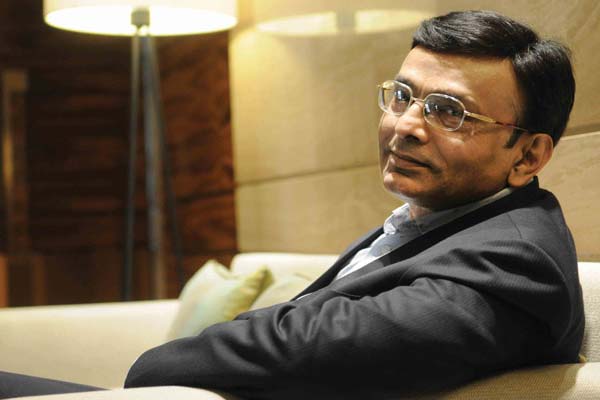









It was Pluto who said that refusing to participate in politics means you are willing to be governed by your inferiors. I had always believed that, to reform society, one must participate in politics. But destiny played its own role. In the region I come from, the youth dreamt of becoming Collectors. Three types of employment opportunities were available: IAS, military and banking. I too veered round to wanting to become a Collector.
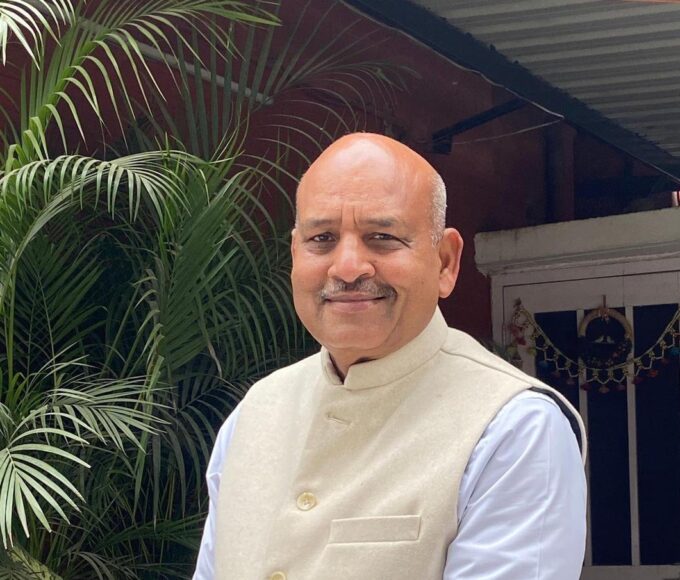
I am from Munaganj village in Oraiya district, Uttar Pradesh. Ours was a good middle class farmer family. One of my six brothers took sanyas at the age of 16 after spending much time with a number of sufi saints. I studied in a junior high school 10 km from my village, walking 20 km daily. It was really a pity that the system allowed the school to be run from a portion of a zamindar’s dwelling that housed pigs. The school’s land was encroached upon by the zamindar and it was difficult to study there. In the rainy season, I had to swim across the Sengar river to get to school. Amidst all these hardships, I topped in the district by scoring over 90 per cent marks. Then I shifted to the government Intermediate school, living in a rented room and cooking my meals. Because of my outstanding performance in studies, teachers loved me and had great expectations of me.
A major change came into my life after I joined Allahabad University. I was interested in doing engineering and had deposited fees in Delhi Polytechnic Institute (now Delhi College of Engineering). But my friends kept reminding me of my goal of becoming a Collector, not an engineer. So I joined Allahabad University and studied English literature, history and philosophy. Allahabad was an academic hub. Students from Japan, Nepal and the Northeast lived in the hostels. I studied socialist and communist literature and developed a firm belief in equal opportunities and rights for all citizens. I participated regularly in debates and literary activities. After MA, I took admission into the law course. When I was in the final year, in 1965, I appeared for the IAS exam and cleared it in the first attempt. Before that, I had also qualified in the bank Probationary Officers (PO) examination and the Uttar Pradesh Provincial Services exam.
One fine morning, I sent a telegram to my father asking him to send me Rs 3,000. I called the police station of my village and spoke to my father. He wanted to know why I needed so much money suddenly. I explained that I needed to have a suit tailored for the PO and IAS interviews.
After training in Mussoorie, my first posting came as a challenge in one of the most sensitive districts, Deoband, as Sub-Divisional Magistrate. Holi was nearing and the town was tense. I handled the situation and the festival passed off peacefully. I also served as District Magistrate of Badayun, Gorakhpur. During my stint in Gorakhpur, a flood struck. I managed the crisis in such a way that my Commissioner asked other District Magistrates to learn from my management of the flood.
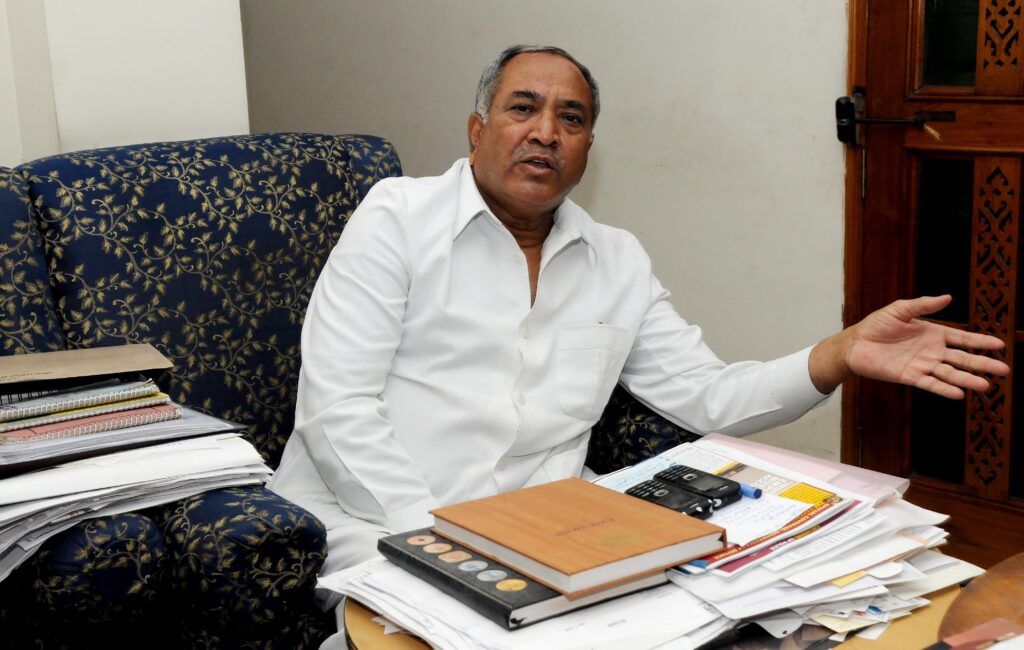
When Chaudhry Charan Singh was Chief Minister of Uttar Pradesh, I was appointed Joint Director (Industries) in western Uttar Pradesh and monitored Agra and Meerut. The government gave a lot of power to develop industries and import was allowed. When I was Deputy Secretary in the Lucknow Secretariat, 10,000 engineers were to be appointed in local self- government. I used to conduct interviews from 9 am to 2.30 pm, and then in the evening sit in the Secretariat to finish the work. My ageing parents, seeing this, asked me to resign so I could have some time to talk to them. I appreciated their feelings but my zeal to serve the poor made me work so hard.
My posting in Ghazipur as District Magistrate was a learning experience. The district was feudal and the land owners considered it a sin to plough fields themselves. I persuaded Arvind Mani Tripathy, younger brother of my colleague, Sushil Chandra Tripathy, to organize a big village festival and plough a field himself. He did it and gradually others followed suit.
Sexual exploitation and burning of Scheduled Caste colonies was the bane of the district. Sometimes, Scheduled Caste people retaliated with attacks on the upper castes. When HN Bahuguna was Chief Minister, he asked me what should be done. I advised him to set up a midwives’ training school and make it mandatory to pay minimum wages of Rs 6.25 to workers. This was done for the first time in UP and people said, “Devi Dayal to naxal ho gaya hai.”
Meanwhile, I got married to a Kayastha girl though I wanted to marry within my backward community. I served as Collector in Muzaffarnagar, Jhansi and Varanasi districts. I also served as an Administrator, Municipal Corporation, Varanasi, where I got the first electric crematorium installed despite opposition from the strong dom lobby. Initially, being a backward caste officer, I was opposed by this lobby but my dedication to work endeared me to them later and they welcomed me in the presence of CPN Singh, then Governor. Between1984-86, I served as Commissioner in Garhwal and launched the family welfare programme. The state government awarded me a colour TV set in recognition of my work and I still have it. I also served the UP government as Secretary, General Administrative Department (GAD). During my tenure as Secretary, Excise, the department collected the highest revenue.
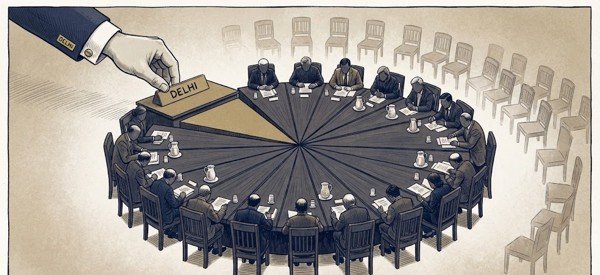
Delhi is a city of political power. After waiting for almost 13 years, I was posted as Joint Secretary, Marketing in the petroleum ministry. During those 13 years, my name appeared at the top of the panel but I was never selected. Another surprise was that I worked in the same room and at the same table for seven years even as Additional Secretary, Ministry of Petroleum.
It was due to my initiative that the campaign for gas to villages was launched. I would tell the gas companies that our priority should be to reach out to the villages. Happily, political leadership appreciated and supported my initiative. Then I shifted as Secretary, Coordination in the Cabinet Secretariat and later was Secretary, Banking.
The banking sector is still too security-conscious and keeps insisting on collateral security. Small farmers are still not favoured by banks. Artisans are totally neglected. I used to tell our banking officials to meet customers every day without appointments and listen to their grievances. We have Rs 2 lakh crore worth of non-performing assets (NPA) belonging to industrial houses and rich people. The small borrowers are denied loans as they don’t know the trick of the trade.
Out of the Chief Ministers I served, HN Bahuguna, Banarsi Das, Ram Naresh Yadav and Kalyan Singh, I consider Bahuguna the best. Bahuguna said that if the people of a district were coming to see him, it meant the Collector was not performing well. He created a corruption-free atmosphere. He preferred public interaction and was accessible most of the time. Bahuguna was also very considerate to his officers. He listened to them and respected their views but lost no time in taking stern action against inefficient officers. Another Chief Minister I still admire is Kalyan Singh. He was straightforward and had a clear vision about things to be done in the state
I am happy that I believed in equality of all and respected every human being. I am happy I served the country in a humble and hardworking way. But I believe “though much is pass much still avoids”.