













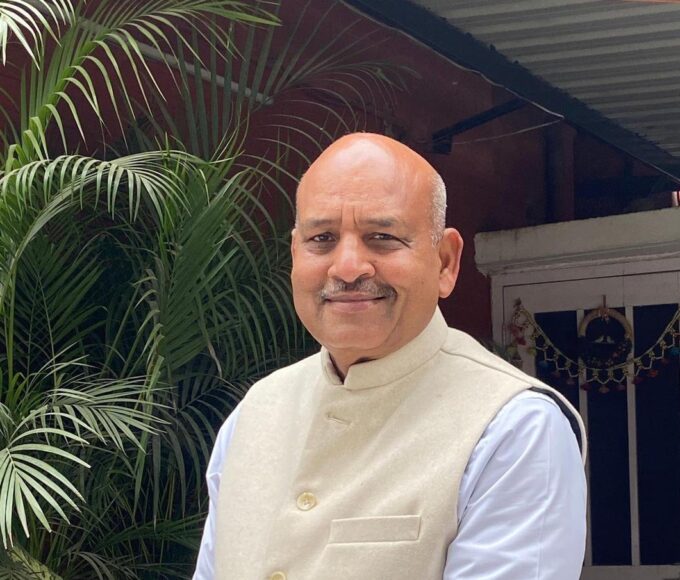











Partha S Bhattacharyya has been Chairman of Coal India Limited (CIL) since October 2006. He introduced the Integrity Pact in high-value procurements and also greater thrust on underground mining and land reclamation. Earlier, he was Chairman-cum-Managing Director of Bharat Coking Coal Ltd (BCCL). Under him, it made a profit of Rs 203 crores in 2005-06 for the first time. He is credited with introduction of e-marketing of coal in BCCL which was later adopted by other coal companies. He was given the Chief Executive of the Year Award for 2005 by the Indian Institute of Materials Management for his achievements in BCCL.
He has been the brain behind CIL’s capital restructuring exercise, its negotiations with the World Bank and Japanese Bank, the introduction of group gratuity scheme in Western Coalfields Ltd, the system of management of currency and interest rate risks by use of advanced derivative products in CIL. A post-graduate in physics from Jadavpur University, Kolkata, he has been conferred a fellowship by the World Academy of Productivity Science.
gfiles: How does Coal India stand in India’s energy sector?
Partha S Bhattacharyya: The world over, coal accounts for over 27 per cent of the total primary energy supplies and consumption. In India, this is 55 per cent, which highlights the importance of this sector. As against 39 per cent for oil and gas together. As per the Integrated Energy Policy, the dominance of coal will continue and might drop to about 51 per cent in 25 years.
Coal India holds a market share of over 82 per cent. The captive block allottees will develop their blocks and a significant amount of coal production is expected from them: more than 100 million tonnes by the terminal year of the Eleventh Plan and over 330 million tonnes by the terminal year of the Twelfth Plan.
gfiles: Are you going to meet the target of the Eleventh Plan?
PSB: In this Plan, the target for coal production is 680 million tonnes. The projected consumption being 731 million tonnes, the gap of 51 million will be bridged by imports. Coal India has a target of 520 million tonnes which is 159 million tonnes more than the 361 million tonnes achieved in the terminal year of the Tenth Plan. It is 45 per cent more than what we achieved in the Ninth and Tenth Plan periods taken together.
‘Underground min
ing is 14 per cent, it
should be 80 per
cent. In 25 years,
open cast reserve
will not be available
and we will lack
technology to mine
below 300 metres
gfiles: What are the obstacles?
PSB: Since you have to increase coal production by this extent – quite unprecedented in this country – you need to develop large projects with large-sized equipment. So global procurement of a different kind of equipment is needed. This means maintenance repairs contracts for a long-term period, with its attendant complications. So we have to ensure the procurement takes place with least delays.
The action that we have taken to meet this challenge is basically for mitigating procurement delays. We are now deciding on standardization of NITs (Notice Inviting Tenders), depending a lot on pre-NIT meetings. We have developed the bid documents to avoid getting tenders into any road-block. We are making it compulsory to sign an integrity pact with the CVC’s clearance.
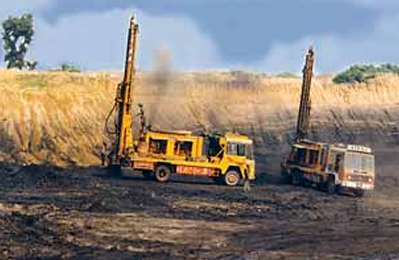
Another challenge is massive socio-environmental impact of large-scale coal production. In India, mostly tribal population inhabits the places, close to forests and dependent on them for daily needs. Once we start mining, it poses serious environmental and social problems besides snatching their sustenance. But mining is important for sustaining the country’s growth. For every large open cast project, land is degraded initially. Thereafter, equal weightage should be given for restoring and reclaiming the land. Unfortunately, despite the fact that reclamation-restoration is inbuilt in the plan, the project officer or colliery manager is judged more by his effort in achieving the production target than restoration. We are trying to rectify this. Satellite surveillance is being used to compare the situation at the beginning of coal extraction and at the end.
gfiles: In Jharia, people are living atop a coal inferno.
PSB: Jharia has a very specific problem. The population density is almost as high as an average town. People have been living in the coal belts since the beginning of the last century. Coal was mined a little unscientifically before nationalization of coal mines. Coal pillars were untouched. These pillars are in contact with the atmospheric oxygen and catch fire. The fire has spread all around. We have identified an alternative site to the north of Jharia – a non-coal bearing zone – where we can relocate people.
This plan is at an advanced stage and needs government approval. Consensus has been achieved between the governments of West Bengal, Jharkhand and the project proponents regarding the compensation package for the people being moved. A similar problem exists in Raniganj. We have a Raniganj Action Plan too.
It involves rehabilitation of 400,000 people; 80,000 houses will have to be built. Once this is done, we can go in for fire-fighting. In many isolated pockets, we have taken away the burning coal. Here, it can be done only after people have moved out from the danger area.
gfiles: What is another obstacle?
PSB: Land acquisition is another very sensitive issue. Land is raw material for us. The aggregate land acquisition is about 40,000 acres per year. We must give the people a quality of life change, particularly for tribals who have to be moved en masse. Their identity and culture must be preserved but their living conditions must also improve. We have done it in Ishwar Marandi Nagar village in Godda district, under the Rajmahal project.
gfiles: It is said that underground mining is being neglected and there is no equilibrium between underground mining and open cast mining.
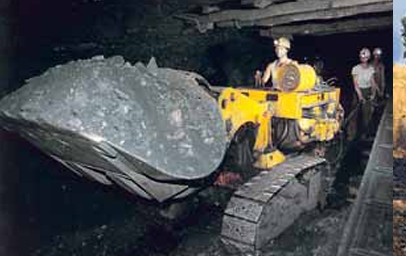
PSB: Our focus on underground mining has been lacking. It is 14 per cent, it should be 80 per cent. It used to be about 65 million tonnes at the time of nationalization, it has decreased to 43 million tonnes. After we reviewed the depth-wise reserve situation, we found further continuation of this policy will make the whole situation unsustainable and coal reserves will not be available for long. In 25 or 30 years, open cast reserve will not be available and we will lack technology to mine below 300 metres.
gfiles: Open cast mining produces high ash content coal. How are you going to check the quality?
PSB: It is not a question of quality balancing but of having reserves longer. We have to infuse technology now and develop underground mines not done so far. Our programme is to increase coal production from underground mining from 43 to 75 million tonnes by the end of the Eleventh Plan. Actually, the action plan documents talk about 54 million but we are adding to it another 21 million to make it 75. We are also introducing a new kind of technology called highwall mining.
gfiles: You have funds to implement the Special Plan for the Eleventh Plan?
PSB: The Eleventh Plan will require about Rs 18,000 crore, which comes to Rs 3,600 crore per year. Today, we are generating resources to the tune of about Rs 8-9,000 crore per year. So resources are not a constraint. We are a zero debt company and we have at least Rs 20,000 crore waiting to be invested.
‘We are in a very stable and firm position.
This year we should be crossing the
Rs 10,000-crore profit mark’
gfiles: You are earning Rs 10,000 crore but you have not been given the Navratna status.
PSB: We did not know we have to apply to get it. We thought it is automatically accorded. After we applied in, we were told that first we have to become a mini Navratna. If we knew, we would have applied for mini Ratna five or six years ago. After this, becoming Navratna would have been automatic. We applied in 2006 end, we were conferred mini Ratna in 2007.
The government recognizes that Coal India needs to be empowered to meet the growing requirement of coal. And we may have to meet a part of the demand by working overseas. Coal Videsh is one of the initiatives we have taken now. We would like to mine abroad and bring the coal back. We have asked for empowerment to take properties abroad. Once Navratna is accorded, part of the empowerment is automatically available.
gfiles: It is alleged Coal India is not producing quality coal.
PSB: We are fully alive to the allegation. We sell coal on mine basis from open cast mining. After removing overburden, we take out coal and sell it. This process is bereft of beneficiation of coal, resulting in quality problem. Indian coal is high in ash content. We cannot control quality much by washing. Also, while selling coal on mine basis, a small mixture of overburden into the coal cannot be ruled out as it is mechanical. Even if the overburden gets mixed slightly, there will be inconsistency or ash between rack to rack supplying coal from a particular mine to a particular customer.
gfiles: But the customer is paying for quality coal.
PSB: Correct. There are two issues: pricing of coal and the way it is sold. Coal is divided into seven grades, each having a particular band of useful heat value. The band width of about 800 to 1300 kilo coal calories is transformed into an equivalent of 6 per cent ash of about 10 per cent ash. This means that, when the ash percentage varies from 6 per cent, plus or minus 3 per cent, even then the grade doesn’t change. It is not a right pricing system.
gfiles: Are you going to correct it?
PSB: Yes. The proposal has been sent and the ministry is supporting it. The bands have to become narrower. There will be a change in the quality parameters.
gfiles: What about coal washing?
PSB:- We have capacity for washing 20 per cent of coal. We are washing about 15 per cent. One reason is that the consumer and the producer of coal have argued all these years as to who should bear the cost of washing. The stand we have taken in recent times is that if I have to supply coal of a particular parameter I cannot do it unless I wash it. If I am stating some specification I should be able to supply materials of that parameter. So
I must bear the cost of washing. After washing, the heat value increases. For this, the consumer should not mind paying more. From that payment, I will bear the cost of washing.
‘We introduced e-auction. Coal is available on the site and anybody can bid. That has put a stop to the coal mafia selling coal at higher prices’
gfiles: You face a problem in setting up coal washeries?
PSB: Resources is not a constraint. We have decided to build washeries on a BOM (Build, Operate, Maintain) model for a period of 10 years initially, to be renewed for five years. We will give the money to set up the washeries. We are trying to get state-of-the-art washeries where water consumption is minimum. The rejects will be used to generate secondary power, and the final rejects will be used for land filling. This will be a move towards a clean coal technology.
gfiles: What is Coal India’s position at present?
PSB: We are in a very stable and firm position. This year we should be crossing the Rs 10,000-crore profit mark. We are growing at close to 9 per cent this year. Due to inflation and other things, the annualized increase in coal price has been 3.7 per cent roughly. Coal price increase has been less than inflation.
gfiles: People say that Coal India’s overhead expenses are high.
PSB: No. We are a company with 427,000 people, including 16,000 officers – all engaged in a very difficult task. They expect to be paid at the best possible rates in the public sector. Our cost of production is the lowest in the world. My average cost of production is about Rs 650 per tonne or about $16. Show me one coal mine where coal is produced at less than $16 per tonne. In man-machine combination productivity, we are one of the best. You have to attain a very high level of equipment productivity if your wage levels are high. If I am paying like in Australia, where they pay about $15-20,000 in a month, then I have to operate high levels of equipment productivity. Equipment productivity and man productivity have to have a balance in order to optimize in reduced costs. If I achieve the objective of operating at the lowest cost, I think I have answered every criticism.
gfiles: Is manpower retention a problem?
PSB: Yes. Globally, mining has become attractive. We have already started losing mine engineers and geologists. Once the pay panel report is implemented, I think an exodus will not happen. Middle and senior level salaries are going to jump. We are seriously looking at human resource issues, upgradation and training. Opportunities are increasing in Coal India also. We are having many joint ventures.
gfiles: What about lower levels?
PSB: Wage negotiation is on. We have given interim relief of 15 per cent of the basic pay. Right now I can’t say how much it will be.
gfiles: What are you doing about the coal mafia?
PSB: One major activity which used to be there before 2004 was getting coal at notified prices and selling it in the black market at higher prices mainly to brick manufacturers. We observed that once we issued the delivery order, it used to change hands. We were losing the premium but we could not do anything as we used to sell coal at notified prices. We introduced the system of e-auction. Coal is available on the site and anybody can bid. That has put a stop to the coal mafia selling coal at higher prices.
gfiles: But what about the mafia on the rail tracks?
PSB: These places are maintained by CISF. If DIG, CISF and the SP are efficient in that area, it can be contained. We have seen it happening. It is a local problem. It can be contained, not eliminated. This problem is acute in Jharia where people are living on coal. There is illegal mining but they are getting a pittance. This process is in-built in the system.
gfiles: But transportation is a big problem?
PSB: No. Growth in internal transport capacity has not increased. Transport from pithead to railway siding is not growing at desired rate owing to slow addition of new fleet. Most of our contracts are annual . The contractors hire trucks. We are now increasing the contracts for five years with a rider that they have to buy new trucks. They can repay the bank during that period easily. Fleet addition will take place soon.
gfiles: You deal with seven states. How do the DM, SP and DIG, CISF play a role?
PSB: I am happy with their cooperation. They can help us in a number of ways. Collectors can help us in land acquisition. Some of them really take interest and acquisition becomes faster and forest clearance is speedily obtained . SP particularly can play a big role in stopping theft of coal and illegal mining.
gfiles: How much cooperation do you get?
PSB: I would say it varies from being excellent to below desired level. We have a task force mechanism at district level. Chief Secretaries are very receptive. Generally, we brief them and get a good response.