























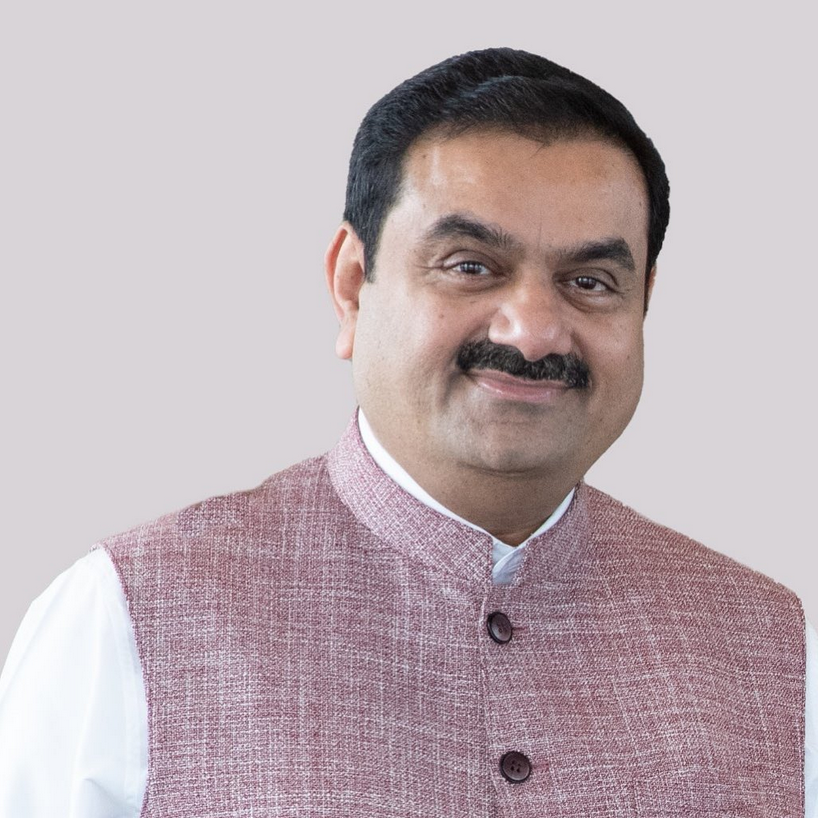
When an insolvency court recently allowed the Adani Group to take over Jaiprakash Associates, with assets in cement, real estate, and Formula 1 racetrack in Noida, there was a furore for a different reason. Media-persons, experts, and observers were shocked that the Adani Group got such viable assets for a song. In fact, as per the approved plan, it does not have to pay anything to the existing shareholders. The worthless shares will be extinguished, or terminated, and turn into irrelevant financial instruments.
Maybe it was the Adani name that led to this stunning daze, and the flabbergasted realization that the shareholders will get nothing. For, as per the law, Insolvency and Bankruptcy Code (IBC), the holders of the shares are given the last, minimal, even zero preference. The fact is that the IBC is a credit-centric law, and protects the rights, and money that belongs to the creditors such as lenders, bankers, vendors, suppliers, contractors, workers and employees, and government dues (taxes, leases, cess, etc). Shareholders stand last in the line of payments, and in almost all cases receive nothing.
Under the payment mechanism, whether the insolvent firms are liquidated, i.e., sold ‘as-is, where-is’ basis, or revived through plans that are approved by the insolvency courts, and result in change in management or owner, the order of priority is clearcut. The new owner(s) will first pay for the costs incurred during the insolvency process, when a professional manages the show till liquidation or a revival plan is approved. Second in the line are the secured financial creditors, or the bankers and lenders, who hold collateral against the various assets, and the employees and workers.

They are followed by the so-called operational creditors, or the vendors, suppliers, contractors, and government agencies (including the income tax department, and other central and state tax authorities). The last in the queue are the equity shareholders, or those who hold the shares in an insolvent firm. In this sense, the shareholders get a share of what is left on the table after the other creditors are paid. In almost every case, nothing is left. As mentioned earlier, the shares owned by individuals and institutions, even the promoters and founders, are not worth anything.
Retail (or small) investors, and institutions that buy shares in a company that is subsequently declared insolvent lose the entire investments in 99 per cent or more of the cases. They have no legal recourse or remedy, and this remains one of the most criticized aspects of the IBC framework, and law. But the law was designed to achieve this objective, i.e., ensure revival, rather than liquidation of bankrupt firms, and enable the stakeholders (creditors), as opposed to the shareholders, to get some money back.
Here is how the calculations go. In a liquidation, a bankrupt firm is sold as it is, and whatever money is recovered is distributed as per the priority mentioned above. In almost 100 per cent of the cases, there is nothing left to distribute to the shareholders, whose equity is deemed to be risk capital and, hence, neither secured nor payable. During revival plans, when new owners take over the assets, the payments to the financial and secured creditors depend on the percentage of loan amounts that the new management is willing to pay, and which is approved by the creditors.
Employees and workers get prominence in revival cases because of legal precedents, and changes in the law. Other operational creditors such as vendors, suppliers, and state agencies are paid as per the possible recoveries if a firm is liquidated, rather than revived, and based on the amount left for them in the former option. In most cases, these amounts are peanuts, or 10 per cent or less of the outstanding amounts. By the time one comes to the shareholders, the amount left is zero or Rs one.
Thus, in the revival plans, the process to deal with the shareholders, or existing shares owned by the promoters, institutions, or retail investors (for listed firms) includes one of the following four options. In the first, which is the general mode, the entire equity is reduced to zero or Rs one, and existing shares are cancelled. No money is given in lieu of the shares, even if they were listed during the bankruptcy process. Fresh shares are issued to the new owners. This was the mode used in mega revival plans for Bhushan Steel and DHFL.
In the second, the existing shares are transferred to the new owners at a total nominal price of Rs one, which implies that the shareholders get zilch, or “a fraction of a paisa per share.” This is the accepted procedure in revival plans for small and medium firms. In the third mode, the existing shares remain intact but massive quantities of shares are issued to the new owners so that the percentage of the former reduces to 0.1-1 per cent of the new equity capital. “The original shares technically survive but become economically worthless,” states an AI-linked search. The shares are delisted in case of a listed firm, which wipes out any residual value.
Finally, the secured financial creditors, like the bankers and lenders, may decide to convert most of the loans into equity. In most cases, since the outstanding debts are huge, the conversion is at high premiums. The process dilutes the holdings of the existing shareholders to near zero, and the balance equity is cancelled. But here too, the existing shareholders get nothing. This was used in Videocon Industries, and Jaypee Infratech (not Jaypee Associates).
Of course, the legal process creates weird, disruptive, and almost-unfair outcomes for the shareholders, especially in the cases of bankrupt firms that are listed on the stock exchanges. Consider the case of DHFL, where the new owner decided to purchase the existing shares from the shareholders, and reduce the equity to zero. Retail and other investors rushed in to buy the shares, as they hoped that they would be paid handsomely. They logically anticipated “windfall gains” if the new management paid a premium to buy the shares.
However, the revival plan of the new owner valued the shares at zero. A retail investor challenged the plan and argued that the new owner had neither informed nor obtained consent for it. The plea was rejected by the insolvency courts. Of course, retail investors lost huge sums of money, especially when they felt that DHFL owned assets worth more than a trillion rupees, but their shares were deemed to have zero value under the revival plan. But this is what the law is, and this is how the courts interpreted the IBC.
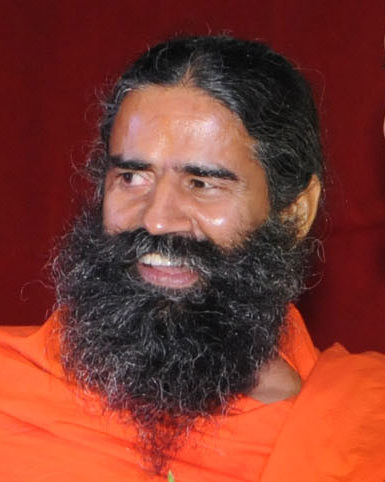
Even worse was the case of Ruchi Soya, where the new owner Patanjali Ayurved, led by Baba Ramdev and Acharya Balkrishna, allotted itself massive quantities of shares so that the stakes of the existing or pre-bankruptcy shareholders fell to one per cent or so. This was done by allotting one share for every 100 shares held by the pre-bankruptcy shareholders under the new equity structure, and nearly 99 per cent of the new capital to the new owner at Rs 7 per share (face value: Rs 2; premium: Rs 5). The shares were delisted. In January 2020, less than two months after the approval of the revival plan, they were relisted at Rs 16-17 per share.
By June 2020, the stock price skyrocketed to more than Rs 1,500 per share. One of the ostensible reasons was the small float in the market since nearly 99 per cent was with the new owner. There was a huge demand for the shares in anticipation of changing financial fortunes. A few years later, the promoters reduced their stake to just over 80 per cent, and sold off the remaining shares in the market through a public offer, when the stock price was just over Rs 800. This was to adhere to the Sebi norms of a minimum 25 per cent public shareholding that is required in the case of listed firms.
In effect, the promoters earned huge sums by selling the shares, which helped them to pay a part of the amount promised to the financial creditors under the revival plan. Under the public offer, the shareholders paid a huge premium to buy the shares. The original shareholders from the pre-bankruptcy period gained almost nothing, as their holdings were reduced to one per cent or, as mentioned earlier, they were given one share for 100 shares held. Even though the price of that share went up to Rs 1,500, the amount was less than the relisting price, which would have given them Rs 1,600-1,700 if they had held 100 shares, and sold them at Rs 16-17. At Rs 1,500, or even Rs 800, the 100 shares were worth Rs 1,50,000, or Rs 80,000.
These examples are crucial. The general impression is that a firm that is declared bankrupt or insolvent under the IBC is a dead-and-gone one with a bleak future. This is not always true. In some cases, when firms are liquidated, the value of their assets may have eroded considerably. In most of the cases, where revival plans are approved, the firms are quite healthy in financial and operational terms and are deemed bankrupt because of minor or major default in payments for some reason or the other. In these instances, the assets are worth thousands of crores of rupees, although debts are massive, and revivals are easy if the new owners pump in money and manage them efficiently. Hence, in most revivals, the shares held by the pre-bankrupt shareholders are valuable, and not worthless.
Such scenarios emanate from the IBC. The insolvency law does not envisage any clearance or interference from the shareholders. Only the financial creditors matter, who take the decisions. Thus, the permissions that are required under the Companies Act, or other non-IBC laws for changes in equity capital, extinguishment, allotment of new shares, or conversion of shares are deemed to be granted. The IBC has an overriding effect over the other laws. If the latter require shareholder approvals, they are “deemed (to be) complied with” once the insolvency court approves a revival plan.
Other sections of the insolvency law do not require a minimum payment to the shareholders. Indeed, once a revival plan is approved, it is binding on the stakeholders, which include the creditors and shareholders, whether they gave their consent or not. Although Sebi created a special framework for IBC-driven delisting, it still does not guarantee any minimum price to the shareholders. The process is simple: new owners apply to the stock exchanges, and delisting is automatic. Hence, there is no legal recourse under the IBC, Companies Act, stock market regulator, or other laws.
Legal precedents via Supreme Court orders, and other judgments have upheld the framework of the IBC. In Swiss Ribbons, the entire architecture of the IBC, including the overriding of existing non-IBC laws, and shareholders’ payment priority as the last one, was held to be constitutionally valid. The differentiation between creditors and shareholders is correct. In Essar Steel, it was held that the minority shareholders cannot challenge the approved revival plans. In Ruchi Soya, the insolvency court agreed that the existing equity capital can be written, or whittled down, under a revival plan.
Hence, there is an extremely narrow, almost non-existent, window for the minority shareholders. They can question a revival plan only if it violates the IBC, is fraudulent, bad in law, or bad in faith, and if it discriminates between similar creditors without logic or rationale. In contrast, when shareholders argued that they “got nothing” for the shares, the courts rejected the arguments because “this is exactly what the law (IBC) intends.” It does not safeguard the rights of the shareholders, only those of the creditors and new owners.

Alam Srinivas is a business journalist with almost four decades of experience and has written for the Times of India, bbc.com, India Today, Outlook, and San Jose Mercury News. He has written Storms in the Sea Wind, IPL and Inside Story, Women of Vision (Nine Business Leaders in Conversation with Alam Srinivas),Cricket Czars: Two Men Who Changed the Gentleman's Game, The Indian Consumer: One Billion Myths, One Billion Realities . He can be reached at editor@gfilesindia.com