














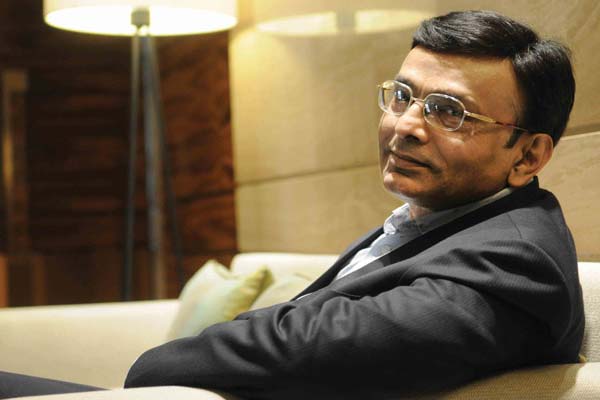



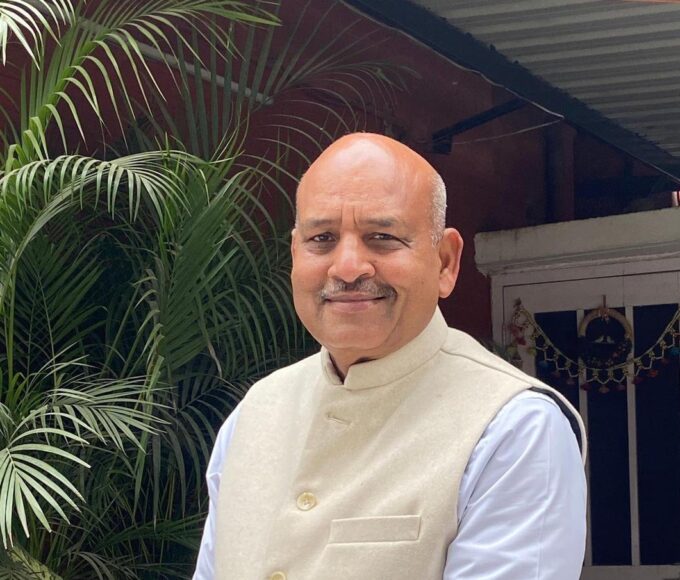









As Director General of the National Institute of Rural Development, BK Sinha is involved in a labour of love, so much so that he has requested the Ministry of Personnel not to shift him as Secretary. The 1952-born Sinha has MA (History), LLB and MPhil degrees. He joined the Indian Police Service in 1973 and switched over to the IAS in 1975, being allotted the Bihar cadre. He has served in several capacities in the state, including Deputy Commissioner, Ranchi, Secretary (Minor Irrigation), Secretary (Education), and Secretary (Public Health Engineering Department). He has also been Deputy Director General in CAPART, and worked in the Dr BR Ambedkar Institute for Social Justice besides being Joint Secretary in the Department of Fertilizers and Additional Secretary in the Ministry of Panchayati Raj.
Sinha, a practitioner of the adage of simple living and high thinking, has an abiding interest in social movements and rural development. He is currently associated with the mass movement of Swadhayaya.
gfiles: What problems does rural India face?
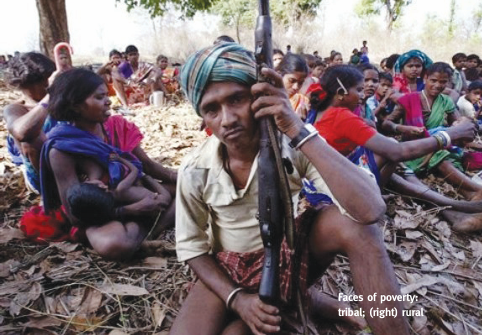
BK Sinha: One, it comprises almost 70 per cent of our population and 60 per cent of our workers are from the agriculture sector. This sector contributes 17 per cent of the Gross Domestic Product (GDP). The problem is that more people are available for work in a sector which contributes less to the GDP. Hence, there is poverty. The second problem is that agriculture is not growing fast enough. The third is that, wherever it is growing, there is no attendant expansion of employment. The fourth problem is that infrastructure in rural areas is very weak. It cannot sustain the rapid growth process.
gfiles: What do rural people have to say?
BKS: Their problem is that their institutions are not functioning. We have different systems for rural and urban areas. The 73rd Amendment was a revolutionary step. It made the panchayat a Constitutional body and made provisions for safeguarding the integrity and functioning of the panchayats. So local self-governance was brought on a par with other tiers of government. Some of the states have empowered panchayats. It has been left to the states to bestow powers on the panchayats. They have been given two functions – planning for development and social equity. They will plan and implement the plans.
gfiles: What do you mean by institutions in rural areas not functioning?
BKS: I am coming to that. The empowerment of the panchayats is at different levels in different states. In some states the panchayats are doing well. The level of satisfaction is greater. In other states, they are yet to be fully empowered. Suppose a village is 30 km from the police station. So the panchayat is the nearest. But if its members are not fully empowered, how will they work?
Second, the task of the administration has become very complex. It is not what it was at Independence. Then there weren’t so many development programmes. The administration was confined to law and order, and revenue. Our administrative structure has not altered sufficiently to take care of the aspirations of the people. It needs to alter to become cost-effective, rich in delivery and sensitive to the needs of the people.
gfiles: Is the problem unemployment or lack of infrastructure?
BKS: Both. Unemployment is the result. The problem is the low output of our various programmes. It is not that the government is not doing programmes. Successive governments have been conscious about the problems and designed programmes for rural India but the output of these programmes is not at the expected level. For instance, when the community development programmes were designed, the roofs in the block offices were Shalimar roofs. These were made of precasted strips and their life was only 15-20 years. It was expected that in this period all the necessary development would take place and there would be no more need for blocks. It has been 50-60 years. The blocks remain and the problem remains. So the output of these programmes has been very poor. Now take a programme like the Integrated Rural Development Programme. It was a poverty alleviation programme. When the Planning Commission assessed it, it was found that its success was less than 15 per cent. It is a problem of implementation and delivery.
gfiles: Delivery by whom? The machinery of the Government of India?
BKS: The Government of India does not act directly. It’s a federal structure so it acts through the states. Therefore the programme designing needs wide consultation. Yet, some of the programmes failed to deliver at the grassroots level. There can be many reasons for that. Another problem is that of the planning process. From the Second Five-Year Plan onwards, we have been talking about grassroots planning but it has never been implemented. In 2006, the Ministry of Panchayati Raj constituted the V Ramachandran Committee. It submitted a model for planning – a grassroots development model where the plans will emerge from ward level to even below village level. It has been accepted by the Planning Commission but it is yet to start because some states are yet to constitute the district planning committees which is the key institution in the planning process.
gfiles: So these are the only tools for development?
BKS: This is the broad scenario. There is another problem. We have many institutions which generate technology and some very relevant technologies have been generated. They have brought excellent results. But the problem is their operational implementation. Let us take the green revolution. It was a path-breaking technology, a seed technology. But such path-breaking technology can come once in a while. We have many intermediate technologies and if implemented they will produce results. To break the stalemate in the agriculture sector, two things have to take place. There has to be technological upgradation such as how we sow the seeds, how we treat, multiply and protect our seeds. Our seed replacement rate is hardly 10-15 per cent. The requirement is that the seed should be replaced once in three years. So we have intermediate technologies but they are not being operationalized. Absorption of technology is not taking place sufficiently.
Again, there is a problem of availability of key inputs, like fertilizers. Farmers are getting killed over fertilizer. Agriculture does not wait for anybody. It is like a child. If you cannot provide today, no matter if you provide double tomorrow. What has been missed has been missed.
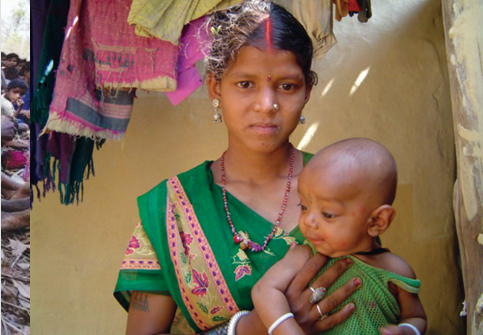
Another big problem with agriculture is prices. The input prices are rising but the product prices have not been able to keep pace. The profitability has gone down. When I was a student, there used to be a slogan about leaving a government job for agriculture. So agriculture was remunerative. Now, even someone with 30 or 40 acres of land would prefer a government job. Our price mechanism has somehow restricted the prices. People are moving towards more and more cash crops.
gfiles: How can these problems be solved with programmes?
BKS: Some of the recent programmes of the Government of India are path-breaking, such as the National Rural Employment Guarantee Scheme (NREGA). The more I look at it, I am filled with wonder. We are researching this project. There are aberrations but the programme is picking up. It is a demand-driven programme. You have a job card and you demand work and if the demand is not fulfilled then you are entitled to employment allowance. This programme has the right structure. The second thing is that this programme is being delivered through the panchayati raj system and 85 per cent of it is being implemented by panchayats.
Our study reveals that NREGA has enhanced the bargaining strength of landless labour, the poorest and most vulnerable class. Now the capacity to refuse work for lesser wages is there among them. NREGA aims to provide employment. Only when you fail to provide employment then you have to pay employment allowance. The second aim is to have productive assets. The third is to have productive assets by prevailing employment and you can reduce poverty.
gfiles: Have you done a study of the states implementing NREGA in letter and spirit?
BKS: We are doing it. I must give full marks to Andhra Pradesh. West Bengal has done well. Tripura is also using the programme. UP is lagging behind. We are doing consultations. We submit our observations to the Ministry.
gfiles: It is remarked that NREGA is a spoon-feeding programme for the poor and landless labour because the government could not create jobs through industry or agriculture.
BKS: Providing employment in the mixed economy is a market function. India has seen robust growth in the private sector but employment has not been generated at the desired level. The growth in the informal sector has been observed to be more than 4 per cent but this has been unable to absorb the surplus from the rural areas.
gfiles: What is the problem?
BKS: One is that the rural population is unskilled. Second, the rate of growth is insufficient. Third, the growth in the industrial sector is not in tune with the growth of unemployment. According to the Planning Commission, we have to provide employment to 13 crore people. Our agriculture sector is not able to absorb the new labour force which is joining the sector. This programme is a great support.
gfiles: How can rural India be developed?
BKS: By application of more resources to the basic infrastructure – roads, education, health, housing and so on. Second, greater investment in public irrigation works. Third, strengthening of implementation institutions. Fourth, better implementation.
gfiles: How much longer for total poverty eradication?
BKS: It can be done in 10-15 years provided your policies are right, your emphasis is right, your implementation process is good. Even high GDP in some sector does not mean poverty eradication will take place.
gfiles: You said agriculture contributes 17 per cent of GDP. Suppose tomorrow we have GDP of about 15 per cent, agriculture’s contribution comes down to 4 per cent. So you will have GDP but not food.
BKS: You are right. The rural household has to be strengthened. Subsidiary employment has to be provided to them. Rural households which are deficient by nature have to be provided food and shelter. NREGA has changed this situation. Their bargaining strength has gone up. Migration has declined. When the human capital in this class rises, most of the problems can be solved.
Gfiles: Has NIRD done any study on the working of NREGA. What are your findings?
BKS: Yes we are monitoring this biggest programme of the government. National Rural Employment Guarntee Scheme is an Act. So it will work till it is not repeled. The progress of NREGA is encouraging. Leakages in Orissa and Jharkhan are relatively high. Studies done by NGO found out 75% lekages where as NIRD study reported 50% lekages. In the whole scheme 90% of the people are poor. Inititally this scheme was first started in 200 districts. Now we have target upto 615 districts. As per our study we have provided employment to 3.48 crores house holds up to Decemeber 2008.
Gfiles: What is the benefit to the people who are joining NREGA?
I must tell you that official statistics indicates that distress migration has reduced drastically. However, in reality it is noticed that reduction of distress migration is possible only on account of certainty of provision of employment and magnitude of works undertaken. Second their nutrition intake has increased as Major portion of the wage income is spent on food consumption (food security). The notable feature of NREGA scheme is that wages have influenced the increase in wages in other activities.Assets creation in the villages have increased the land value of the small holders of agriculture. NREGA wage earnings have increased on an average to a tune of Rs. 2880 per House Hold. This has resulted poverty reduction in real sense. You can see it when you visit the benefeted areas.
Gfiles: How much money the government of India is spending?
BKS: We started in 2006 with Rs. 120897.3 million. Till now funds available with NREGA are Rs. 580576.9 million, Out of that we have released Rs 439536.9 million and out of that NREGA has spent Rs 399773.5 million.
Gfiles: But there are many complaints about NREGA. At some places it has become laughing stock. Implementation machinery is not working up to exectations.
BKS: Yes you are right, at some places complaints have come to our notice. One is that Lack of staff resulted in poor performance of Scheme though 4% administrative charges are allocated. Overstaff in few states like AP has resulted in high administrative charges. Second, Inadequate deployment of Junior Engineers and Technical Assistants, Accountants resulted in delay in issue of technical sanction and measurement of works which in turn caused delay in release of payments to wage seekers. Recently several States have recruited Junior Engineers, Technical Assistants, GRS and Mates, GRS are assigned more functions in their job chart but are not capable of providing quality services.
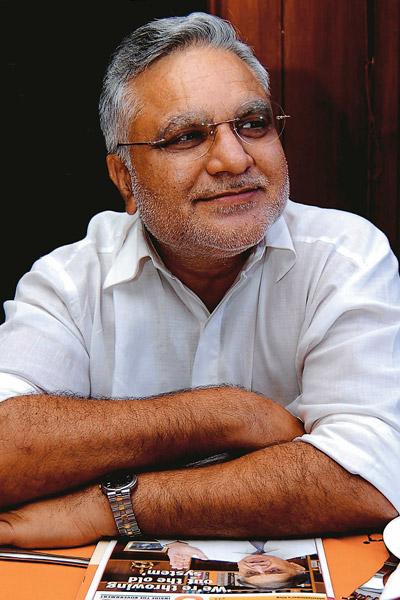
Anil Tyagi is a distinguished Indian journalist. An alumnus of the Delhi School of Economics (M.Com) and the University of Delhi (LL.B), he brings decades of rich experience to journalism. He presently serves as Editor of gfiles.