
































Friendliness instead of authoritarianism will pay dividends by hiking tax revenue
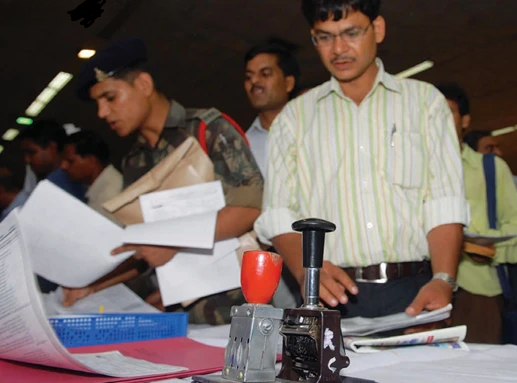
The attitude of tax authorities in India, to put it mildly, is similar to that in a police station. In contrast, in most of the advanced countries, taxpayers are not only respected but are given a number of benefits. In India, they are harassed. If the government can bring about just one single reform – altering the attitude of tax authorities from stern police to a friendly and helpful neighbour, the result would be not just relieved taxpayers but also a tremendous increase in tax revenue.
The truth is that the average taxpayer is afraid to disclose a hike in his income even if it is perfectly above board for the simple reason that it is bound to rouse suspicion in the mind of the assessing officer. Hence, it is quite likely that an individual will prefer not to disclose any massive increase in his income. Another factor is that the tax department is believed to be amongst the most corrupt departments of the country.
Though the automation of functions such as filing of returns and refunds has had a considerable impact, a great deal remains to be done. Scrutiny should also be automated so that the taxpayer is not required to go to the Income Tax Department. Form 26AS is a revolutionary step in this direction. One can electronically see one’s tax status including the payments of tax made, TDS deducted and advance tax paid till date. The need to put a host of questions to the taxpayer has by and large been eliminated because the assessment officer can get complete information from this form. Accordingly, strong incentives should be offered by the government for online submission of tax returns
The highest tax rate in case of individual taxpayers should not be more than 25 per cent with the savings limit under Section 80C increased significantly to promote savings and investments for achieving the GDP growth targets of 9-10 per cent
The highest tax rate in case of individual taxpayers should not be more than 25 per cent with the savings limit under Section 80C increased significantly to promote savings and investments for achieving the GDP growth targets of 9-10 per cent. But I fail to understand the logic of the method of imposing Fringe Benefit Tax. It can be simplified if all items under this head are taxed in the hands of the employer. At present, confusion abounds on this count since many of the items are taxed in the hands of the employee as well. It is better if such tax is always deducted at source and ultimately takes the form of what is popularly known as Withholding Tax. Just as the tax is paid on dividends before distribution, the same can be done for many other payments such as Rent, Interest, Royalty, Technical Fee, and so on. Thus there is a lot of scope for simplifying the existing Income Tax Act.
Coming to corporate tax, the tax system should be such as to offer incentives for growth. The present system does not offer any incentives for fresh investments. The country will realize the error of this 20-25 years from now. I strongly advocate liberal incentives being given to companies investing in plants and machinery. The corporate tax rate can be lower for companies investing at least 25 per cent of profits in plants and machinery whereas others can be charged at the usual rate.
There are many more issues regularly debated and disputed between taxpayers and the authorities and even pending at the level of the Supreme Court. They can be clarified by way of amending the provisions in one go so that all these controversies can be put to rest once for all.
(The author is a writer on tax issues)
Relief when salary and the like is paid with arrears or in advance
Where an assessee is in receipt of a sum in the nature of salary, being paid in arrears or in advance or is in receipt, in any one financial year, of salary for more than 12 months or a payment which under the provisions of Clause (3) of Section 17 is a profit in lieu of salary, or is in receipt of a sum in the nature of family pension as defined in the explanation to Section 57 (iia), being paid in arrears, due to which his total income is assessed at a rate higher than that at which it would otherwise have been assessed, the Assessing Officer shall, on an application made to him in this behalf, grant relief under Rule 21A of the Income Tax Rules, 1962.
A government servant or an employee in a company, cooperative society, local authority, University, Institution, association or body, if he is entitled to relief under Section 89, of the Income Tax Act, 1961, may furnish to the employer such particulars in the prescribed form no 10E. The employer in such a case shall compute the relief u/s 89 on the basis of such particulars and take it into account while deducting tax at source [Vide Section 192 (2A)].
According to Circular No 431, dated 12.9.1985, the relief under Section 89 read with Rule 21A of the Income Tax Rules will also be admissible in respect of encashment of leave salary by an employee while in service.
Such relief in respect of salary paid in arrears or in advance/family pension paid in arrears shall be computed in the following manner:
- Find out the tax on total income of the previous year in which the salary is received in arrears or in advance (such salary being hereafter referred to as “additional salary”).
- Find out the tax on total income as reduced by additional salary.
- From the amount arrived at in (1), deduct the amount arrived at in (2).
- The resultant figure of (3) is the tax on additional salary.
- Ascertain the previous years to which the additional salary relates and add the respective amount of additional salary in respective preceding previous years.
- Find out the tax on total income as increased by the relevant additional salary in respect of each of such previous years.
- Find out the tax on the total income (without the addition of additional salary) of each of the said previous years.
- From the amount so arrived at in (6) deduct the amount arrived at in (7)
- The resultant figure arrived at in (8) is the aggregate tax on additional salary.
- The relief u/s 89 is the difference of (9) and (10).