









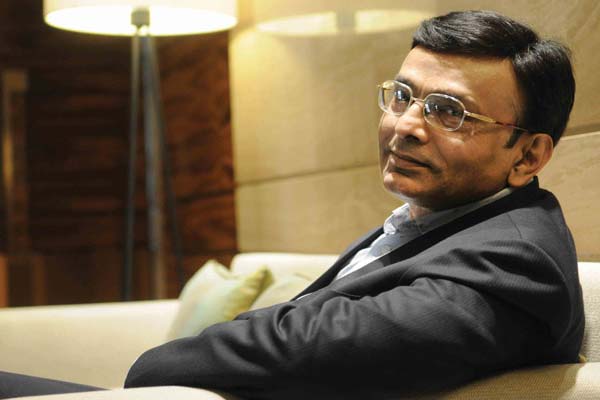








THE 29th Cabinet Secretary of independent India might appear mild but is quite hardboiled, having learnt the art of administration from his father, Kesava Menon, who was Chairman of the Railway Service Commission. KM Chandrasekhar was born in Kerala but grew up in Delhi. After graduating from St Stephen’s, he got an MA in history from the University of Delhi. He also studied business administration. His acces sion to Cabinet Secretary was a matter of course after his stint as Revenue Secretary during a period when revenue collection was low. Chandrasekhar put into use what he had learnt as Finance Secretary in Kerala. From Rs 3,48,474 crore in the 2006 Budget, total revenue receipt jumped to Rs 4,86,422 crore the next year – an increase of Rs 54,991 crore. Chandrasekhar has travelled a long way from his start as a Collector in Idukki in 1977. He has been Chairman of KELTRON; as Secretary, Fisheries, he eliminated middlemen to get better prices for fishermen; as Chairman, Civil Supplies Corporation, he established Maveli Stores, a superbazaar, in which he developed a Public Distribution System for essential commodities with competitive prices; he also set up a 95-acre techno park in Kerala. He has been Commerce Secretary and Ambassador to the World Trade Organization (WTO), Geneva. At the Cancun convention, he asserted the interests of India, leading to developing countries assuming greater importance in the Doha negotiations.
gfiles: Has Election 2009 brought you some respite from hectic work?
KM Chandrasekhar: No respite from work. Now it is election-related meetings.
gfiles: How do you see these two years as Cabinet Secretary with regard to work, satisfaction and achievements?
KMC: You move from one area to another fast. It is not like being a Secretary of a Ministry where you are dealing with a specific area. In the morning, you start with law and order. In the afternoon, you have economic problems and in the evening you are handling rural development. You have to absorb and try to find a solution. Basically, it is a question of getting people together, getting them to speak, and then looking for consensus. Convergence emerges, almost always. I have emphasized developing contact with the states.
gfiles: What are some new initiatives?
KMC: With video conferencing, all the Chief Secretaries are connected. I have held about five or six meetings with states till now. We have looked at specific issues, especially the economic stimulus package, and its implementation. I held a meeting on January 31 this year in Vigyan Bhawan on video conferencing. In April I propose to hold another video conference with states on crisis management plans. The National Security Adviser will also join in.
gfiles: Some recent challenges?
KMC: The past year has been difficult. We had a lot of law and order problems, and then we had Mumbai. We had three Pay Commissions, the Central Commission, the public sector one and the third for teachers. Then there was the issue of availability of fertilizer. And then the economic crisis hit.
‘Performance
evaluation is
lacking in India. We have
the ACR system. They
take weeks. There are
imbalances. These things
have to be corrected’
gfiles: Is the Pay Commission policy your major contribution?
major contribution?
KMC: By and large it has been welcomed. This is the most difficult exercise because everybody is looking not at personal increase but parity with others. This parity business is difficult to achieve, particularly in the Central government pay structure. A huge change has been made in the structure. We had many pay scales. They were
combined into four bands.
gfiles: Law and order is a major problem. Why is India being attacked?
KMC: We have become economically stronger. The people of this country have realized that there is much to be gained by economic stability. Incomes are growing. There is change. To a great extent this has resulted in weakening the internal militancy. Look at how many people voted in Kashmir. In such a situation, to create any kind of uncertainty you need to do very violent things. That is why India is being attacked.
‘The past year has been difficult. We had law and
order problems, we had Mumbai. We had three Pay
Commissions and then the economic crisis hit’
gfiles: What about the economic slowdown?
KMC: The effects of the economic crisis have been muted, primarily because we have a strong rural economy. We have not been affected much because we have policies like high minimum support price mechanism in place for agricultural products. We have many flagship programmes, so there was more income in that sector. That income resulted in more demand. Many sectors in the Indian economy continue to be strong. FMCG, steel, food processing, cement, and infrastructure are growing at a certain pace.
gfiles: But private companies and banks have started retrenching people.
KMC: India cannot remain untouched. What I am emphasizing is that the effect of this crisis will be felt less in India than other countries. We see some signs of change. Even the automobile industry is recovering.
gfiles: How much time will we take for recovery?
KMC: I am hoping this year we will be able to do a lot better. We have to see how quickly the global economy recovers.
Internationally, there is need for concerted action. The International Monetary Fund forecast is that in one to two years, the economy should start turning around. I am hoping that in India it will take place earlier may be by the end of this calendar year
gfiles: What do you do when the Cabinetintends to take a decision which the Cabinet Secretariat fears may boomerang?
KMC: If there is a difference of opinion it is referred to the Committee of Secretaries or a Group of Ministers is constituted. They recommend a modification. The Cabinet, however, is the final authority.
gfiles: Isn’t the concept of Group of Ministers subverting the authority of the Cabinet?
KMC: No. It is a mechanism devised to facilitate decisionmaking. If there are differences of opinion in the Cabinet, how will they be resolved? The Cabinet last year took the largest number of decisions ever. This was facilitated by the existence of mechanisms for resolution of differences.
gfiles: Manmohan Singh has emphasized that the process of consultation in the govern ment should be minimized. How far has this been achieved?
KMC: The Prime Minister has given a lot of importance to the institution of the Committee of Secretaries to resolve issues. So when an issue becomes intractable there is increasing interaction between the Ministries and Secretaries. Reducing the number of layers is an on-going exercise.
‘We have to make sure that the rural sector develops
at the same pace as sectors like services, manufactur
ing and the urban sector. There has to be balance’
gfiles: There is a general feeling that we take too much time in reaching a decision.
KMC: We are constantly monitoring when a file goes in and out. In the CabinetAppointments Committee, it used to take 50 days from establishment officer to Prime Minister’s Office. Now it is 17 days. We are electronically connected so it is easier now. Many Ministries are simplifying procedures. Take Customs. They have improved a lot. They have introduced a risk management system. The Commerce Ministry has also changed their system. The External Affairs Ministry has expedited the passport system. It is happening every day. It is invisible but can be felt.
gfiles: It is said that the Cab Sec is not inaccessible. Do you meet common people?
KMC: Secretaries get appointments immediately. Chief Secretaries can speak to me anytime. Others I meet during the first half of every Saturday. I finish the backlog of files at home on Sunday.
gfiles: As the ex-officio Chairman of the Civil Service Board, what reforms do you suggest?
KMC: Performance evaluation and performance management. We need to do a lot of work from the Cabinet Secretariat. I have an expert, Prajapati Trivedi, who has done a lot of work in this field. He is Secretary, Performance Management. Many countries have introduced an MoU system. You have an understanding on what will be the
performance and what will be the results and you give them a little flexibility and let them be free to operate. At the end of the year, you evaluate. It has apparently been successful in Canada. Some African countries are also trying it.
Performance evaluation is lacking in India. We have the ACR system. While evaluating empanelment, we go through a thorough exercise. Retired officers look at the CRs in detail. They take weeks. Sometimes, there are imbalances – you get an excellent report for most of your career and suddenly a bad report for no clear reason. All these things have to be corrected. We are working with the Lal Bahadur Shastri Academy of Administration and experts on evaluation. We have introduced transparency. The empanelment guide lines have been put on the website.
gfiles: With reference to the Lal Bahadur Shastri Academy, how do you find the new stream of the service?
KMC: Lots of change has taken place. There are youngsters who are committed. When I was a Collector, I did not have
access to any money. Today they have access to thousands of crores of rupees in districts. If they are able to make use of all these resources, and if they are able to effect a certain degree of convergence of various schemes, they can bring about really solid change in districts. The public sector is more flexible. If you have an idea, you can carry it through.
gfiles: Isn’t the power of the Collector curtailed? He is under stress – too many committees and too much political pressure.
KMC: It is no longer the colonial era. We have to work with democratic institutions.We also need to develop team spirit. You can’t order people. You can’t do it on the basis of writing CRs. Yes, the field work is much more. You are a district Collector so you have to do it, you have to evolve the mean
gfiles: What is India’s biggest challenge?
KMC: We have to make sure that the rural sector in particular develops at the same pace as sectors like services, manufacturing and the urban sector. There has to be balance. Another challenge is what to do with the people below the poverty line. It is the most terrible thing when small children don’t have food to eat. They don’t have hospitals for treatment. We have to create the system for the poorest of the poor.
gfiles: Other challenges?
KMC: Insurgency and militancy. The movements in the Northeast are descending into plain extortion. Militancy any
where in the country has to be dealt with firmly. Another issue is traditional – education and healthcare for all.
Infrastructure is one area where India is lagging. We need to invest more to build roads, ports, railway lines, railway bridges, underbridges.
gfiles: What about low input from the agri culture sector? You can achieve everything but if agriculture doesn’t recover it will become a major challenge.
KMC: We are not like the developed coun tries where they have big farms. We have small landholding-based agriculture. We have a large number of schemes. ICAR is doing a lot of research. You need a set of fac tors – seed, credit, fertilizer, and technolo gy. Our inputs are heavily subsidized. The government is aware of the problem and we are doing our best.
gfiles: In the coalition era, does the job of Cabinet Secretary get affected?
KMC: (laughs)I cannot say. Throughout my career I have served coalition govern ments. It is not unfamiliar or uncomfort able for me.
gfiles: Understandable, since you are from Kerala! But isn’t dealing with Lalu Yadav, Sharad Pawar and Mulayam Singh Yadav difficult?
KMC: Sometimes dealing with a national politician is much easier than dealing at district level. The perspective of a national leader is different. They have been Chief Ministers in the states, they are their respective parties’ leaders. So the atmos phere is congenial. I have never faced any problems.
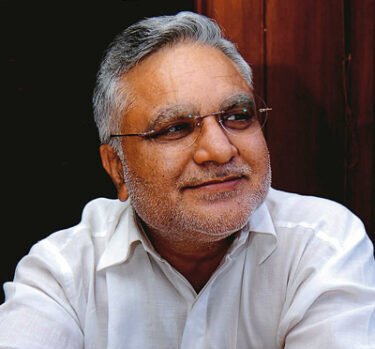
Anil Tyagi is a distinguished Indian journalist. An alumnus of the Delhi School of Economics (M.Com) and the University of Delhi (LL.B), he brings decades of rich experience to journalism. He presently serves as Editor of gfiles.