












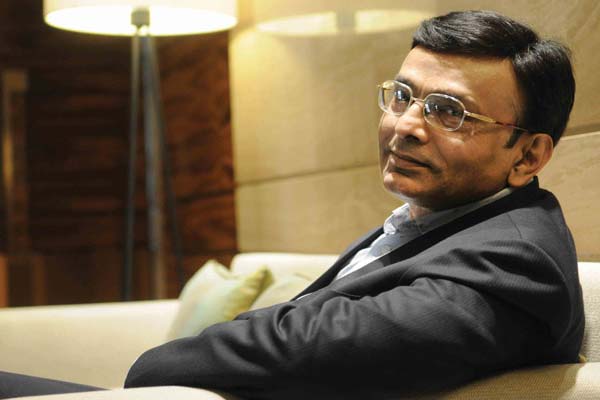


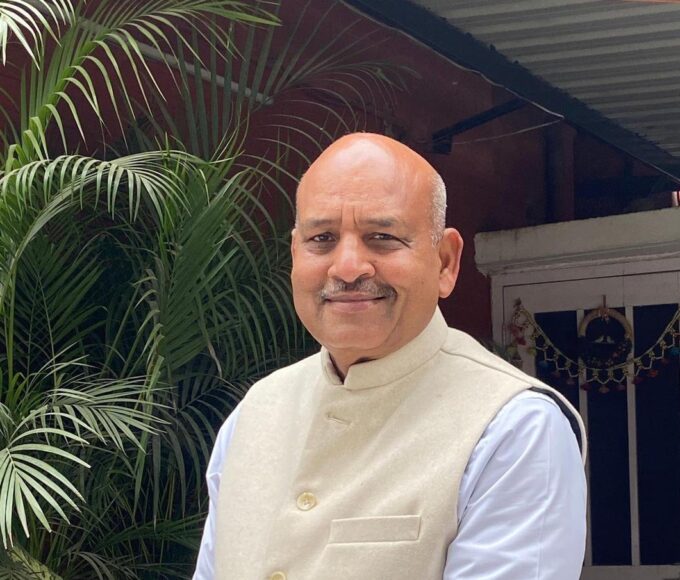











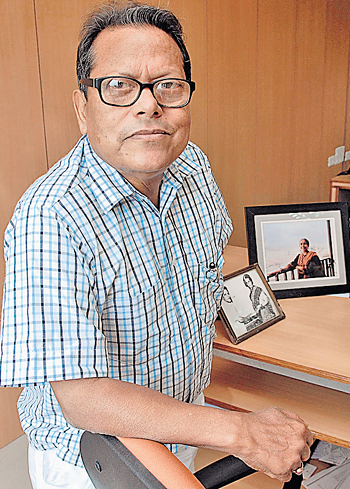
The professor-turned-bureaucrat brings alive the flavour of the India and Bengal of half a century ago
My decision to appear for the Indian Administrative Service examination in 1956 was on an impulse. The thought of joining the bureaucratic ranks of the government had not occurred to me in my student days. Having been brought up in small towns of undivided Bengal, and having gone through the emotional experience associated with the freedom movement, in particular Mahatma Gandhi’s Quit India Movement of 1942, and Netaji Subhas Bose’s Indian National Army and the trial of the INA officers after the Second World War, I had, as a child, come to associate officialdom with foreign colonial rule.
We used to look upon the sub-division level and district level officials, smartly dressed in western attire, as essentially a symbol of foreign rule and had no particular feeling of admiration for them. This feeling was reinforced during my days in Presidency College. My ambition had always been to join the academic world and go for teaching and research and perhaps also work for public causes. But fate decreed otherwise. After a double “first” in my Honours and MA examinations, and having secured the top position in MA, I was waiting for a job opportunity to come my way for seven months or so. I was simply giving private tuitions to cover my own expenses. After seven months of suspense, I took the IAS examination. Ironically, immediately after I had completed the written examination, I was offered a teaching position in my own college on the recommendation of my guru, the legendary professor of history, Sushobhan Sarkar, who was retiring and who had suggested to the government that I was the best available person to take up the subject he was teaching. Next month, I was selected by the Union Public Service Commission (UPSC) for a Government of India scholarship for doctoral studies at Oxford University and was also admitted to that university. Had these two developments taken place a few months earlier, I might not have sat for the IAS examination. I did teach for about six months, but having been selected for the IAS, it was very difficult to opt against it, all the more so because of the great prestige the ICS-IAS commanded in our society during those days. Also, there were family circumstances that compelled one to quickly get into the job stream that many of us in post-Partition Bengal faced.
I do not think I have any reason to regret my decision to join the IAS. One great advantage of being in the IAS is that, no matter where you are, you can always contact the local Collector or the Superintendent of Police (SP), the local Sub Divisional Officer (SDO) or the local executive administrator at any level, or the officer in-charge of a police station, and introduce yourself and will get a certain consideration and all possible assistance.
It is this spirit of oneness in the IAS, which has very largely kept India as a country together, irrespective of different political parties ruling different states. There are many occasions when political parties ruling in the states are different from the party that rules at the Centre. But so long as IAS officers are serving in key posts in both the Central and state governments, they understand one another and count upon a civil servant’s awareness of the overall national objectives and his commitment to the nation. This understanding always facilities interaction and negotiations.
On May 1, 1957 I took my last class at Presidency College and on May 15 I left for Delhi to join the IAS which was to remain my life and career for a long period of 35 years and 4 months. Thus I became a part of the steel frame that has supported independent India.
Delhi (in 1957) was a city which, except for Connaught Circus and the Chandni Chowk-Jama Masjid area, would go to sleep by 8/9 pm and there would scarcely be a passer-by on the main roads. Camel carts and horse-driven tongas were to be seen all over
I reached Delhi by train on the evening of May 6, along with another childhood friend who had also been selected for the IAS, to spend one year of training at Metcalfe House in Old Delhi where the IAS Training School was then located. Compared to Calcutta and Bombay, Delhi was very much a small town in those days. I still remember the shock I received when, on arriving at Metcalfe House and asking the bearer for a packet of cigarettes, I was told that he had to go to Kashmere Gate, five km away, to fetch it. It was barely nine in the evening. But Delhi was still a city which, except for Connaught Circus and the Chandni Chowk-Jama Masjid area, would go to sleep by 8/9 pm and there would scarcely be a passer-by on the main roads. Camel carts and horse-driven tongas were to be seen all over.
The one year at Metcalfe House was indeed a memorable experience, living together with about 70 IAS and IFS probationers and sharing with them various joys and sorrows. Travelling with them to various parts of the country, starting with Kashmir and on to Kanya Kumari, through the Bengal-Bihar industrial belt, and the colourful Rajasthan desert was a unique experience.
We completed our training programme in April 1958 and left for our respective States. I was among a batch of five officers posted to West Bengal. I was to proceed to the district of Murshidabad for my one-year district training as Assistant Magistrate and Collector.
I took over as Under Secretary (Home) on 24 August, 1960 after my transfer from Diamond Harbour.
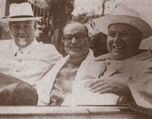
I was extremely fortunate in having during my time a very outstanding ICS officer, R Gupta, as Chief Secretary. Before him there had been SN Ray, who had a very long tenure of 13 or 14 years. SN Ray had been an aloof, much-feared Chief Secretary, not readily accessible. Gupta insisted on the Under Secretary seeing all papers and giving his advice/recommendation. This straightaway restored for the US (Home) a position he had not enjoyed any time since independence.
He would keep me involved in top policy matters, and would refer many important people such as senior Central government officials or foreign diplomats and Consul Generals to me for dealing with their problems. Both he and his gracious wife, Meera Gupta, took a great interest in young IAS officers and made them feel at ease, with the result that, unlike most of his colleagues in the ICS, he retained the love and affection of so many of those officers till the last days of his life.
West Bengal those days was quite different from today. Economically she was among the front-ranking states, and was also politically very important. Towering over everybody else and dominating the entire scenario was the great personality of Dr BC Roy. Since he was also in-charge of the Home Department, I had many occasions to get to know him. A man of tremendous personality, he would overawe nearly everybody who came in contact with him. Yet he was a person full of humility. He would come to Writers’ Building around 8 o’clock in the morning, have his breakfast there and work till late evening. He literally ruled West Bengal like a personal zamindari and would expect every major matter to be referred to him.
I returned to the West Bengal Secretariat after a spell of nearly 10 years in 1978. I was Secretary in charge of two departments, Information and Public Relations (subsequently redesigned as Information and Cultural Affairs, and the Department of Youth Services) and, therefore, answerable to two different Ministers, which did create problems at times.
The Department of Company Affairs (at that time a part of the Ministry of Industry), which I joined in March 1968 as Deputy Secretary, gave me a unique opportunity to be at the centre of the Indian government’s formidable economic regulatory system. This was doubly significant because this happened at a time when the thrust of the Central government’s policy was changing from one of benign aloofness to massive intervention in corporate business. Industrial licensing was already being tightened.
I was lucky to be involved in two major events in the history of the Indian corporate sector, viz., the abolition of the managing agency in 1969/70 and the enforcement of the MRTP Act, 1970
I was lucky to be involved in two major events in the history of the Indian corporate sector, viz., the abolition of the managing agency in 1969/70 and the enforcement of the MRTP Act, 1970. I was initially involved, among other things, with the appointment of Managing Directors and Directors in public limited companies, and fixation of their remuneration.
After Rajiv Gandhi’s assassination the Congress was returned as the largest party. Within a few days I found myself Secretary, Planning Commission with my old boss, Pranab Mukherjee, as Deputy Chairman. I welcomed this appointment as the work of framing the Eighth Five-Year plan, bedevilled by quick political changes since 1989, was due to be resumed. This gave me a unique and creative experience. It was a fascinating exercise that enabled me to acquire both a macro and micro view of all aspects of our economy and the work of the Ministries of the Government of India as also of the state governments.
On the evening of September 30, 1992, I bade adieu to Deputy Chairman, Planning Commission Pranab Mukherjee and my colleagues in Yojana Bhawan, and indeed to over 35 years of service in the government. On the one hand, there was a great sense of freedom and of relief from the obligation that was imposed 35 years ago in Metcalfe House of being in the service of the government for all 24 hours of the day. On the other hand, there was also a tinge of sadness that I was coming out of the protective umbrella under which I had been from the age of 23. The only privilege I have truly missed outside the government is the access to the Rax telephone system. But above everything else, I felt sorry to have to part company with so many colleagues and friends. Not that we would not continue to be friends, but I would no longer meet them or talk to them almost every day. I would miss them as colleagues. At one of the farewell functions on that day, I quoted from Rabindranath Tagore’s song:
“I have returned the key to my door
And surrendered claims to my room
I seek blessings from everyone
For many days have been neighbours
What I have received from them
Is much more that what I have given.”
(Edited extract from Inside the Steel Frame, a memoir by Nitish Sengupta)
(with mug shots of BC Roy and Buddhadev Bhattacharya)
Reminiscences of statesmanship
I saw Dr BC Roy in action during the entire dispute with Pakistan over Berubari, and saw how he could brush aside even the strong views expressed by Prime Minister Jawaharlal Nehru. My senior colleague and friend RN Sengupta heard him muttering on the phone to Nehru, “Please do not force me to accept any suggestion about Berubari’s transfer to Pakistan until the 1962 elections are over. Otherwise you may have to relieve me and take over as Chief Minister, West Bengal.”
Buddhadev Bhattacharya, the Information and Cultural Affairs Minister, was young but a very high-ranking leader in the state CPI(M) and also reported to be close to the party boss, Promode Das Gupta, who was also the Chairman of the Left Front Committee. I found him well meaning and enthusiastic in his work and developed a good rapport with him. But he was prone to be influenced by some of his partymen outside who were operating in the cultural field or “cultural front” as the leftists were apt to call it.
