






























Or so the ordinary Indian still believes. But the Supreme Court is not quite living up to it
Irrespective of the corruption in society, the common man retains his high expectations of the judiciary – so much so that at times it can appear unrealistic. India is one of the world’s most corrupt nations and its judicial officers spring from the same society and possess the qualities of average citizens. Just as my mother would feel a single grain of rice to check whether the entire lot was cooked, everyone belonging to a particular society, whether a doctor, teacher, engineer, lawyer, bureaucrat, minister or judge, is likely to be of the same quality.
On February 22, 2005 Chief Justice of India RC Lahoty, in his lecture on “Canons of Judicial Ethics” said, “The courts of law are essential to act and assume their role as guardians of the Rule of Law and a means of assuring good governance. Though it can be said that the source of judicial power is the law but, in reality, the effective exercise of judicial power originates from two sources. The very existence of justice-delivery system depends on the judges who, for the time being, constitute the system. The judges have to honour the judicial office, which they hold a public trust. Their each action and their every word – spoken or written –must show and reflect correctly that they hold office as a public trust and they are determined to strive continuously to enhance and maintain the people’s confidence in the judicial system.” He further stressed the need to inculcate and imbibe the canons of judicial ethics in judges to make them strong and independent from within to protect the judiciary.
Sukra Neeti (IV-5-14-15) enumerates five vices which every judge should guard against in order to be impartial. They are: (I) raga (leaning in favour of a party), (II) lobha (greed), (III) bhaye (fear), (IV) dvesha (ill-will against anyone) and (V) vadinoscha rahashruti (the judge meeting and hearing a party to a case secretly, ie in the absence of the other party). Socrates counselled judges to hear courteously, answer wisely, consider soberly and decide impartially. The Constitution of India obligates a judge to swear in the name of God that he shall secure to all citizens justice, liberty, equality and fraternity.
Is it not asking for the moon if we expect that, though not too many citizens possess these sterling qualities, a person, on taking the oath of a judge, shall immediately imbibe them – perhaps due to some divine intervention?
How many of us in present-day society have imbibed all these qualities a judge must possess in order to deliver complete justice? Is it not asking for the moon if we expect that, though not too many citizens possess these sterling qualities, a person, on taking the oath of a judge, shall immediately imbibe them – perhaps due to some divine intervention? The recent unfortunate developments when even a former Chief Justice of India was accused of corruption and persons of the eminence of Justice Krishna Iyer and former Chief Justice of India JS Verma sought an inquiry, have not done any service to the credibility of the judicial system.
The Chief Justice is like the captain, who can instil or shake the confidence of the whole team expected to be guardians of the rule of law. If the captain of the ship is weak or not evolved as per Sukra Neeti and the Constitution, the people will fast lose faith in the judicial system. This can have far-reaching consequences and may even threaten democracy and rule of law.
In Indian culture, we extend a great deal of respect to our seniors in every profession – be it a roadside mechanic or a highly-paid doctor, lawyer or artiste. Even the best in the field often touches his senior’s feet in public. It is thus surprising to see the current Chief Justice of India and his colleagues conveniently ignore the resolution passed in 1998 by their seniors, the full court of the Supreme Court, regarding the declaration of assets and code of conduct. All the present judges were High Court judges then so in a way, High Court judges have overruled the full Supreme Court! It is also difficult to accept their stand that litigants can harass them if they declare their assets publicly.
Further, the Supreme Court says that conspiracies are held in secrecy. This means that anything requiring secrecy cannot be fair or moral. Then why do they seek secrecy regarding their assets? If your core is strong, even Parliament cannot remove a judge let alone an ordinary disgruntled litigant. The Supreme Court judges want politicians to declare their assets but will not do so themselves. A few should take the lead in doing so to pressurize and isolate the others.
No doubt the infrastructure needs much revamping, be it in the form of appointing more judicial officers or extending other facilities. But, to provide relief to the three crore litigants, especially undertrials, competent and bold judges are the primary need of the hour. In the same court, one judge disposes of a hundred matters and another of only 10 during the same period. It is high time promotions and appointments are made on the basis of merit rather than seniority and relations.
The precedent set by the Chief Justice by simply recommending transfer of a High Court judge found guilty of corruption by the committee constituted by the Supreme Court itself has only damaged the credibility of the judicial system
The precedent set by the Chief Justice by simply recommending transfer of a High Court judge found guilty of corruption by the committee constituted by the Supreme Court itself has only damaged the credibility of the judicial system. The Chief Justice should lead from the front to send the message that incompetence and dishonesty will not be tolerated.
We surely have quite a few judicial officers at all levels who are honest, knowledgeable, efficient and bold to restore citizens’ eroding faith in the judicial system. The rotten apples should be thrown out without any hesitation. Even the appointment of judges to the higher judiciary should be made more transparent to attract competent and bold people rather than relatives of those who matter. After all, despite corruption being so rampant in other spheres of life, the judiciary can still claim to be the most honest wing of the democratic set-up.
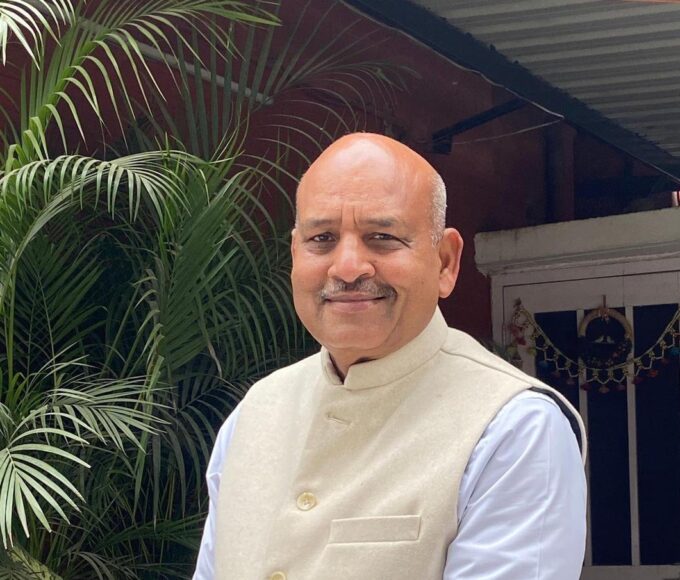
The writer is former Secretary, Supreme Court Bar Association and can be reached at ashok@aroraz.com