




















The Prime Minister has a mandate – now he should govern
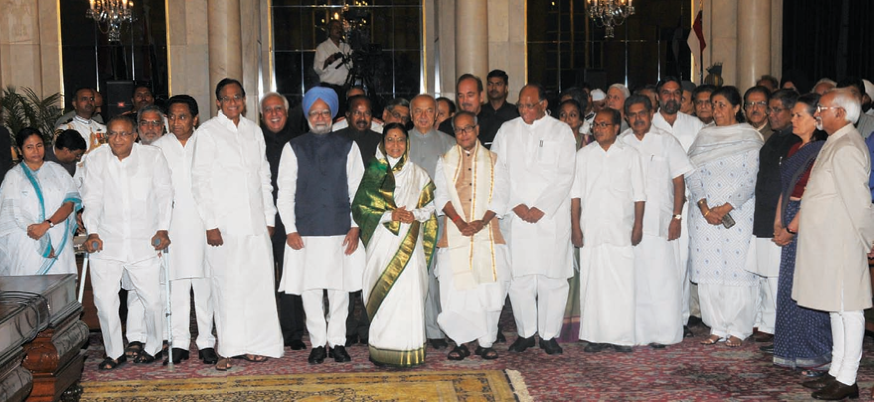
Egged on by screaming media anchors, exit pollwallahs and armchair analysts, the doomsayers had forecast a floundering UPA in no position to form the government without the support of the Fourth Front and perchance even the Left. This, they predicted, would be the unfortunate outcome of this general election!
Belying the pessimists, the aam aadmi – always the bulwark of India’s democracy – has given the UPA a substantial mandate. As to how it came about, the irrepressible Shobaa De has a theory: “This has been a daal-chawal election – in that the voter opted for comfort food, when the offer was for an exotic eight course menu… or, if one were to look at it more crudely, an unappetizing khichdi. There couldn’t have been a more emphatic ‘No’ to the sort of bogus change that was being peddled. It was a straight-forward vote for maintaining the status quo.”
The onus is now on the Prime Minister to change the “status quo” into dynamic governance. Considering the constraints under which he worked during his last tenure, the aam aadmi has given him another chance. Though he and his government swore upon the aam aadmi in their last avatar, they have been left in the lurch if the World Bank is to be believed.
In 2004, the patch-work UPA government headed by Manmohan Singh came out with an “aam aadmi agenda” which turned out to be non-performing. The past five years saw the actual thrust on GDP-obsessed, SEZ-centred and FDI/FII-led growth through unregulated instruments like Participatory Notes and rogue hedge funds. The aim was to prop up the real estate and stock markets and generate upbeat economic data that do not reflect the true picture of the country. Governance focus was almost entirely on this millionaire-billionaire segment and their celebration through the “super-power” hype!
The most damning indictment of the UPA Government and its “growth story” comes from the World Bank’s observation that “India is just ahead of Sub-Saharan Africa”. In a report titled “Global Economic Prospects for 2009”, the bank has predicted that a quarter of India’s population will be living on $1.25 a day – considered a state of extreme poverty – in 2015. Two years ago, a report by the National Commission for Enterprises in the Unorganized Sector had created a storm when it pointed out that 77 per cent of Indians lived on less than Rs 20 a day.
The only crumbs thrown at the poor were the 100-day job-card under NREGS and promotion of Self-Help Groups to encourage women towards micro-credit driven entrepreneurship. NREGS has largely contributed to slumber and sloth among the landless labour. Poverty remained as it was, in fact worsened – as seen from the World Bank indictment. What is worse, these two schemes have become convenient conduits for ruling parties to funnel huge public and private funds to purchase votes from the gullible rural folk!
In absolute terms, poverty has worsened and the life of the aam aadmi has become more miserable. Yet, they have given the UPA and Manmohan Singh an un-fractured mandate. That is the greatness of this “bent, dried-up, stick” of men and women who carry the burden of India’s democracy.
Elements also conspired to bring Manmohan Singh back to the forefront. In the midst of the “fractured mandate” forecast and mushrooming of a dozen Prime Ministerial aspirants, including one for 2014, Manmohan Singh unobtrusively became the symbol of a dormant collective aspiration for governmental stability, administrative performance, and decency in public life. Above all, there was a yearning for and appreciation of a performing government at the Centre – and a clear preference for a proven administrator over the wannabes.
As columnist Harish Khare observes: “If the Congress has bucked anti-incumbency, it is primarily because it had Dr Manmohan Singh reinforcing its reputation as a party of serious and responsible governance. The 2009 mandate has mandated Singh to restore the moral elements in governing processes and practices.”
The key words are responsible governance and restoration of moral elements. This is the expectation the Prime Minister has aroused, and he has to live up to it. The road map I suggest would be simple and fundamental:
- Restructuring of governance system
Jawaharlal Nehru had called for a Constitution “wherein all power and authority of the Sovereign Independent India, its constituent parts and organs of government, are derived from the people”. This reflected Mahatma Gandhi’s description of swaraj as merely a “courteous ratification of the declared wish of the people of India”. These Founding Fathers envisaged people-based governance with a bottom-up process that would give everyone “a place in the sun”. Urgent steps should be taken to reform and restructure the governance system in accordance with the spirit of India’s Constitution.
- Zero tolerance for corruption
In the 1970s, Jayaprakash Narayan, hailed as the second Mahatma, said: “As I diagnose the root cause of the country’s critical state of health, I identify it unhesitatingly as corruption and precipitous fall in the moral standards of our politics and public life.” Political, bureaucratic and business corruption is far worse now and, like the dreaded disease of AIDS, sucks and destroys the basic value system on which a society is founded. It has no cure if allowed to go beyond a certain stage. Morality in governance is possible only if there is zero tolerance for corruption in both word and deed.
- Rejuvenate urban governance
Half of India will soon live in cities and urban settlements where there has been rapid decay of infrastructure and basic services. The root cause is weak urban governance and institutional mechanisms not capable of efficiently delivering the diverse civic services. While launching JNNURM in December 2005, the Prime Minister said: “Governance reform should be seen as a massive catalyst for change. Cities, unfortunately, with some exceptions, have not been enabled to look inward and build on their inherent capacities, both financial and technical, and instead are still being seen in many states as ‘wards’ of the state governments. This should and this must change.” Let his actions speak now.
- Put basic governance on top of the agenda
For a nation of 1,100 million people with 70 per cent of the aam aadmi living hand to mouth, governance has a very distinct connotation. It is not about facilitating a “billionaire economy” through globalization, with some crumbs trickling down. It is about basic governance – creating and sustaining an ambience and atmosphere for the common man to work and live with equity, safety, security and dignity. Tragically, at grassroots level, these elements of basic governance are being trashed at every turn. This should be set right and basic governance placed at the top of the PM’s agenda.
Our Republic is tottering and wavering because the honest, sincere and genuine among her sons and daughters are being increasingly banished from public offices and councils and replaced by sycophants and time-servers looking for safe sinecures. This must change if responsible and moral governance is to be restored.
Pursuing this road map would not have been possible with a fractured mandate. The aam aadmi has given the Prime Minister as wholesome a mandate as possible under the circumstances. He should go ahead and govern!
Poverty has worsened and the life of the aam aadmi has become more miserable. Yet, they have given the UPA h an un-fractured mandate. That is the greatness of this “bent, dried-up, stick” of men and women who carry the burden of India’s democracy

IAS (retd) with a distinguished career of 40 years - worked in Army, Govt, Private, Politics & NGOs.