

















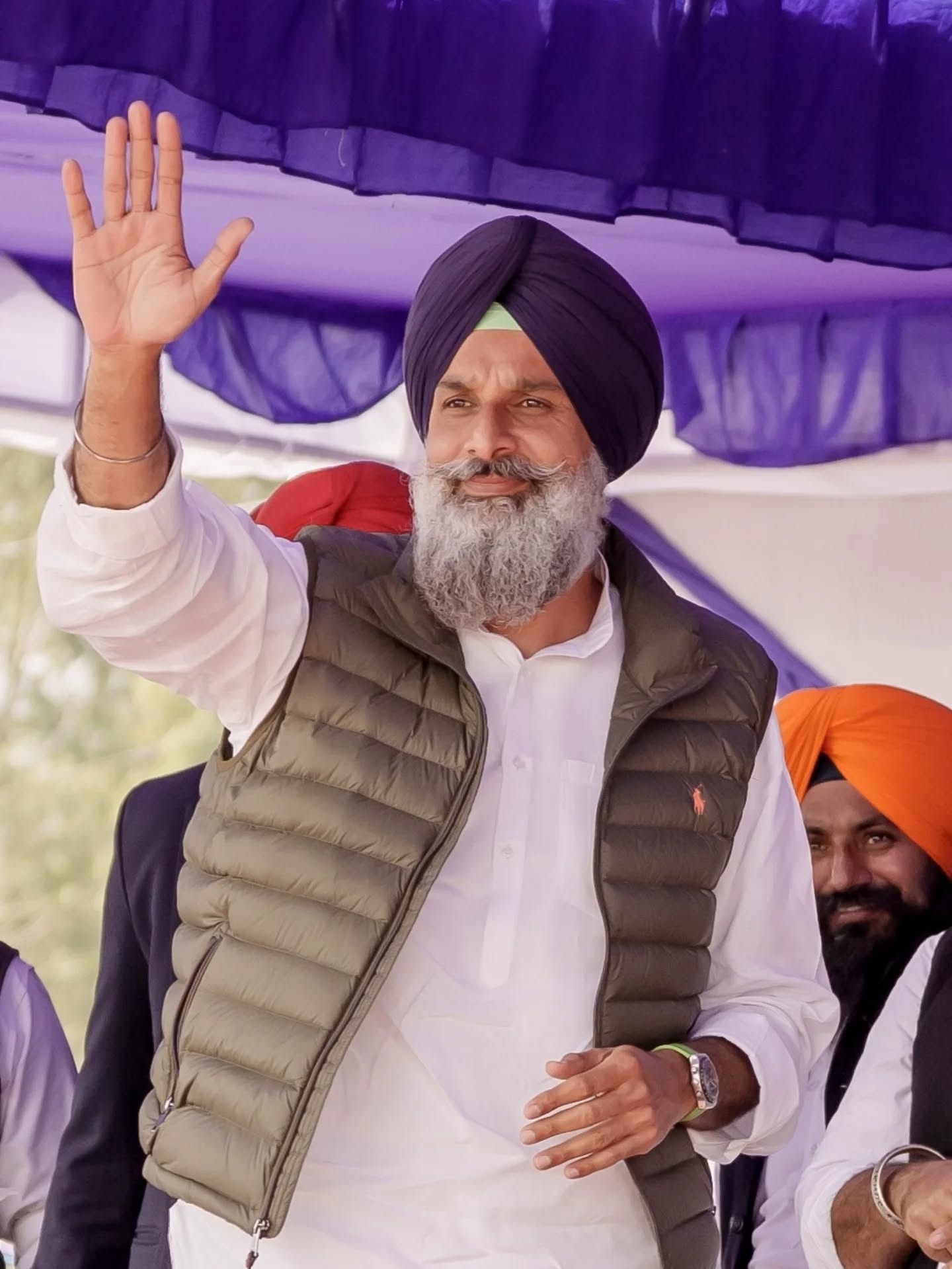
For Bikram Majithia, the battle is no longer merely legal or organisational; it is reputational. And in politics, reputation, once hardened, is the most difficult terrain to reclaim. Allegations of entrenched mafias — from sand and cable to liquor — began to stain the party’s image. The controversial “halka incharge” system concentrated local authority but also bred resentment. Meanwhile, Punjab’s growing drug crisis became a moral and political flashpoint. The 2014 parliamentary elections, when AAP and Bhagwant Mann made deep inroads, signalled the first serious tremors. From there, decline was swift.
In Politics branding is often destiny. Leaders are either defined by themselves or by their opponents — and once a label sticks, it rarely comes off easily. Rahul Gandhi’s long struggle to shed the “Pappu” caricature is a reminder of how reputational battles can shape political trajectories for years. The same logic now hovers over Bikram Singh Majithia.
Majithia and his supporters would hope that what they describe as political vendetta by the Bhagwant Mann government — combined with prolonged legal battles and jail stints — may eventually envelop him in a martyr’s halo. The calculation is simple: adversity can cleanse reputations. If suffering is visible enough, it can soften even the hardest public perception. For Majithia, the hope is that incarceration and confrontation will blur the older image of a leader long associated with allegations of drugs and corruption and recast him instead as a persecuted political warrior.
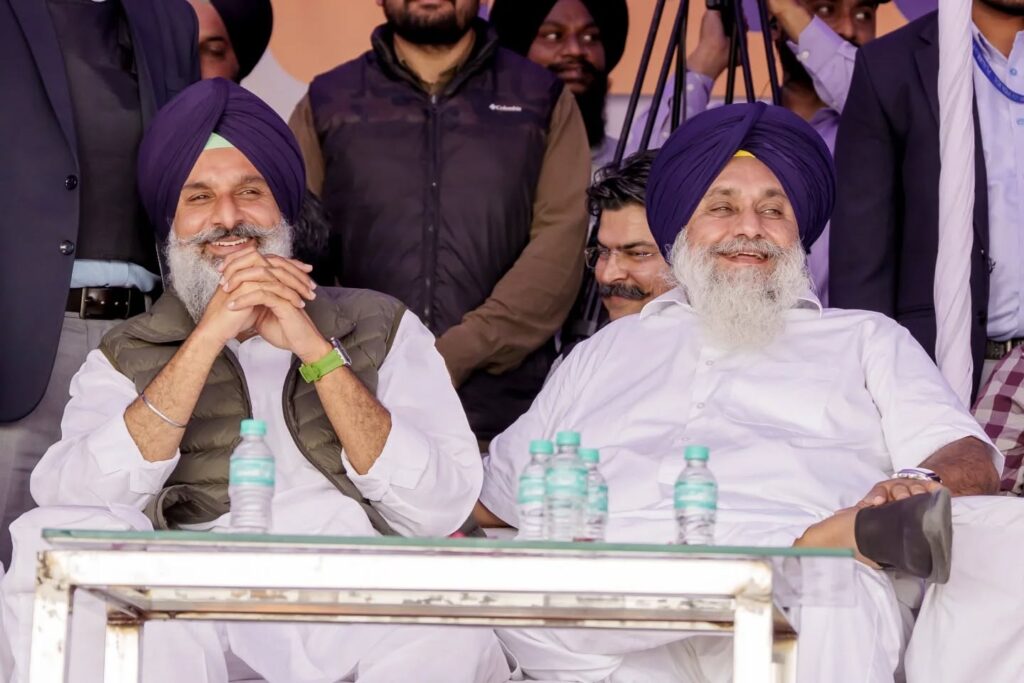
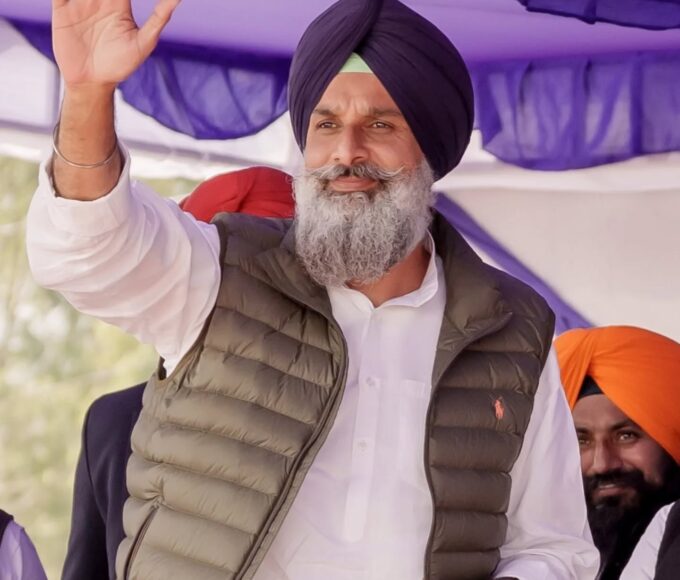
A scion of the aristocratic Majithia family, Bikram came to prominence in 2007 when the first-time MLA was swiftly elevated to ministerial rank. By virtue of being the brother-in-law of Sukhbir Singh Badal, he rose rapidly within the Shiromani Akali Dal’s inner circle. Combative, articulate and organisationally astute, Majithia soon attracted a new generation of young, aspirational Akali workers. In the Majha belt he was hailed as “Majhe da Jarnail” — a field commander for a party that was increasingly centralised around the Badal family.
The zenith of Sukhbir–Majithia power came in 2012 when, against conventional anti-incumbency logic, the Akali Dal returned to power. That victory consolidated the transformation of the party into a tightly controlled dynastic machine. What had begun under Parkash Singh Badal as gradual familial consolidation matured under Sukhbir into a streamlined, centralised structure. Majithia’s ascent symbolised that shift: from a historically Panthic, peasant-rooted movement to a professionally managed electoral enterprise focused relentlessly on winning and retaining power.
On a deeper cultural level, the rise of Sukhbir and Majithia marked a generational break within Akali politics. The old guard — steeped in ideological vocabulary of “Panth and Punjab” — increasingly found themselves overshadowed by a younger leadership comfortable with corporate management styles, visible affluence and aggressive electoral tactics. The party projected confidence and efficiency; critics saw arrogance and entitlement. Either way, the Akali Dal of the 2010s was no longer the Akali Dal of the 1980s.
Majithia’s rapid rise, however, also generated quiet resentment. Older leaders felt sidelined, and the consolidation of power within the Badal family narrowed internal democratic space. The departure of Manpreet Singh Badal in 2011 to launch the People’s Party of Punjab was followed by stalwarts such as Ranjit Singh Brahmpura and Ratan Singh Ajnala , fragmenting the Majha base. Critics compared Majithia’s influence within the party to powerful political relatives in other regional parties like Sadhu Yadav (Brother-in-Law of former Chief Minister Lalu Yadav) and Abhay Chautala (Son of Former Chief Minister of Haryana Om Prakash Chautala) — figures who exercised significant authority without necessarily holding the top post.
Even as Sukhbir spoke of a long and stable “25 years rule”, the political ground was shifting. Allegations of entrenched mafias — from sand and cable to liquor — began to stain the party’s image. The controversial “halka incharge” system concentrated local authority but also bred resentment. Meanwhile, Punjab’s growing drug crisis became a moral and political flashpoint. The 2014 parliamentary elections, when AAP and Bhagwant Mann made deep inroads, signalled the first serious tremors. From there, decline was swift. The sacrilege incidents (“beadabi”) and later the farmers’ agitation dealt severe blows to the Akali Dal’s credibility. Its vote share collapsed dramatically from its peak; its long-standing alliance with the BJP unravelled; and splinter factions as well as radical elements began to challenge the party’s once-secure base.
As opposition parties sought symbols to personify the alleged excesses of the Akali regime, Majithia emerged as a convenient focal point and scapegoat. He became the central target of repeated attacks — accused by rivals of embodying dynastic privilege and the darker underside of power. Arvind Kejriwal publicly accused him of links to drug networks; Navjot Singh Sidhu attacked him for entitlement; both Channi and Bhagwant Mann govt’s pursued legal cases that led to his incarceration on multiple occasions. In public discourse, Majithia became shorthand for everything his critics believed had gone wrong with Akali rule.
Following the crushing 2022 assembly defeat — the second successive setback — even Sukhbir appeared to recalibrate his distance. Within the party, Majithia’s isolation during his legal battles was noticeable. As Sukhbir reasserted control over the shrinking organisation, many of Majithia’s loyalists felt marginalised. His unease during periods of internal tension, including controversies surrounding the Akal Takht’s interventions, underscored the fragility of his position within the party.
Yet Majithia has shown resilience. Supporters describe him as politically tough, thick-skinned and unafraid of confrontation. He thrives in adversarial arenas — press conferences, courtroom exchanges and sharp political rebuttals. Even after repeated setbacks, he has remained a vocal critic of CM Bhagwant Mann and AAP government, positioning himself as a combative opposition figure unwilling to retreat. His supporters believe that extended jail terms, combined with a more visible religiosity and public outreach, could soften his image and revive his appeal. His familial association with Dera Beas head, Baba Gurinder Dhillon is also seen as a strategic advantage in Punjab’s intricate political landscape.
Critics, however, offer a harsher assessment. To them, Majithia represents the excesses of personality-driven, dynastic politics: aggressive, polarising and more comfortable mobilising loyal cadres than building broad social coalitions. His style — confrontational and unapologetic — energises a core base but struggles to attract voters beyond it. In a state where political tides have turned sharply toward newer formations like AAP, critics argue that Majithia remains too closely identified with a discredited era to lead a genuine revival.
In many ways, Bikram Majithia embodies both the strengths and limits of Punjab’s traditional power politics. He is organisationally seasoned, battle-tested and resilient under pressure. But he is also burdened by controversy and the accumulated baggage of a party that has yet to fully reinvent itself. The Shiromani Akali Dal’s challenge is existential: reconnecting with a younger electorate that has drifted toward alternative narratives of governance and protest politics. Majithia’s challenge is personal: transcending the image crafted by opponents and reinforced by years of polarisation.
Whether he succeeds will depend less on courtroom verdicts and more on narrative control. Can he reframe himself as a broader political leader rather than a symbol of a contested past? Can he widen his appeal beyond the loyalist cadre and present a credible roadmap for governance rather than opposition alone? Or will he remain a formidable but polarising survivor within a shrinking political ecosystem?
In Punjab’s volatile political theatre, reinvention is possible — but rarely easy. For Bikram Majithia, the battle is no longer merely legal or organisational; it is reputational. And in politics, reputation, once hardened, is the most difficult terrain to reclaim.

Prof Harjeshwar Singh
Prof Harjeshwar Pal Singh is a veteran writer on Punjab History and Politics. Director, Punjab Thinks

