







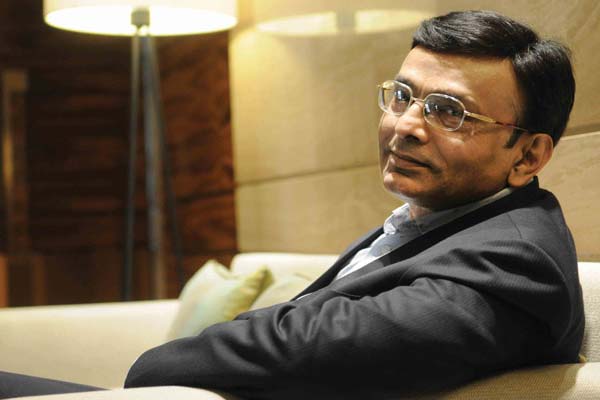

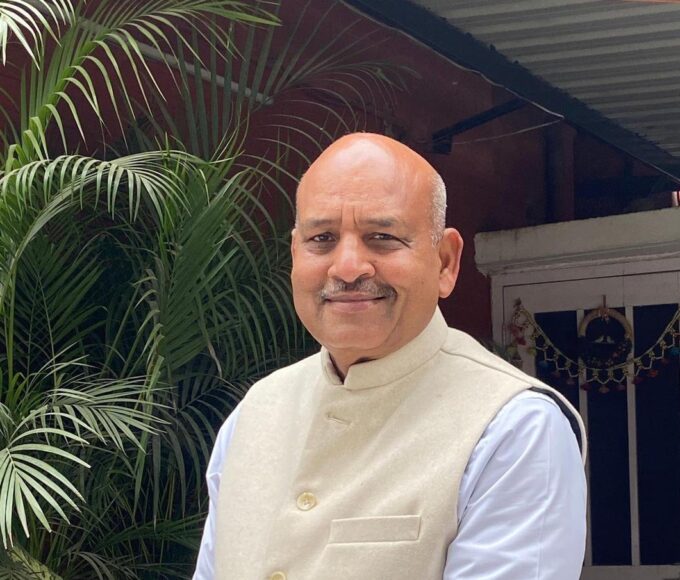







A former Vice-Chairman of the Delhi Development Authority (DDA), Dinesh Rai of the IAS’ 1974-batch UP cadre has considerable experience in the industry sector. He is considered a ready reckoner on the industries and housing sector of the country. Rai has served as Collector of Gorakhpur, Pilibhit and Varanasi. His career in government has revolved around agriculture, urban development, and human resource development. A postgraduate in physics, he was appointed Secretary in the Ministry of Micro, Small and Medium Enterprises in February 2008. He is known for painstaking probing of details.
gfiles: What is the scenario regarding small-scale industries post-liberalization?
Dinesh Rai: After liberalization we had over 800 reserved items in the SSI (Small-Scale Industry) sector. Because of cheaper imports, we were finding it difficult to compete with large sectors. So our policy was to examine the areas and see whether we needed to be there or not. Over the years we have pruned the list to 21 items out of 800. We felt that those 21 items should be protected as they create mass employment – for instance, manufacturing of matchboxes, text-books, furniture, carpets etc.
gfiles: After focusing on 21 items out of 800, what change have you noticed?
DR: There are two to three indicators to judge the change. First is growth. Growth in this sector is highest – 12.6 per cent annual growth. It is higher than in bigger industries. The number of units is over three million, employing about 31 million people. Our industrial production is almost 35-40 per cent of the total industrial production. We have the same figures in exports. So we can see the sector is contributing in a major way by employing a large number of people. Employment in the organized sector is static due to cost-cutting and so on whereas Micro, Small and Medium Enterprises (MSME) is a dynamic sector.
gfiles: When you talk about small-scale units, what are the financial parameters?
DR: Small-scale unit limit is Rs 5 crore, while for medium limit it is Rs 10 crore. The important thing is that, after agriculture, it provides maximum employment with inclusive growth and binds the social fabric of rural India. There can be local raw material industry like forest; this takes care of local demand, provides jobs, creates self-employment and stops urban migration. The advantage of MSME is that raw material and demand is locally available and people can find jobs where they live.
gfiles: You mean small industries are helping people to avoid migrating from rural to urban India.
DR: Once you provide jobs in rural areas, why will people go to cities? Their family life suffers when they are forced to go to urban areas for jobs. It is a kind of socio-economic development.
gfiles: What is the government’s focus regarding industry post-liberalization?
DR: The focus, specially in MSME, is on how to make it more competitive and face competition from bigger industry and imports.
gfiles: How are you going to do this?
DR: We have a programme to help industry on four counts – skill development, credit, technology, market. For skill development, we have several programmes from the lower end to the highest end – like how to extract honey, computers, cad-cam, food processing, stitching clothes, binding of transformers, footwear, making pottery. In Hyderabad, I saw people working on nuclear reactor equipment during the ban. Even B Tech people are joining our tool rooms.
We train around 2 lakh people. This year’s target is to train 3 lakh. Eventually, we have to reach the 5-lakh figure by the end of the Eleventh Plan. We started with 1.8 lakh.
gfiles: What about credit?
DR: It is a popular area. Banks initially used to ask for collaterals but lately the Reserve Bank of India has issued instructions that no collaterals up to Rs 5 lakh is required. Banks are public entities so the government created a credit guarantee fund operated through a trust managed by Small Industrial Development Bank of India (SIDBI). For bank loans, SIDBI gives a guarantee up to 75 per cent and 80 per cent for special groups like women and the Northeast. About 1.2 lakh such cases have been covered. This has really helped flow of credit in this sector. The policy guideline is that the overall credit flow to this sector should double in five years.
In order to make banks feel more comfortable, we have certain subsidy schemes. For first-generation entrepreneurs who don’t feel very confident, one such scheme is the Prime Minister’s Employment Generation Programme. This programme is for setting up industries up to Rs 25 lakh. In urban areas, the subsidy component provided is 15 per cent for the general category and 25 per cent for special groups such as SC/ST and minorities. In rural areas, it is 25 per cent and 35 per cent for general and special groups, respectively. This is expected to generate 37 lakh jobs. We are inclined towards rural areas as they lack infrastructure facilities.

gfiles: What are you doing regarding technology?
DR: We have to improve the technology of the units. We provide 15 per cent subsidy up to Rs 1 crore. We have identified 48 products and processes; it is called credit link subsidy schemes. There is another bold initiative, the National Manufacturing Competitiveness Programme, which aims at making units more competitive. It has several schemes. Bar coding of product is one scheme which provides 75 per cent subsidy to those who introduce bar coding of their products. There is also a scheme for incubators; this is basically for research in engineering colleges on new ideas. There is another scheme called Intellectual Property Right. We provide the budget of Rs 55 crore. There are geographical indicators like Basmati Rice, Banarsi Sarees and so on. We set up IPR centres to help. It is a very costly process; we motivate them to file their claims.
We have a new scheme called Lean Manufacturing, evolved by Toyota, where you learn to cut costs and processes and become more competitive. For this, consultants’ fees are very expensive. The government will give 80 per cent of the fees and the remaining will come from associations. It will work like a cluster.
We have another scheme called Mini Tool Room. For this, we would prefer Private Public Partnership. It is for high-tech industries like automobiles and bio-technology. We are willing to offer 40 per cent subsidy per project up to Rs 9 crore. We have high-tech and high-precision tool rooms costing Rs 100-200 crore. But we don’t require such rooms everywhere so we have tool rooms costing Rs 10-20 crore too.
Energy is also a big issue. We have schemes for Energy Efficiency Audit. In this sector, people are not aware of the importance of energy efficiency so we hold seminars, demonstrations, exhibitions and so on.
‘There is awareness about khadi. I feel there
is a change, visit our khadi showrooms and
see the rush of customers’
gfiles: But what about marketing?
DR: We have two to three initiatives. NSIC (National Small Industry Corporation) is one such initiative which takes big orders and passes them down to small units who are not able to fetch such orders through the info diaries service. Units registered with NSIC also get all tender information. We send entrepreneurs for exhibitions in India and abroad. We subsidize air fare and transportation funds. We provide earnest money for tenders so that their money is not blocked.
gfiles: Why did you change the name of the Ministry from Small Scale Industries to Micro, Small and Medium Enterprises?
DR: Previously we had the Ministries of SSI and Agro Rural Industry. They were combined and named the MSME Ministry. Enterprise includes the service sector also, like tyre repair, rickshaw repair, computer repair, cell phones repair. Under the PRG programme, we are ready to give up to Rs 10 lakh to the service sector also. A two-week training is compulsory, then you get the money.
gfiles: So now your role seems to be one of facilitator rather than controller?
DR: We are now acting as facilitator and also troubleshooter for the industry. The MSME Act of 2006, which is a landmark Act, defines our role. Sometimes the bigger units are not paying the dues against goods supplies, so we play a role as facilitator. We have set up one facilitation centre in every state to help such suppliers. Previously, registration was a big problem. Now we have made it optional and it will become online soon.
gfiles: Actually, small-scale industries are all in the state domain. Where do you figure?
DR: Both state and Centre have to play their roles. Land belongs to the state but we create a positive environment through our policy and programmes. Under PMEGP, we have provided Rs 4,700 crore to states through banks. We operate all schemes through banks. I have also asked the states to strengthen their District Industry Centres. It is not a question of only providing raw material, we need to have jobs, data bank and project profiles, and so on. Again our role is not of regulator or controller but facilitator.
‘After agriculture, it provides maximum employment with inclusive growth and binds the social fabric of rural India….The advantage of MSME is that raw material and demand is locally available and people can find jobs where they live’

gfiles: So now no quota, no permit, no control. Do states still come to you?
DR: They come to us because we have so many programmes. It is also in their interest that their industries develop and prosper. This provides them the maximum number of stable jobs after agriculture. In MSME, a new job is created within Rs 70,000-1 lakh whereas in the bigger sector, the capital investment is almost seven times more.
gfiles: So states do come to you?
DR: Of course. We have a number of programmes for them in traditional industries like bangles, brass vessels and so on. We conduct diagnostic studies of the clusters to arrive at problem areas, for example lack of raw material, problems of design, bank problems.
We intervene in two ways – soft intervention and hard intervention. The former provides training and the latter common facility centres where, for example, scrap can be melted. In Anantnag, cricket bats are manufactured because of good quality wood available there. We did a study and found that they were not using seasoned wood. So we are setting up a seasoning plant to cater to the entire cluster. The cluster approach is very important because you can take care of 500 and 1,000 families and more industries.
gfiles: You mean the focus of the government is again shifting from heavy to small-scale industries?
DR: I will put it another way. The government recognizes the importance of this sector as it creates the maximum number of jobs. In more developed countries, this sector is most important in terms of providing employment.
gfiles: How are you going to compete with China under the WTO regime?
DR: Chinese imports are not everywhere. Indian manufacturers are trying to orient themselves on getting competitive. Look at this stapler….
gfiles: It is all China….
DR: No, it is all Indian. India has beaten even Korea. Previously, it was imported. Now India has captured the world market. Take this pen; again India has captured the world market. Chinese products are there but they are not able to beat Indian manufacturers.
gfiles: I was talking about WTO….
DR: WTO is there for China also but we have our own programmes. The advantage is that we have a large market among ourselves. About 60-65 per cent of our production is consumed locally. Our export to total production ratio is not very high. Singapore is badly affected as their local consumption is less. You are right in that we have to be competitive. We have appointed a commission, the National Commission on Competitiveness, for this. Keeping in mind the competition, we are focusing on clusters like khadi, honey, automobiles, leather and so on and creating next-generation clusters. We have our programmes and policies to be competitive in the global market.
gfiles: What scope is there when you have only 21 reserved items?
DR: As per the Eleventh Plan document, worldwide MSMEs have been recognized as engines of economic growth. As per the Plan, the endeavour would be to recognize the heterogeneity of the MSE sector and at the same time remove artificial distinctions within the sector to ensure that the unorganized, home-based industries such as handlooms and food processing are able to avail of the benefits and schemes launched for the industry in general and MSE in particular.
gfiles: What is the broader scope of MSME in the changing circumstances?
DR: I must tell you that this sector is very important from India’s point of view. We have a large population and large resources. That is why Prime Minister Manmohan Singh launched the Skill Development Initiative because India has a very young population. This sector creates the maximum number of jobs with less investment. You can choose your industry wherever you are, based on local resources.
gfiles: What is your target of employment for 2020?
DR: Our projection for 2011-12 is to provide employment to approximately 4 crore people. The Prime Minister said on MSME Day, “In our National Action for Skill Development, we would like to set for the country the ambitious goal of 500 million trained people by 2020 in keeping with Smt Sonia Gandhi’s vision of Rozgar Badhao.” So this is our target.
gfiles: How much are you going to invest?
DR: We have different programmes. In this PMEG programme, investment will be Rs 15,000 crore and the remaining money will come as loan.
gfiles: Why is Khadi Village Industries not earning a profit, whereas anyone selling khadi earns a profit?
DR: Their intention is not to make too much money. There are fixed criteria regarding how much price they have to charge. True, they have not expanded as one would have wished. They had some problems of credit. Now we have got a study done through PriceWaterhouseCoopers.
gfiles: What does it say?
DR: We have discussed the study with the Asian Development Bank. They have sanctioned a $150-million loan to the Government of India. This money has come to take care of the various structural problems. So it is tied with reforms also. First, we will take up 300 institutions of khadi. Lately there has been achievement; we have product development schemes where we engage young designers. This is the right time. There is awareness about khadi. I feel there is a change, visit our khadi showrooms and see the rush of customers. We are in a process of introspection and reorientation and khadi will come up as a vital instrument of economic strength for rural India.


