

















Dedication and discipline apart, the three Services need upgradation to arrest the downward slide
The Armed Forces of India have undergone a phenomenal change in the past 60 years. Soon after Independence, the Razakars invaded Kashmir to annex it. Intervention by our armed forces pushed them back. But for the declaration of a unilateral ceasefire by Prime Minister Jawaharlal Nehru, the state could have been cleansed of Razakars and all of Kashmir would have been part of India. The armed forces acquitted themselves well so soon after Independence. However, they were still under a British Commander-in-Chief. The era leading up to the 1962 Chinese invasion witnessed regress of the Armed Forces. The government took national security for granted, believing that our national frontiers could never be attacked, and played down the role of the Armed Forces. Government policies revolved around non-alignment, diplomacy, the principles of Panch Sheel, “Hindi Chini Bhai Bhai” and so on.
The Armed Forces were reduced to the status of just another security force which had to be retained but was employed in activities such as “Shram Daan” and, if and when required, for maintenance of law and order and aiding the civilian government. Modernization was nowhere on the horizon. This resulted in politically motivated officers rising to high positions and Service Headquarters being reduced to the status of subordinate officers of the Ministry of Defence. The debacle of 1962 shook the government and nation from slumber.
Post-1962, the Armed Forces underwent a major expansion and modernization programme. During the 1965 Indo Pakistan conflict, the Armed Forces again acquitted themselves well under the dynamic leadership of Prime Minister Lal Bahadur Shastri. Professionalism was beginning to be seen. The 1971 Indo-Pakistan conflict under the political leadership of Indira Gandhi and military leadership of Gen SHFJ Manekshaw made history by creating Bangladesh. It was a campaign with no parallel in modern times. By this time the Armed Forces of independent India had come of age, become extremely professional and were on the path to adequate modernization.
The period after 1971 has not witnessed any major military engagement but for a politically misconceived and poorly executed military operation in 1984 in Punjab and a politically mishandled but militarily well executed campaign by the Indian Peace Keeping Force (IPKF) in Sri Lanka.
Since the early 1990s the Indian Armed Forces have been engaged in combating low intensity proxy war insurgency and terrorism. Briefly in the state of Punjab, intermittently in the Northeast, and intensely in Jammu and Kashmir. In between, they have also been subjected to Operation Vijay in Kargil and Operation Parakram, consequent to the attack on the Indian Parliament by a group of terrorists. The Armed Forces have done extremely well in all these military operations.
They have also participated in international peacekeeping missions of the United Nations and their services have been recognized the world over. Sixty years after Independence, our Armed Forces are recognized as a highly professional, dedicated, and disciplined force in the world. Recently, NDTV ranked the Unknown Soldier as Indian of the Year.
Yet, the armed forces are passing through very critical times.
The most significant criticality occured in the modernization programme. For a good 10-15 years, particularly during the tenure of Prime Minister PV Narasimha Rao, the modernization programme was put on the back-burner. As a result, serious operational deficiencies occurred which substantially reduced the cutting edge of the Armed Forces. The ratio of superiority against Pakistan has reduced considerably, diminishing deterrence capabilities. Perhaps this is one of the reasons which emboldened Pakistan to wage a low intensity proxy war and insurgency against India in Kashmir.
Deterrent capabilities, both conventional and nuclear, against China too have taken a nose dive despite the border problem with China remaining unresolved.
Both China and Pakistan have consistently been improving their strategic and military potential against India. The Chinese have carried out extensive infrastructure development along the border areas but there has been hardly any improvement on the Indian side.
Our armed forces are in a precarious situation regarding deterrence capabilities. Resolving contagious issues by dialogue is always preferred, but meaningful negotiations can only take place among equals
These facets have once again placed the Indian Armed Forces in a somewhat precarious situation regarding deterrence capabilities. The nation and successive governments have to share the burden of the responsibility. Resolving contagious issues by dialogue and negotiation is always a more preferred option, but meaningful negotiations can only take place among equals. The Armed Forces have a definite role in planning and formulation of national security policies and should not be considered subordinate offices.
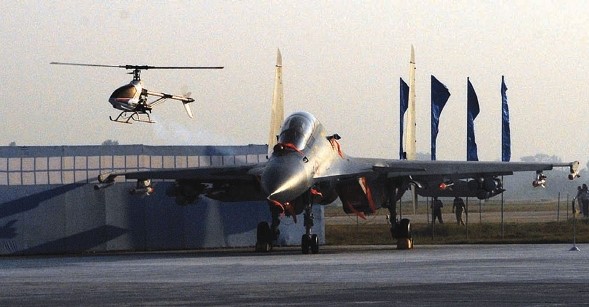
All three services are in dire need of modernization and infrastructure development in the border areas. Though limited budgetary allocations are made every year, very little is committed due to political and bureaucratic hassles. Funds are surrendered year after year with little enhancement in deterrence capabilities of the Armed Forces. The only way to ensure national security is to have credible deterrence.
Due to their nature of employment, the Armed Forces have today become the least favoured option for a young
man. Hence, they suffer from huge deficiencies in the officer cadre which adversely impacts operational capabilities. The nation and the government have to look into this aspect. The compensation provided in relation to the demands of the services makes for an unpopular career choice.
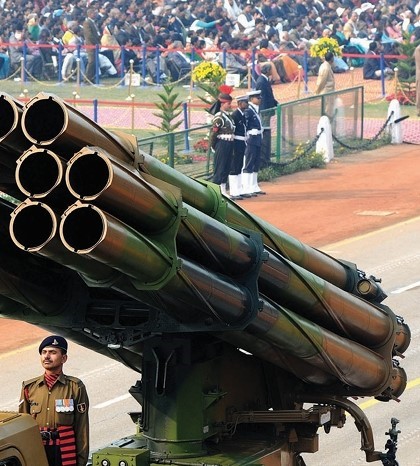
The country’s free and vibrant media has a major role to play in the state of the armed forces. While nobody holds a brief for not projecting negative aspects, it is equally the responsibility of a mature and responsible media to project the positive side. During the recent Army Day function, the Army put up an outstanding parade. The media not only ignored this but chose to highlight all the negative issues with which the Army is riddled today such as a dozen cases of corruption, scams and some cases of indiscipline.
For a good 10-15 years, particularly during the tenure of Prime Minister PV Narasimha Rao, the modernization programme was put on the back-burner. As a result, serious operational deficiencies occurred