















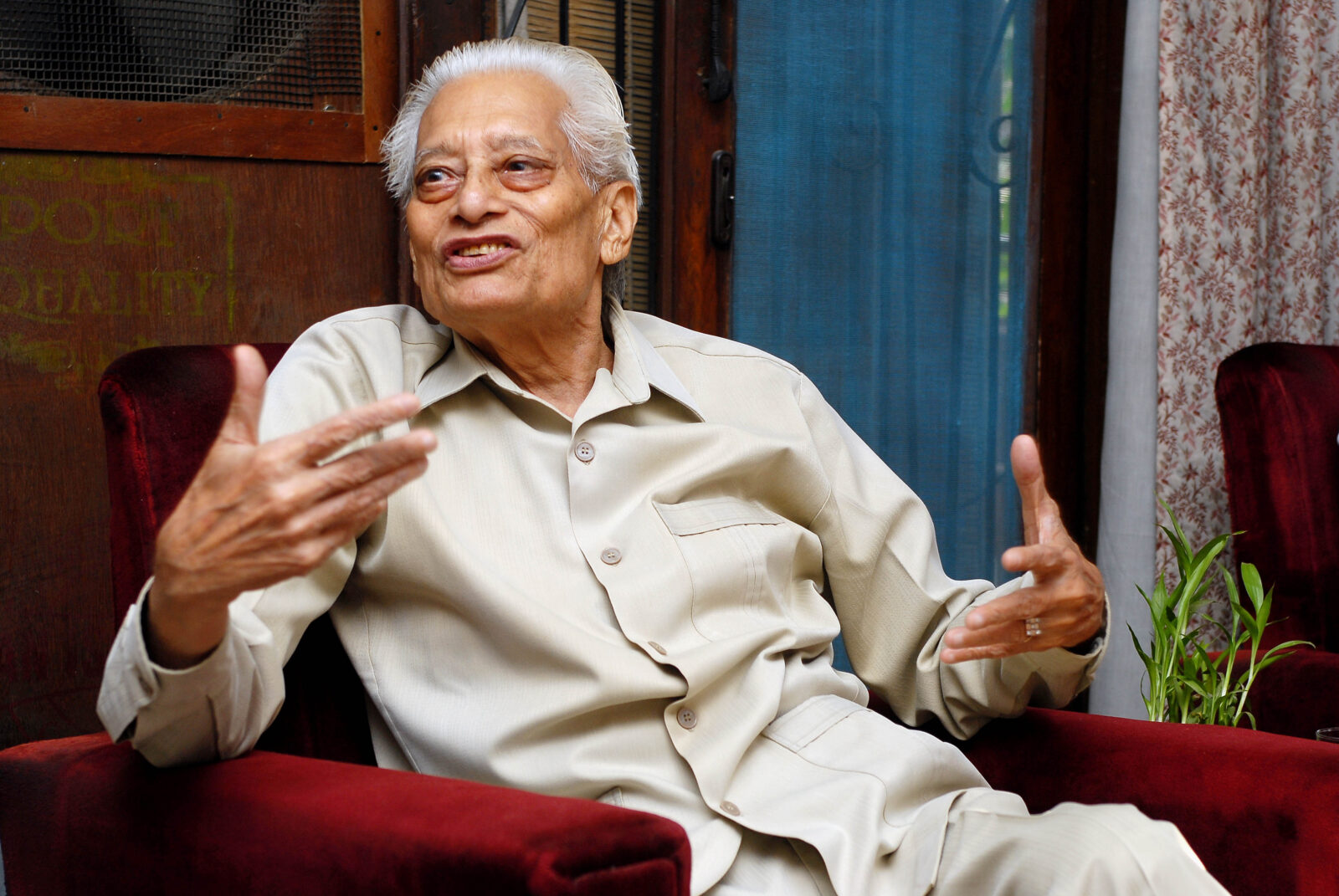
I earned an MSc in physics in 1946 and was pursuing further research. My research guide, Sir KS Krishnan, was doing collaborative research with the renowned scientist, CV Raman. One fine morning, in April 1947, I saw the advertisement for the Indian AdministrativeServices. The last exam for the ICS had been held in 1944 and, after a gap of three years, brilliant students across the country were waiting to appear for the IAS exam. I too tried my luck in the first IAS exam held between July 20 and August 7, 1947. After the exams, I was appointed a lecturer in Allahabad University and thought of continuing with academics, my prime interest. On August 15, 1947, I travelled to Delhi to witness the historic event of Lord Mountbatten bringing down the British flag along with Jawaharlal Nehru and the Tricolour being hoisted. I still recall it vividly. I returned to Allahabad and became engrossed in studies. The results of the IAS exam came out in March 1948. Topper Venkateswaran opted for the Indian Foreign Service. Tirumalai was second and Rajeshwar Prasad third. Sushital Banerjee ranked fourth, followed by me.
The selected candidates came to Metcalfe House, Delhi, for training and stayed in hutments with the Yamuna flowing nearby. On a full moon day, Nehru came to meet us. We were thrilled to find him amongst us. He asked which lunar day it was. Everyone said, “Purnima.” But Sunil Mukherjee said it was Buddha’s Nirvana Day. Nehru seemed to like the answer. I also recall the visit of Sardar Vallabhbhai Patel, Home Minister and the greatest advocate of the IAS. He was unwell and sat on the sofa. He said, “All of you undergoing training have been provided security of life and family by the country. Now it is your turn to repay the debt.” Then he elaborated the importance of the service: “You will become so important and busy in the coming days that we shall not be able to address all of you on a single day and under one roof again.” While we were talking to him, a message came that the Maharaja of Jaipur and the Nawab of Bhopal wanted to see him urgently. We went to the garden and watched. Sardar Patel was seated on a chair, truly looking an iron man.The Nawab of Bhopal was bending, whispering in his ear while the Maharaja knelt on the other side and waited for his turn to speak.
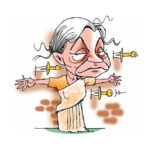
The caste system has been exploited. I call upon the new generation of civil servants to shed the fear of transfers and say no to unfair diktats
Our training got over and I joined the UP cadre. I was posted as Joint Magistrate, Etawah in 1948. I would go to villages, meet people, listen to their grievances and settle them on the spot. My wife accompanied me on my visits. Once, at Rae Bareli, I took a boat to reach a remote village. On the way, I saw a sadhu sanctifying an idol with holy water. My wife asked if he would give her the idol for worship at home. He said that a number of such idols were lying in the fields and she could pick up one. We found plenty. The incident led to study of antiques becoming my hobby. I later became a collector of antiques. When Sampoornanand was Chief Minister, I was appointed Additional Director of a relatively new department, Heavy Industries. Realizing the immense untapped potential this sector had for the development of the state, I made a 15-year dynamic plan, with 27 groups of experts. The Jawaharpur Heavy Electric Plant, the Hindustan Aluminum plant and an antibiotics factory, a joint venture with the then Soviet Union at Rishikesh, were established during this period. But after I left, the 15-year plan was not followed up.
I became Chief Secretary in December 1976 and worked for 15 months. It was a difficult period. The Janata Party came to power and Ram Naresh Yadav became CM. I left the state for Delhi and was appointed Secretary, Department of Statistics. I suggested merger of the post of Registrar-General of the Census of India, which functioned under the HomeMinistry, with the Statistics Department. Lord Curzon formed this department in 1905 and it was logical to merge it with the Statistics Department, whose work was similar. During my four-year tenure in the Ministry of Family Planning as Joint Secretary, I restructured and established the entire set-up. A road map of the family planning programme was prepared and family welfare centres established across India. The programme was moving steadily on the right track. A single overenthusiastic act by Sanjay Gandhi derailed it during the Emergency. We have not been able to revive it since.
The present IAS lot is sharper, intelligent and more energetic. Their canvas is much bigger than ours. But they lack
interaction with the masses. This should be addressed on priority. I often wonder why we have not been able to take the poor of this country along with us We know the reason yet are helpless todo any thing about it. The caste system has been exploited. I call upon the new generation of civil servants to shed the fear of transfers and say no to unfair diktats In spite of many drawbacks, and ups and downs in the growth of the Indian economy I see a silver lining. India is developing very fast in the right direction. We only need to be cautious and keep the welfare of the downtrodden at the centre of all our developmental planning and implementation.The biggest asset is the love and affection of the people with whom civil servants work.
(Kripa Narayan Srivastava was Health Secretary, Government of India, Chief Secretary of UP and Goa, and Vice-Chancellor, Pant Agriculture University)