


























ATENDENCY has developed among people to blame the police for every ill in society even when their own contribution towards such ills is not small — be it in the form of contributory negligence, abetment of illegal acts or committing offences.
Lawlessness, the ever-rising criminal graph, a steady increase in white collar and economic offences, the growing incidence of road accidents and a general state of discontent and unrest are all attributed to policing failure. The police is held responsible even in cases where citizens are responsible for some unsavoury outcome of their own doing.
According to the established position of law, it is every citizen’s duty to keep his loss to the minimum since his negli gence may result in loss either caused or increased by his contribution — know ingly or otherwise. Thus, every citizen must remain alert at least to the extent of safeguarding his own interests and not indulging in activities that may occasion injury or loss to himself or others.
“Contributory negligence” was thus defined in a judgment:
“Contributory negligence consists of absence of that ordinary care which a sentient being ought reasonably to have taken for his own safety, and which had it been exer cised would have enabled him to avoid the injury of which he complains, or the doing of some act which he ought not to have done and but for which the calamity would not have occurred.”
[Wakelin v. London and South Western Rly Co., (1886) 12 AC 41]
People indulge in several activities, unwittingly as well as intentionally, that could be termed as negligence — con tributing to landing them in a crisis (see boxes). Citizens also invite trouble by doing certain things with a rigid sched ule and careless prominence:
Keeping huge amounts of cash in shops and offices without adequate safe ty and security; transferring huge amounts of cash from business place to bank and vice versa without armed escorts; collecting cash from debtors on a fixed schedule, carrying it in shoulder bags, scooter dickeys and without ade quate security; flaunting costly jewellery at public functions; keeping large amounts of cash and valuables at home in cupboards with the keys placed in obvi ous places; sleeping outdoors in summer without securing entry to the house; fail ing to make security arrangements before leaving the house shut for days, not even asking neighbours to keep an eye out for strangers and intruders.
It is the duty of every citizen not to indulge in crime and to anticipate crim inal conduct by a third person. When circumstances are such that the possibil ity of harm caused by criminal conduct of a third person is, or in the exercise of due care should be, reasonably foresee able, it is negligence to fail to use reason able care to prevent such criminal act from causing injury or damage. The Constitution of India guarantees (a) the right to practise any profession, or to carry on any occupation, trade or busi ness, and (b) protection of life and per sonal liberty of every person, whether a citizen of India or not. The State, accord ingly, is dutybound to ensure these rights and provide adequate protection.
But the Constitution also imposes some fundamental duties on the citi zens. Article 51A expects every citizen “to safeguard public property and to abjure violence” and “to strive towards excellence in all spheres of individual and collective activity, so that the nation constantly rises to higher levels of endeavour and achievement”.
The emphasis on “excellence” indicates that citizens are not expected to perform their duties half-heartedly. Yet, experi ence shows that people want the State to perform its duties to the hilt, but conve niently forget their role.
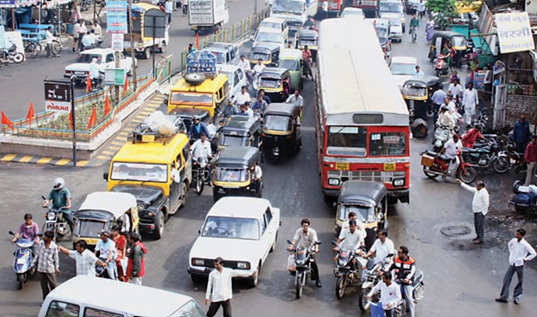
Diminishing moral values in society have caused a growing tendency to violate laws, unless checked at every moment. For example, people abide by traffic rules only when the traffic police is present. When apprehended for a vio lation, people invariably try to bribe their way out of the situation.
Rights and duties are mutually supplementary and comple mentary. One cannot be claimed without the other. An American, in a letter to the editor pub lished in The Times of India, Mumbai on October 4, 2007 said:
“Factors such as poorly-maintained roads, lack of emer gency services and police corruption, certainly, were factors to be blamed for India’s shocking road fatality rates but it was the motorists, not the Government authorities, that must take most of the responsibility because they don’t take simple and effective measures like wear ing helmets and seatbelts to protect themselves. If motorists want to increase their chances of surviving an accident, they can assume personal responsibility and take the above simple steps, includ ing driving more safely, and not just blame a faceless government entity.”
It is true that the concept of contrib utory negligence — or its modern ver sion, comparative negligence — is more relevant to the law of Torts and Contracts, yet in a wider and general perspective it applies to criminal law as well. People’s actions and inactions con tribute in increasing their own woes and losses.
In the circumstances of India, it is futile to expect too much from a skele tal police force that is overburdened and stressed beyond reasonable limits. Every citizen is a policeman sans uniform. An alert and enlightened citizenry can avoid many pitfalls, avert damage to public and private property, and injuries and fatali ties to self as well as others.
A responsible citizenry reduces much of the stress and strain on the administration and law enforcing machinery.
The trend of blaming the police for everything also leads to contradictory demands. More police interference to prevent crimes is sought but this means less liberty for the people. So, a reduction in police interference is sought to allow people liberty and to avoid police raj.
How can both objectives be achieved simultaneously? Indeed, in our demo cratic set-up, we must opt for greater lib erty and less police interference. It is entirely feasible if the people become more responsible.
