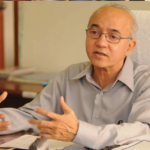









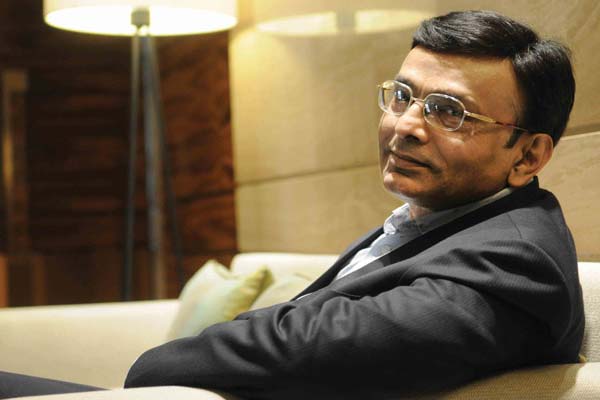







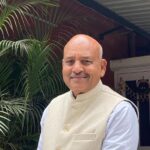




Born in Jaunpur, Uttar Pradesh, Indra Sen Singh secured an MSc in physics from Banaras Hindu University and then joined the Bihar Civil Services in 1977. He upgraded to the IAS’ 1995 batch in March this year. Over three decades, he has been Deputy Collector in Dehri-on-Son, Giridih, Singhbhum and Katihar, Executive Magistrate in Hazipur, Vaishali, Raxaul, Betia and Buxer, and Deputy Director, Consolidation in Katihar, Secretary, Sone Command Area Development Agency (SCADA), and Deputy Divisional Commissioner, Motihari. Before becoming District Magistrate (DM) at Araria, he was Director, Handloom & Sericulture, Department of Industries. He has also been an election observer at Pathankot and Kohima during the last Assembly election in 2007.
As DM of trouble-torn Araria, he leaves home at 9 am and returns at midnight. For him, there is no respite from work. When not in his office, he runs it through his mobile phone. There are no weekly offs for him and every day is given as much to the public as to his family. He travels nearly 100 km every day to keep track of what is happening in his area. Tara Patkar talked to him en route to his flood relief camp office at Forbesganj:
gfiles: After the devastation by the Kosi, your district is the focus of national attention. Your responsibilities have increased. How are you managing the challenge?
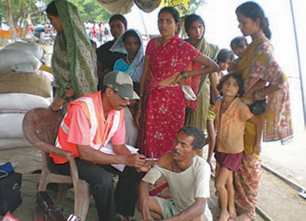
Indra Sen Singh: This is the first time that Araria also has faced the Kosi’s fury. Araria is not badly affected but it is surrounded by the worst-affected districts like Supaul, Purnea, Saharsa etc. When they were in trouble, we had to play the role of a good neighbour. It was a big challenge for us. First the rescue operation was the challenge and then the rehabilitation. We rescued 27,405 people between August 31 and September 11 with the help of many rescue agencies, including the ITBP, CRPF, SSB, Navy and Army personnel. They are living in 69 camps. As far as Araria is concerned, 3,86,328 people and 80,000 animals from 96 villages are flood-affected. We are arranging food, clothes and tents for them. We also set up 42 medical camps for people and 13 for animals. In rehabilitation camps, 246 toilets and 173 hand pumps were set up. I am regularly visiting all these places and taking all complaints seriously.
‘I have instructed the officials to make entries for each and every item received, whether money or goods, and issue receipts’
gfiles: Political parties are blaming each other for the tragedy and their leaders are coming to this area to see the people’s plight. Ministers are also paying visits. They all give you so many instructions. How do you deal with them?
ISS: I am convening all-party meetings every two or three days. I listen, note down their complaints and request them to help me in solving the problems. I also involve local media in the process. When there is transparency in all activities, it becomes easier to manage difficult problems. A district-level advisory and emergency committee has also been formed. It includes the minister in charge, MLA, MP and other public representatives along with other officers. A 24-hour flood control room has been set up at my residence. The public can contact me directly on my mobile. The block-level flood management committee has been formed to look after the problems of flood victims. We are making cards for all flood victims in which the details about the loss and damage suffered will be registered. We have formed various cells to manage records of all relief materials like NGO cell, material cell, boat cell, vehicle cell and so on.
gfiles: There is a feeling that the huge funds generated will not reach where they are needed due to corruption in the system.
ISS: I have instructed the officials to make entries for each and every item received, whether money or goods, and issue receipts. Proper documentation is being maintained in relief camps so that there is transparency.
gfiles: Do you meet the public on a particular day to listen to their problems?
ISS: When I joined here on March 18 this year, I felt that Thursday would be a good day to meet the public due to less work pressure. So the hours between 11 am and 1 pm have been set apart for them to come and share their problems. Most of the cases relate to land disputes, police atrocities and irregularities in teachers’ appointments. I have also said that all departmental heads must be present in office to redress the people’s problems. With the help of the district police chief, I started the Tiger Mobile Seva to check crime. It got a positive response and the public has got respite from crime.
gfiles: What is the ethnicity of the district?
ISS: Araria is Muslim-dominated. Over 40 per cent of the population is Muslim. Santhal, Mahadalit and Rishidev are other important communities. Earlier, Araria was a subdivision of Purnea district. It became a district on January 14, 1990.
gfiles: What should be done regarding flood and water management?
ISS: India needs to evolve a larger, integrated water management strategy with Nepal, China, Pakistan and Bangladesh. There are 200 small and large rivers between India and Nepal. The more the trust between neighbours, the better the river management. The two sides have not reached an agreement on building the Kosi dam despite years of talks. Nepal is not keen because it will mean dislocation of people even though it would generate power. But a dam may not solve the entire problem, a combination strategy of decelerating water flow and massive reforestation in Nepal is also needed. India could garner support there by creating stakeholders through poverty alleviation projects instead of just being bogged down in technical reports.