


















The draft legislation ignores children below six and above fourteen years of age and the responsibility of the State towards education remains ambivalent.
The Bill
Ideally, every child should complete elementary education without any disparity under a common school system as was recommended by the Kothari Commission in 1966. In 2002, the Right to free Education was incorporated into the Constitution.
With the objective of putting into effect this Right for all children in the age group of six to fourteen years, a Bill was drafted by a committee of Central Advisory Board of Education in 2005. It contains some of the following provisions:
- Children between the ages of 6 and 14 shall have the right to free education. (Clause 3)
- It will be the responsibility of the State that children should receive education of equitable quality conforming to the values enshrined in the Constitution. (Clause 5)
- A National Commission of Elementary Education will be set up to monitor the implementation of the Act, recommend corrective measures wherever necessary and perform other functions assigned to it. (Chapter VI)
- Competent Academic Authorities will prescribe curriculum and evaluation procedures. (Chapter V)
- No Non-state schools will be recognized unless the norms of the Schedule are fulfilled. (Clause 18)
- The Schedule to the Bill provides norms and standards for a school.
- It will be ensured by the Government to enroll every child of the age group in a neighbourhood school within three years. (Clause 3)
- It will be the responsibility of the parents or guardians of the children to enroll them in a school at the age of 6 years. (Clause 50)
- The appropriate government shall endeavour to provide for pre-school education to children below 6 years. (Clause 7)
THE SHORTCOMINGS
Initially Article 45 of the Constitution stated that the State would endeavour to provide free and compulsory education for all children below 14 years. Though it was one of the Directive Principles of State Policy, in the Unnikrishnan vs. Government of Andhra Pradesh, the Supreme Court said that Article 45 was a legal source for claim to education.
The Secretary of the concerned department of the Government of India says that he has been working on the Right to Education Bill for the last six months and that it may be tabled in Parliament very soon.
It is somewhat surprising that while the 2005 draft was placed in the public domain, the amended draft is kept under covers till it is tabled in the parliament. It is suspected that some radical changes have been effected in the earlier draft. The amended draft of the Bill was recently considered by the Union Cabinet and referred to a Group of Ministers.
To recall, the Bill has been hanging fire for the last three years. And if one counts from the 86th Amendment of the Constitution, which enshrined the Right in the first place but left it to be notified, it is more than six years that millions of children in the country have waited to be enrolled in school. Those who were six years old at that time may not get the benefit of the Right as they will very soon cross the age of 14 years, the upper limit of the definition of “child” in the Bill.
The 2005 draft merely speaks of recognition of private schools. It does not mention any regulation of non-state schools on the lines of state and aided schools. On the contrary, it tends to support the privatization of primary education. The State is seen as partly withdrawing from its responsibility of providing elementary education as is its duty under the Constitution.
Since the early childhood care and education (ECCE) is not being provided to all the children of the country (it is being provided to almost 50%) and rest of the children are left to be covered by either NGOs or private sector, it should be covered by including all the eligible children. This is the obligation flowing from the 86th Amendment of the Constitution to acknowledge the fundamental right of all children between the ages of six and fourteen years.
To avoid disparity in education a common school system should be introduced. At the moment, there are different types of schools. There is no commonality of curricula or system of teaching. The private unaided schools are not regulated in the same manner as the government schools are. Way back in 1966, the Kothari Commission had recommended Common School System. That recommendation has neither been accepted nor rejected by the successive governments in the last four decades.
I am not aware whether CABE did examine the pros and cons of introducing a common School System while deliberation on operationalizing the Right to Education.
There are two identifiable objectives of the Right to Education. The first objective obviously is providing free access to educational facilities to every eligible child without any discrimination of race, class, caste, gender, region or religion. It is a precondition for full realization of the Right. As an extension of this, the child should complete 8 year’s education without dropping out of the school.
The second objective, and perhaps more important than the first, is the quality of education imparted. It is a widely known fact that many children, who have passed class 5, cannot read or write. So in my view, the quality of education is as important as retaining the child in school.
The Bill does make a mention of “equitable quality” of education. According to clause 2 (o) of the draft bill, the equitable quality in relation to elementary education is defined as;
“Providing all children opportunities of access to, participation in, and completion of elementary education in accordance with the provisions of this Act.”
Therefore, the definition of quality education is restricted to access and retention of the child for a stipulated period of time. The quality of education and learning levels cannot be ensured unless measurable and monitorable indicators of quality education are in place. In the bill there should be national standard of quality education applicable to all schools with clear monitorable indicators. There are no indicators that can be monitored in an empirical way.
Schools should not be allowed to discriminate between groups or to perpetuate inequality. Non discrimination in education should be achieved at once.
The objective of “equitable quality” of education should be linked with culturally appropriate form and content. It is the duty of the state to ensure that all schools conform to the same minimum standard criteria. The language of instruction should also be acceptable to the students. Besides, it should encourage non-violent methods of school discipline.
Deliberate, concrete and targeted steps should be taken to achieve the target, when so much delay has already been made. In fact, since 2002 when the right to education was placed in the Constitution, the Central and State Governments should have made efforts to set up schools in every habitat of the country and to equip them with necessary materials and teachers.
According the International Covenant on Economic, Social and Cultural Rights (ICESCR) of 1966, there are several elements which are essential for the schools to function properly – buildings, sanitation, drinking water, trained teachers, teaching materials, library, and computers etc.
In the Act, there should be penal clauses like the Right to Information Act, 2005 for failure to take targeted and concrete steps for realization of the right to education, failure to provide minimum educational standards etc. Bad quality of teaching and failure to conform to minimum standards should also be actionable under the Act.
Education is a subject in the Concurrent List and therefore a shared responsibility of the Central and State Governments. The views of the state governments should be legitimately taken into consideration while finalizing the Bill.
The Right to Education Bill is undoubtedly welcome despite the long delay in its introduction. However, it is still not as comprehensive as it could have been. It ignores children below six and above fourteen years of age and the responsibility of the State towards education remains ambivalent.
ADDITIONAL CONCERNS
It is the first duty of the State to provide a school in every child’s neighbourhood. The Secretary of School Education and Literacy has recently stated in an interview that the government has succeeded in providing a primary school for 97% of the children within 1 kilometer and a upper primary school for 90% of the children within 3 kilometers(see gfiles of August 2008). Certainly the task of providing neighbourhood schools to remaining children is not so daunting.
The justification for excluding schools of certain categories is not clear. The resulting possible duality of educational system would militate against equality of all children at the elementary stage.
Also the reasons for doing away with public examinations altogether (Clause 30) is not clear. While annual examinations can be dispensed with but tests at the end of primary stage (Class V) and at the end of upper primary stage (Class VIII) are necessary to assess the learning levels of the children.
The introduction of School Management Committees (SMCs) is a welcome provision. Curiously it applies only to sate and aided schools but does not cover private unaided schools. It should be made applicable to all recognized schools irrespective of the nature of management. Besides, in the SMCs the representation of mother parents should be at least 50%.
FIRST PRINCIPLES
The right to education is a fundamental human right. Every individual, irrespective of race, gender, nationality, ethnic or social origin, religion or political preference, age or disability, is entitled to a free elementary education. This right is explicitly stated in the United Nations’ Universal Declaration of Human Rights (UDHR), adopted in 1948:
“Everyone has the right to education. Education shall be free, at least in the elementary and fundamental stages. Elementary education shall be compulsory. Technical and professional education shall be made generally available and higher education shall be equally accessible to all on the basis of merit. …” (Article 26)
The Declaration further states that;
“… Education shall be directed to the full development of the human personality and to the strengthening of respect for human rights and fundamental freedoms. It shall promote understanding, tolerance and friendship among … racial or religious groups. …”.
It is universally recognized that there is a direct correlation between lack of education and poverty. In fact, the UN High Commissioner of Human Rights has been working on the Right to Development and the right to education along with right to food and right to health forms an essential component of the right to development.
Worsening Ratio
The number of primary schools increased from 2,10,000 in 1950-51 to 6,42,000 in 1999-2000. The number of upper primary schools increased from 13,600 in 1950-51 to 1,98,000 in 1999-2000. It is estimated that about 90% of the habitations have physical availability of a primary school within a distance of one kilometer.
The number of teachers increased from 6,34,000 in 1950-51 to more than 3.2 million in 1999-2000. Among them, 35% are female teachers. But the teacher pupil ratio has worsened from 1:24 to 1:43 in primary schools and from 1:20 to 1:38 in upper primary schools.
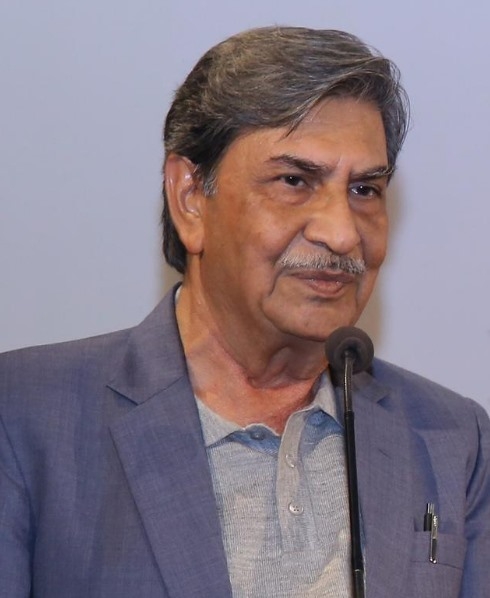
The author is a former Cabinet Secretary. This is an edited excerpt from a paper prepared for the IC Centre for Governance)

Prabhat Kumar is an Indian Administrative Service officer of the 1963 batch, he served as the Cabinet Secretary of Government of India between 1998 and 2000. Upon creation of the State of Jharkhand in November 2000, he served as the first Governor.