









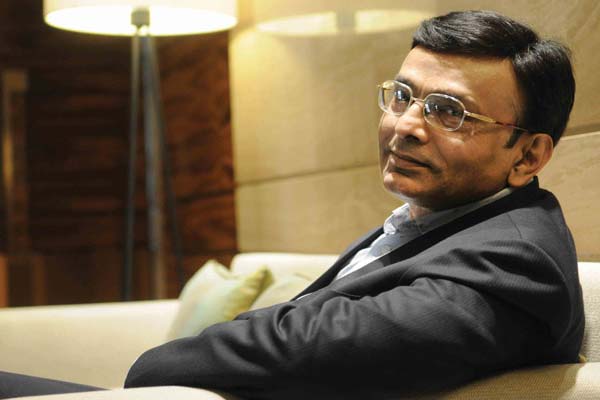

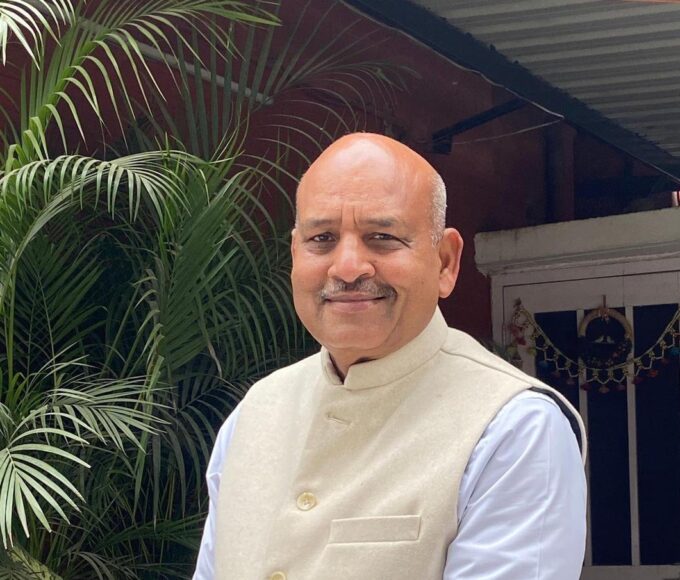












Since inception in 1995, under the I&B Ministry, Broadcast Engineering Consultants India Ltd (BECIL) has been a profit making undertaking that has paid regular dividends to the state exchequer. The Mini Ratna company has played a pivotal role in the growth of radio and television broadcasting through terrestrial, cable and satellite transmission in India and abroad. BECIL is a consultancy agency, system integrator and turnkey solution provider in all spheres ofbroadcast engineering including operation and maintenance of various types of broadcast systems. Its client list includes government, semi-government and private organizations within the country and abroad. To private sector clients it provides the security of being a government enterprise as well as efficiency of the highest order. CMD Harkesh Gupta talks about his organization’s contribution to this hi-tech sector on the eve of launch of the FM-II revolution in the country.
gfiles : Can you throw some light on the need for incorporation of BECIL by the government?
Harkesh Gupta : Seeing the present significant role of the private sector in broadcasting, it is interesting to note that radio broadcasting was started in India by a private company, viz. Indian Broadcasting Company Ltd, in 1927. The company went into liquidation within three years and was taken over by the government on an experimental basis for two years. The government then took it over in May 1932 and named the service Indian State Broadcasting Service, later renamed All India Radio. From this humble beginning, Indian broadcasting has witnessed a revolution with the coming up of satellite channels and opening of the broadcasting sector to private participation. The expertise in the field had mostly remained in government hands with the exception of allotment of time slot on AIR’s FM transmitters. With the opening of the broadcasting sector after the Gulf War in 1989, more and more satellite channels started beaming programmes to India. By 1991-92 the scene reached such a stage that Indian companies also felt the need to broadcast via satellite. They needed an expert agency to advise them. Such expertise was then available only with AIR and Doordarshan. The Government of India decided to incorporate an agency for this purpose.
gfiles : How has the formation of BECIL helped the country?
HG : An expert agency became available to private broadcasters. An expert agency was thus already available when broadcasting was opened to private broadcasters through the scheme of private FM Broadcasting Phase-I launched in 1999, offering 108 FM channels to private operators in 40 cities. Private operators did not have to run to foreign countries for expertise. The same benefit also accrued in the setting up of TV earth stations wherein the first two private broadcasters’ satellite uplink stations in the country were set up by BECIL.
gfiles : What are the main areas of BECIL activities?
HG : BECIL provides consultancy service including turnkey jobs in terrestrial radio and television broadcasting, satellite uplink and downlink systems including DTH, TV automation system, community radio, acoustics, audio-video systems (sound reinforcement systems/conferencing/recording/production and post-production systems), MMDS, and CATV Network besides broadcast operations and event-based satellite services.
Its services range from system design, planning and specifications to site-selection, installation and commissioning to project running, costing, staffing and in-service operations regardless of location.
BECIL also places, on suitable terms, technicians, engineers and experts in various organizations for operation and maintenance of broadcasting systems. It also supplies broadcasting equipment, especially to government departments.
In addition to its commercial activities, BECIL provides technical inputs to the Ministry of Information & Broadcasting for formulation of various policies related to broadcasting.
gfiles : Which countries does BECIL operate in?
HG : Mauritius, Bhutan, Kuwait, Nepal, Bangladesh, Afghanistan, Singapore and Qatar. Notable is the execution of various projects in Afghanistan entrusted by the Ministry of External Affairs under its India Aid Programme.
gfiles : What has been BECIL’s role in Afghanistan?
HG : The situation in strife- torn Afghanistan is well known to us. India and Afghanistan have a long history of friendship and cooperation. In the hour of their crisis, the Government of India prepared a package of assistance and offered it. It included refurbishing of media facilities, including radio and TV stations. The Ministry of External Affairs entrusted the work to BECIL. Our performance and time-bound delivery system despite many odds and violence in the host country impressed the Afghan government. In addition to revamping the radio and TV setup, their government was keen to revive its defunct national daily, Kabul Times. The terrorists had already destroyed the equipment and office of the daily. It was a Herculean task, because Kabul lacked human resources to run the daily. Apart from supplying and installing the equipment, we had to train a new team to run the printing press, its high-tech equipment and also make them learn to synchronize their equipment within a time schedule to print the daily without any interruptions. The credit of this success goes to our colleagues and other associates who performed under the looming threats of violence. The work is still in progress in various parts of the country.
gfiles : In the era of convergence, what other work has BECIL done in connection with media?
HG : BECIL played a key role in setting up the Media Centre at the recently held Commonwealth Youth Games in Pune. It was done in active collaboration with the Press Trust of India (PTI) to cater to the needs of audio, video and print media. The Pune event received wide national and international coverage and BECIL’s efforts have been appreciated. It is hoped that we will be able to repeat our efforts on a much larger scale for the Commonwealth Games in 2010.
gfiles : What has been BECIL’s role in setting up systems connected with EDUSAT?
HG : IGNOU, University of Goa, Abdul Nazir Sahib Institute of Rural Development, Mysore, and SATCOM, Jaipur are examples where BECIL has played a key role in setting up of earth stations as well as studio classrooms. It has enabled quality teachers and academicians to reach students of remote areas even in their homes. It has enabled students to access the best teachers through EDUSAT.
gfiles : The government now seems keen to monitor radio and TV channels. Has BECIL any role in it?
HG : BECIL has already set up an Electronic Media Monitoring Centre (EMMC) for TV channels. It is operational and will be expanded to monitor more channels. The government has entrusted BECIL with setting up a monitoring system for private FM radio stations. We have already undertaken the work at all the private FM stations across the country. We plan to have a centralized system for FM monitoring also.
gfiles : Do you visualize any role for BECIL in helping security agencies to fight terrorism?
HG : BECIL has already undertaken a step towards supply of communication and security equipment to security agencies. The company is planning to expand its activities in this direction.
gfiles : Does BECIL’s success revolve around government-sponsored assignments?
HG : No. As I have mentioned earlier, our clients include government, semi-government autonomous and private organizations. BECIL has a strong market presence in broadcasting. This year, its share of turnover from private operators is about 58.7 per cent of its total turnover. Even in the case of government work, including those of Prasar Bharati, BECIL has to compete in the real market.
gfiles : What are your expansion plans?
HG : With new technology, there is rapid growth in broadcasting all over the world. New developments are taking place in the broadcasting sector due to convergence of broadcasting, telecom and IT which offer fresh opportunities and challenges. The company plans to expand its activities to be able to cater to the growing market demand in upcoming areas like High Definition Television, Digital Terrestrial Transmission, Mobile TV, IPTV, EDUSAT programmes, Commonwealth Games coverage, besides gearing up for the enormous amount of work for FM Phase-III which is expected to cover a large number of cities.
gfiles : How much do these efforts reflect on your balance sheets?
HG : For 13 years, we have sustained ourselves from our own profits. We have booked returns in our balance sheets almost twice the investments made in the company. This year, we have paid a dividend of Rs 28.065 million to the state exchequer.
‘BECIL has set up an Electronic Media Monitoring Centre for TV channels. The government has entrusted BECIL with setting up a monitoring system for private FM radio stations’
‘Our performance and time-bound delivery system despite many odds and violence impressed the Afghan government. In addition to revamping the radio and TV setup, their government was keen to revive its defunct national daily, Kabul Times. It was a Herculean task’