
















A Dalit farmer’s son traces his rise through the ranks
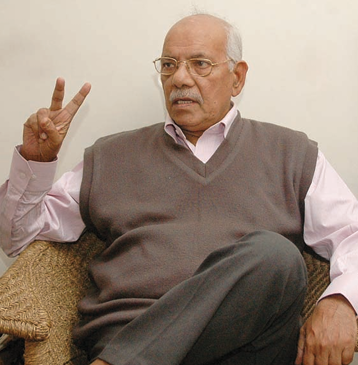
I was born in Kandhla, Muzzaffarnagar, UP, in a small Dalit farmer’s family. My father wanted all his sons and daughters to be educated despite the total lack of motivation. I was mediocre in studies. Having graduated in Kandhla, I moved to Meerut University for an MCom degree. My father then sent me to do LLB from Allahabad University. Allahabad was a sea change. The pure academic atmosphere impressed and motivated me to study hard and I made up my mind to appear for the civil services exam. After completing LLB, I joined the Government of India in 1963 as an assistant, but kept preparing for the civil services exam. I qualified and was selected as an IPS officer. A childhood memory of having seen an influential policeman in a rural area returned to delight me. While I was still undergoing training, I got the news of my selection in the IAS. It took me five years – from 1963 to 1968 – to become an IAS officer.
I was married eight years before joining as an IAS officer in accordance with the tradition prevalent in our area. I also used to work in my fields. Thus, I have risen in the government from the ranks. I was allotted the UT cadre and posted in Rampur for training. I learnt district functioning with fascinated interest. Being from a rural background, I always wanted to know how patwaris and tehsildars functioned.
After training, I was posted as Sub-Divisional Magistrate in Tripura. In 1970, the turmoil in East Pakistan started. When refugees started pouring into Tripura in 1971, I was posted in north Tripura. It was a massive task to make arrangements for approximately seven lakh refugees. I was supposed to look after 2.5 lakh of them. I had to coordinate everything within 15 days. Gen. I was a helping hand for Gen AS Arora, who was in charge of planning. I vividly recall that the BSF came first and then the military. Welfare activities were started through the Army Officers’ Wives Association.
It was my first experience of how a war is fought and how tough the military was. The most difficult job we completed peacefully was to send the refugees back after the war was over.
In 1972 Tripura became a state and Baleshwar Prasad was made Lt-Governor. I returned to Delhi and joined the Delhi Development Authority as Deputy Commissioner. In 1974, I joined the Agriculture Ministry. Once, my Secretary called to say he was posting me as Private Secretary to the Minister of State, Budh Priya Maurya. He probably thought that my being a Dalit would suit the Minister. When I asked him to post me in some other department, he said it was a challenging job. I was sad at the appointment.
However, it was yet another new experience for me. Important leaders would sit outside his office. Maurya was arrogant and visitors invariably enquired about his mood before entering his room. He trusted me so much that he always consulted me before signing any important document. He did not allow me to join any other department until his stint was over. After the Congress lost the next election, I was appointed Registrar, Cooperative Societies.
I served the government for 34 years and seven months. The most satisfying part of my career was the posting in Tripura and then as Commissioner, Municipal Corporation of Delhi on August 8, 1988. It was only because of the firm decision taken by Prime Minister Rajiv Gandhi that I could become Commissioner. My earlier postings in MCD as Deputy Commissioner (Taxes, Education, Horticulture) came in handy.
Soon after taking over as Commissioner, gastro enteritis was reported in resettlement colonies. The Central Government was worried. I put all possible staff and machinery on the job. Contaminated water was found to be the culprit. Hand pumps installed along with drainage lines had polluted the ground water. My rural background helped me control the epidemic fast and the job was commended by everyone.
Today we lack good leaders who command the respect and trust of the common man. Once, Pandit Jawaharlal Nehru stood up to address an unruly public meeting. The crowd was not under control. Nehru went down from the stage into the crowd and told it to behave. He could do it as the crowd loved and trusted him. Can you name a single leader today who can dare do such a thing?
The civil service trains one to be disciplined and it allows one to interact with different strata of society. Sadly, now it lacks the earlier spirit. Then, Collectors would be like elder brothers and treat citizens like family members and even host lunches for them at home. This is no more the practice in the changed atmosphere today. There is poor or total lack of social interaction. The relaxed and stress-free working environment has given way to an unduly stressed scenario.
Soon after taking over as Commissioner, MCD, gastro enteritis was reported in resettlement colonies. My rural background helped me control the epidemic fast and the job was commended by everyone
Collectors would be like elder brothers and treat citizens like family members and even host lunches for them at home