
















A member of the design team behind India’s first nuclear blast looks back on a life devoted to the unglamorous world of scientific research
My motto in life has been “Improving the common man’s life through scientific means”. When I was a student in the secluded town of Tiruchirappalli in Tamil Nadu, not many people knew about the scope of science. I am grateful to my teachers who saw a scientist in me and nurtured me. I came from a small middle-class family and my father was a junior engineer in the state electricity board. I studied in one of Tamil Nadu’s best colleges – St Joseph’s College, which is older than Chennai University. Dr Abdul Kalam also studied there.
I always stood first in class and got a first class first in MSc. Atomic energy was a glamorous subject in those days. Research was considered fashionable and was not common then. The Bhabha Atomic Research Centre (BARC) started giving fellowships to young scientists and I was selected for one.
I joined BARC immediately after college but continued my studies and did PhD while working at BARC. Though I did not get the opportunity to do research directly under Homi Bhabha, I used to observe him working. I worked with Dr Raja Ramanna – father of the Indian nuclear programme. One cannot imagine today that we worked on wall-size computers called Tifrac computers.
We were proud of working at BARC because the office was air-conditioned, with a well-equipped laboratory and computers. The atmosphere at BARC was very stimulating since the best brains of the world, including Nobel laureates, used to come for interaction. I learnt a lot from these interactions. They decisively influenced my outlook and vision for my nation.
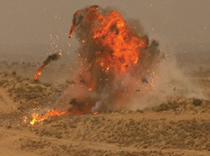
I was part of the design team of the first nuclear bomb of India – Pokharan1 – and was assigned a very specific job. It was a secret programme and no one knew as to what others were doing except probably the top bosses. We started from scratch under the leadership of Dr Ramanna.
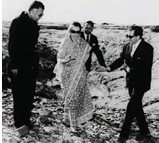
The plan to have a nuclear bomb must have started some time in 1969 or 1970 and we had no idea as to what the budget was. But it was a 100 per cent Indian effort. BARC, to me, was the best workshop in the world. We developed most of the parts there itself. Some work was done through vendors who were provided with the design only and never knew what it was meant for.
When Pokharan1 took place in 1974, everybody was surprised. The reaction was quite exhilarating. We were proud that India could do it.
I spent 25 years at BARC. Later, I established the Institute of Physics in Bhubaneswar in 1989 and was there till 1994. The institute is known for its research facilities. I then became Secretary, Science and Technology, Government of India in 1995 – a position I held for 11 years. I think I was one of the longest-serving Secretaries of the Government of India. My endeavour as Secretary was to develop the best research facilities in the country.
I started two major programmes for budding scientists – the Swaran Jayanti Fellowship and the Kishore Vigyanik Protsahan Yojana. Can you believe that India is a major participant in the Centre for European Nuclear Research, which became possible when I was Secretary in the Government of India? As a researcher, I know what kind of equipment is needed.
India’s global position in the scientific world is on a par with that of China and Europe. In the US, 24 per cent of scientists are of Indian origin. But we still lack the infrastructure required to produce quality research.
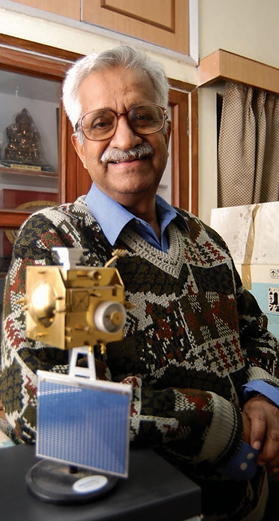
Bhabha, Ramanna, R Chidambram and Richard Feynman have been my role models throughout my life. To me, research is a challenge. From scarcity of food to the green revolution in 1969 and the nuclear bomb in 1974 – they were all challenges that we met successfully. People will be surprised to know that, during the signing of the 123 Agreement, the Americans remarked at a meeting that “whenever we deny anything to India they always come out with new things”. This shows how Indian scientists take up challenges.
Scientific research is a long-drawn process and does not bring instant results. It needs time and infrastructure and does not guarantee 100 per cent success. Research is always a risky proposition and requires a lot of patience. But a good scientific idea has a time limit. If you don’t start working on it, it becomes stale. In our system, the process of consultation is too long. We need to shorten it.
The Government of India is aware of the importance of science and scientific research. It is focusing on the IITs, inspiring youth, spending more resources on education. It is a sign that in the days to come scientific research will have its place.
Researchers’ lives are not glamorous. I have always worked behind the scenes. That is what every scientist does. Our media does not give adequate attention to the scientific world. There are many human interest stories which need to be highlighted.
I am still contributing as a scientist. There is not a minute in a day when I don’t think about science. I am currently Chairman of the Board of Governors of IIT, Delhi. I am also Chairman of the Recruitment and Assessment Board of the Council of Scientific and Industrial Research (CSIR) which has a total of 25,000 employees of which 8,000 are scientists. And I am part of the National Security Advisory Board as Member, Technical. So every day I am contributing whatever I can for my country.
After my present engagements in Delhi are over, I plan to settle in Coimbatore.
The plan to have a nuclear bomb must have started some time in 1969 or 1970 and we had no idea as to what the budget was. But it was a 100 per cent Indian effort. BARC, to me, was the best workshop in the world. We developed most of the parts there
Researchers’ lives are not glamorous. I have always worked behind the scenes. That is what every scientist does. Our media does not give adequate attention to the scientific world. There are many human interest stories which need to be highlighted