




















The state needs bureaucratic initiative to steer out of the complications of change
WHAT is the picture that unfolds when someone utters “Kerala”? Irrespective of your geographical location, the images will be the same: a rich green landscape. Snaking backwaters. High literacy. Highest longevity. Lowest infant mortality. Best healthcare. Best sex ratio. Gender equality. Robust media. Vibrant rural and urban markets. These are just a few images.
Kerala is a fascinating case study especially now as it is in the throes of change that is being resisted by purists. It is a model that is touted in various corners of developing countries. The debate, however, has been largely superficial as it eulogises the development parameters that Kerala has been able to achieve.
Here is a state caught in a web of paradoxes that has no parallel in any Indian state. On one hand are the firsts that Kerala has achieved. On the other is a state caught in the trap of its political ideologies and narrow interests myopic to the dynamism of change.
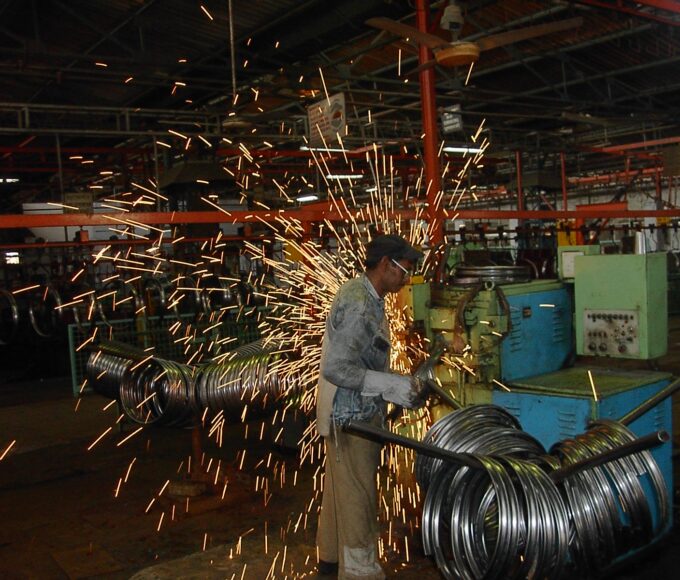
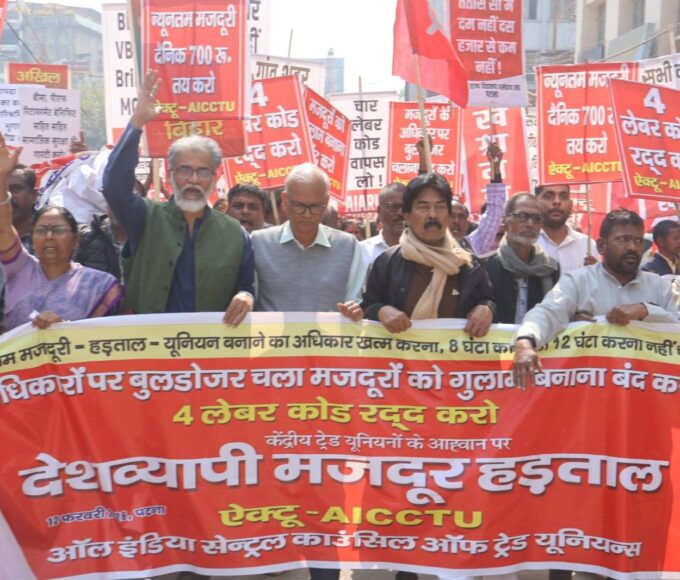
In the last few years, there has been a growth in the per capita income as far as the service sector is concerned. But there is no industry worth the name. The only silver lining is the prospect of the IT industry that is making a mark, though not as dramatically as its neighbours. But the fact that Kerala has notched up Rs 700 crore with IT exports is remarkable. It is a fraction compared to Karnataka but, apart from tourism which rakes in Rs 10,000 crore, there is nothing to write home about. Industry shies away from investing, fearing labour unrest as Kerala is one of the most volatile labour controlled islands in India. Political parties have thrived on creating pockets of labour unions and using them as vote banks. The industries ministry wants to bring in reforms but that is on the backburner as they fear being stonewalled by their own party activists who will see the ghost of capitalism in every reform.
So there are no worthwhile job opportunities and the young continue to migrate to faraway lands. Villages and towns are bereft of educated youngsters as they have left for any place that has a job to offer. Over 44,000 passports are issued every year. There are 35 lakh educated unemployed people waiting.
Politics runs deep in every Malayalee. There is complete polarization. If you are not a Marxist, you must be a Congressman. This is probably the only state where even the bureaucracy is completely politicized. You have Left bureaucrats and Right bureaucrats. They largely follow political dictates and have not been able to creatively sculpt a different future for Kerala. Those who leave the shores of Kerala on deputation are not keen to return as there is a lot of political interference.
Is it not tragic that in a state where even the daily wage labourer is mostly educated, youngsters are committing suicide for fear of a bleak future? There is palpable anger and desperation as the state is chained to a graveyard of industry and modernization. Ironically, civil society in Kerala is one of the most active. Have you ever heard of a populace gathering money to help a bureaucrat fight court cases that rich vested interests have slapped him with? It happens here.
Kerala has such a fantastic combination of educated talent, fertile land and vast human capital. What it lacks is discipline and direction. It needs leadership to steer it from complicated situations that have been thrown up by change. There is no industry, but an economic boom seems to be happening. The marketplaces are full; there is a kind of consumerism that you will not see anywhere; land prices are rocketing; and jewellery shops selling gold are packed.
But let it not fool you. Most of the money floating around is from remittances from Malayalees working their backs off. The figure is a staggering Rs 25,000 crore. It is not just the Gulf anymore that is a destination. In the last five years, as many as 25,000 nurses have moved into the US and UK. Kerala continues to limp as a “money order economy”. If the gold shops are full and real estate is exploding, it is because of Malayalees abroad not knowing what to invest in. Gold and land is all they understand.
As remittances keep increasing every year, there is inequality growing. A study by the Kerala Shastra Sahitya Parishad shows that almost 75 per cent of the growth in assets is benefiting only the top 20 per cent. Prabhat Patnaik, vice chairman of the Kerala State Planning Board, keeps warning that the gains Kerala made with its development model are now under threat and poverty is a real problem that needs to be tackled though it might not seem obvious as remittances camouflage the actual reality.
The glitz does hide the truth. As urbanization races ahead, there is a new problem of waste disposal which was not there earlier as each household recycled biodegradable waste in its backyard. But, with high rises shooting up, there are no backyards anymore dotted with coconut and areca nut trees. The recent outbreak of chikungunya was a direct result of waste not being disposed. Public health is in a complete shambles. Yet, for the rich there are hi tech hospitals mushrooming. In the rural hinterland of Perinthalmanna in Mallapuram district there are 45 hospitals. Even the Marxists have got into the act with a specialty hospital. The space for public utilities is being crowded out.
The bureaucracy has done a swell job with land reforms, panchayati raj and protection of the poorer sections of society. If Kerala today is seen as God’s own country, it is because a determined bureaucracy induced political forces over a decade ago to open up the state for tourism. Internationally, Kerala is today seen as one of the best destinations in India. There is a lot of apprehension about public private partnership but the success of Kochi International Airport is there for all to see. Last year, it posted a profit of over Rs 50 crore. The planned Smartcity in Kochi and the Technocity in Thiruvananthapuram could be the new models emerging that might teach cynics a thing or two. Bureaucrats could use this to remove some ideological cobwebs that politicians are clinging to. Kerala has risen far above pedestrian caste and communal traps and the bureaucracy can take some credit for it though social activists played a great role. The bureaucracy now needs to take Kerala to a new state of health.
On one hand are the firsts that Kerala has achieved. On the other is a state caught in the trap of its political ideologies and narrow interests myopic to the dynamism of change
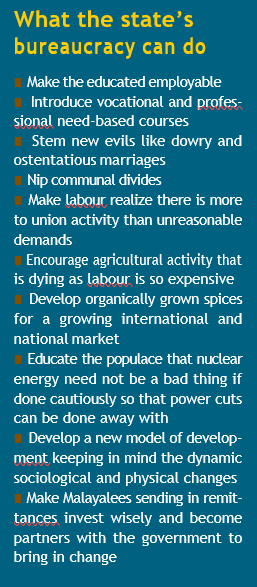
Kerala has the kind of potential that no Indian state has, but it has to take that leap which only the bureaucracy can do as active catalysts of change in such a dynamic state. Kerala cannot be left to its blinkered politicians. The Marxists are not open to listening. But the bureaucracy must work in tandem to whip up political will to make Kerala the kind of state it deserves to be