















There is an interesting sideline to the drama of the Indo-US nuclear deal. Sources say our envoy to the US, Ronen Sen, will definitely be asked to appear before Parliament’s Privileges Committee for his “headless chicken” remark about the opponents of the 123 Agreement. Now, Sen’s outburst might have been intemperate but seasoned observers believe it was likely caused by what may be termed the Mughal durbar courtier syndrome. It dates from the era when, as a relatively junior officer posted in Moscow, he escorted Rajiv and Sonia Gandhi during their extensive tour of the then Soviet Union when Mrs G was PM. A meteoric rise in the Indian Foreign Service followed and Rajiv Gandhi appointed him Joint Secretary in the PMO.
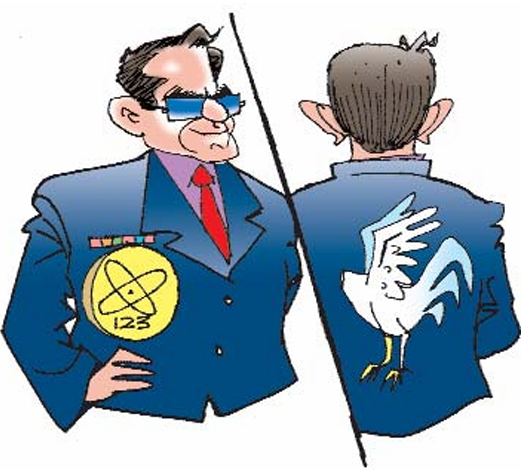
He has not looked back since even when the Congress was out of power because of his ties with 10, Janpath. And it was this connection that propelled him to become the UPA government’s representative in Washington and have an important say in the development of US-India relations. Then there is the case of a stern aide-memoire from the Singapore government to the Ministry of External Affairs, relating to the prolonged absence from Singapore of the Indian High Commissioner, S Jaishankar. The memorandum points out that the High Commissioner had been away seven times since he took over and has asked Delhi to clarify the status of India’s representation in Singapore. Jaishankar has been a key negotiator for India in the nuclear deal and his posting to Singapore had in the first place puzzled many people. As Joint Secretary (Americas), he was involved in the negotiations from the outset and had to be brought back from Singapore repeatedly for crucial parleys.
Deshmukh acts in haste
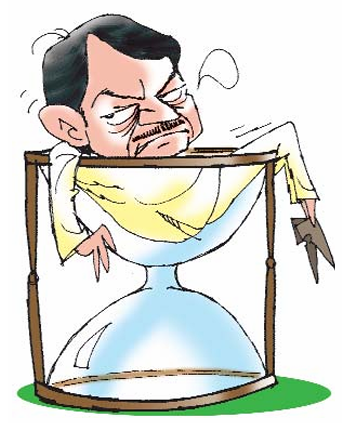
Vilas Rao Deshmukh, now in his second stint as Chief Minister of Maharashtra, unwisely sprang into action when a rumour spread in Mumbai that his days in the seat were numbered. He was in Latur when the grapevine buzzed but, mindful of his previous ignominious exit, issued a denial at once. He has reason to be wary: the Congress high command has a plethora of worries in the state. And Maharashtra too has its share of Congressmen whose purpose in life is to gauge the mood of the party high command and, at an opportune moment, open a Pandora’s box to plague the Chief Minister. Now, Deshmukh, in his hurry to issue the denial, forgot that, in such a situation, it is the particular General Secretary of the All-India Congress Committee in charge of the state who dismisses the rumours. Deshmukh’s opponents are gloating over the fact that this did not happen in his case. Prominent among them is a former migrant labourer from eastern UP who, by dint of receiving and seeing off central Congress leaders at Mumbai airport, rose to become minister during Deshmukh’s first innings. Now, sans a berth in Deshmukh’s second Cabinet, he has turned against his former mentor and is utilizing his airport connections to stage a comeback as minister. But Deshmukh has vowed not to induct him, come what may, as he knows the chap has already curried disfavour with 10, Janpath for exploiting the name of the son-in-law of the entire Congress community.
Culture clash
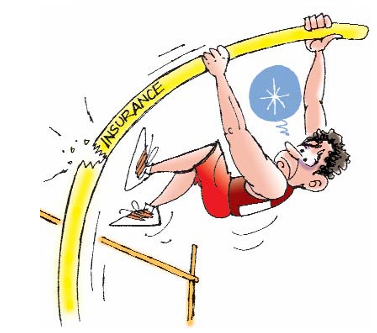
Not only is Punjab blessed with a number of sporting legends, it has also had the good fortune (or sense, some may cavalierly remark) to involve some of them in sports administration once their days of glory on the playing fields were over. But many of these legends of Indian sport, going at their tasks with the same never-say-die spirit as in the days when they tackled hurdles in the playing arena, are finding it difficult to keep their chins up when faced with the rather differing mindset that is all too frequently becoming a trademark of bureaucratic functioning. Recently, some sports administrators scratched their heads to find a solution to a common problem: during tournaments, injured players often do not get medical help immediately due to lack of funds and resources. The officials decided to insure the athletes for the duration of the tournament so that, in case of injury, an ambulance and hospital care would be available. They tied up with a private hospital and a premium of Rs 600 per athlete was fixed. However, they were in for a shock when the file went up to RPS Pawar (SecretarySports). This worthy called in an organization from among his own contacts in place of the private hospital. In the fresh proposal submitted by the new body, the premium was quoted at Rs 2000 per athlete. Last heard, the file had not made any progress and the cash-strapped tournament organizers had seen their dream of prompt medical aid for injured players for what it was – a dream.
Lalu bends rules
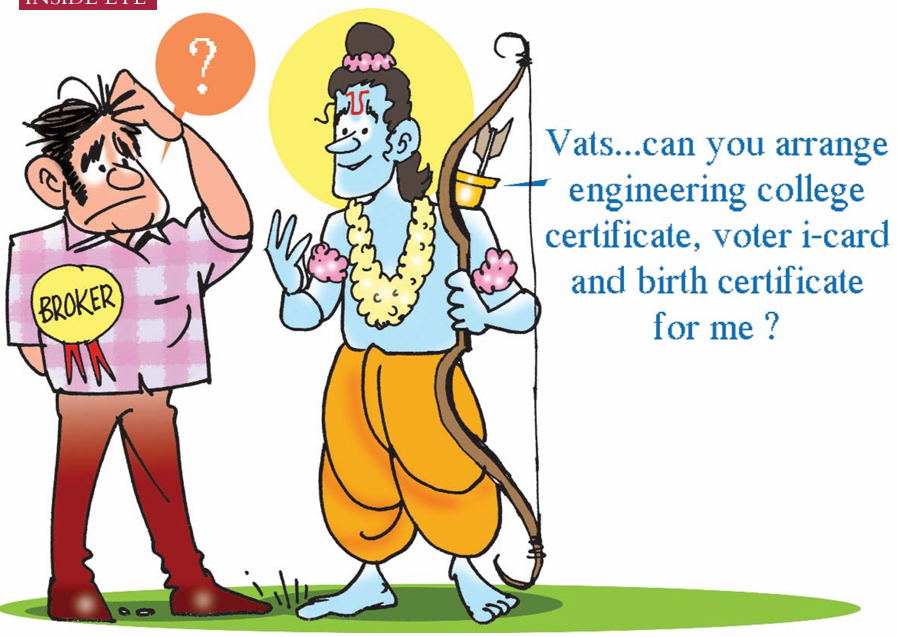
There is always cutthroat competition among Indian Railways officers to bag the highest post of Chairman, Railway Board. There are two criteria: working experience of at least a year as General Manager of any of the zonal railways or as member of the Railway Board, and at least two years of service left before retirement. The candidate should not be accused of anything by a vigilance authority. The last two Chairmen were selected on the basis of these criteria. But the story behind the elevation of the new Chairman, Kalyan Coomar Jena, is distasteful. Jena (Member, Staff, Railway Board) had two rivals: Sukhbir Singh (General Manager, Northern Frontier Railway) and VK Rao (Member, Mechanical, Railway Board) as far as seniority went. Rao was ruled out of the fray as he had less than two years of service left.
Interestingly, Jena not only had less than two years of service but also faced a vigilance case during his stint as Divisional Railway Manager, Baroda. Singh satisfied every condition but Jena was recommended to the Cabinet Committee of Approval. The Committee returned the file without approval. This continued for over a month. Ultimately, since the operative principles of a coalition government tend to override government rules and regulations, the candidate favoured by Railways Minister Lalu Prasad Yadav was installed on August