




























The advent of the desi aam in America is the fruit of bureaucratic cooperation
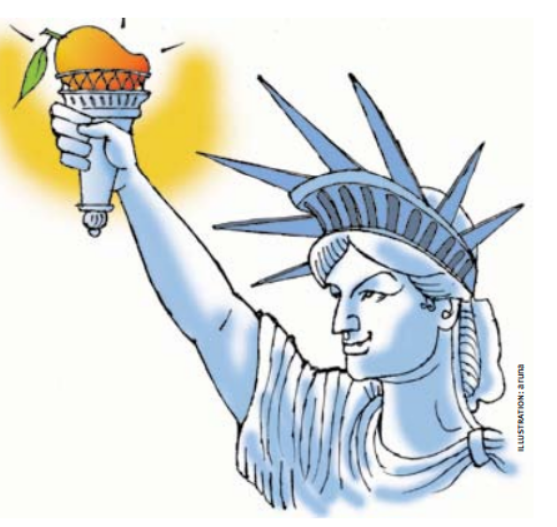
The first shipment of India’s king of fruits – the royal mango – was given a finger-lickin’-good welcome by none other than US Secretary of Agriculture Mike Johanns. Irradiated Indian mangoes arriving through US ports-of-entry pioneers the mango trade with the United States.
At a mango fest hosted at the Washington-headquartered US-India Business Council (USIBC), just opposite the White House, US Trade Representative Susan Schwab and Johanns each received from Indian Ambassador Ronen Sen the first gift baskets of ripe Indian mangoes seen in the US capital in 18 years.
Smiles and joyous applause erupted at the USIBC mango-tasting event as an Indian chef, Ramesh, from the nearby famous Bombay Club of Washington, DC, cut into the first Alphonso mango. Ambassador Sen shared cubes of the golden fruit with the two Bush Administration Cabinet officials credited for enabling access of Indian mangoes to the US market.
Indian mangoes are the first fruit irradiated at an overseas site and approved for importation into the United States. Irradiation became an approved treatment for all pests on fruits and vegetables entering the United States in 2002. Last year, a generic dose was recognized for a wider range of commodities, including Indian mangoes. The use of irradiation provides an alternative to other pest control methods, such as fumigation, cold and heat treatments.
“This is a significant milestone that paves the way for the future use of irradiation technology to protect against the introduction of plant pests,” said Johanns. “India and the United States began talking about shipping mangoes 17 years ago. Irradiating Indian mangoes safeguards American agriculture while providing additional choices for US consumers in today’s global marketplace.”
APHIS, the Animal Plant Health Inspection Service, approved the import of pre-cleared, commercial shipments of fresh mangoes from India provided certain conditions are met. To ensure that plant pests of quarantine significance do not enter the United States through the importation of this fruit, the mangoes must be treated with specified doses of irradiation prior to export at an APHIS-certified facility. Each shipment must also be accompanied by a certificate issued by the national plant protection organization of India with additional declarations certifying that the treatment and inspection of the mangoes was made in accordance with APHIS regulations. In addition, inspectors with the Department of Homeland Security’s Customs and Border Protection may further inspect pre-cleared commodities at the port of first arrival.
India’s Commerce Minister, Kamal Nath, remarked upon the first consignment leaving India: “America for too long has denied itself the taste of delicious Indian mangoes.”
For Indian mango growers, the American market holds significant promise. India is the world’s largest producer of mangoes – at 12 million metric tons harvested each year – but it accounts for less than 1 per cent of the global mango trade. America’s taste for mangoes is growing, with US demand 99 per cent dependent on imports – mostly from Mexico and South America – at 250,000 metric tons annually, valued at $156 million. By contrast, in 2005-06, India exported 58,000 metric tons of mangoes to neighbours in Asia and to Europe.
This breakthrough of the mango trade is highly emblematic of a push by both the US and India to deepen two-way trade from $30 billion to $60 billion over the next two years.
LITERARY TASTES
Fareed Zakaria, editor of Newsweek International, who grew up in Mumbai: “I’m thrilled. It’s been one of the things I miss most from India. The Alphonso mango is just delicious, the best in the world. Americans have been deprived of this delicacy for too long!”
David Davidar, author of The House of Blue Mangoes and publisher of Penguin Canada: “The broader implications of the move aside, the decision by the US to start importing Indian mangoes simply means residents of the States will now be able to start enjoying the finest mangoes in the world, not just the insipid varieties from elsewhere that were the only option available to them until now.”
Shashi Tharoor, whose The Great Indian Novel features one of the best descriptions of India’s love affair with the mango: “After years of penury, where what passed for mangoes in American supermarkets was a travesty of the term, we at last have the real thing! I used to believe that true mango lovers could sue American groceries for false advertising – the tasteless, fibrous, tart and flavour-challenged fruit they sold did not deserve the name of mango. Now we should urge every American we know to try a real Indian mango. They’ll never think of mangoes the same way again.”