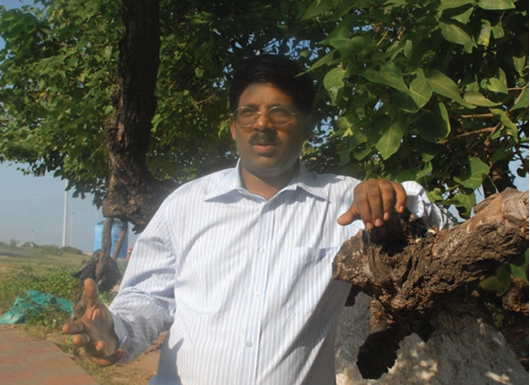























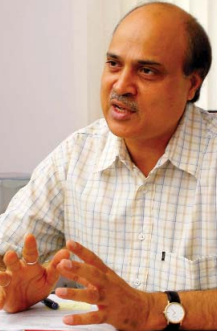
ANIL Kumar Singh, a 1984-batch Indian Forest Service officer of the Assam cadre, has vast experience in planning and implementation of a wide variety of schemes in sanitation and
hygiene, environment conservation, potable water and child education at the grass-roots
level. He went global in his developmental mission after joining the world-renowned Sulabh International Academy of Environmental Sanitation, as Chief Executive Officer in January 2005. “Poor access to potable water and adequate sanitation is a global curse,” he says. The global initiative to promote clean living and good health propelled the Academy into evolving and putting into practice new strategies and technologies in African countries.
Then, Singh led the Academy into formulating an Education, Capacity Building & Training Programme on sanitation technologies for African countries with a long partnership with the United Nations Human Settlements Programme (UN-HABITAT). Professionals in these countries were trained through rigorous workshops, and helped to formulate projects, provide logistics and finally implement at grass-roots level under the technical and administrative supervision of the Academy. Since then over 50 professionals from 13 African countries – Ethiopia, Mozambique, Uganda, Cameroon, Burkina Faso, Kenya, Zambia, Tanzania, Mali, Ghana, Cote d’Ivorie, Nigeria and Senegal have been trained at the Academy campus. The officer, frequently travelling to these countries, is overwhelmed by the adoption rate and success of the transferred technologies at the ground level.
When not in the African countries, Singh spends time in the resettlement colony of Madipur in Delhi, training traditional waste-pickers in managing city garbage through vermi-composting. Sulabh’s Solid Waste Management (SWM) project has been running in Madipur since September 2005. “SWM is a grave urban problem,” says Singh. “Training waste-pickers in vermi-composting can help them realize additional income, generate employment and tackle the menace of urban waste at low cost.” Two thousand waste-picker families have already been trained. An additional welcome feature of this project is that it involves local communities and local government.
Of tax headaches and mouse clicks
Corruption, inefficiency and lack of innovation have been the hallmarks of the Municipal Corporation of Delhi (MCD) with political pressure taking a toll of good governance.
Revenue collection from property tax has always been a challenge for the MCD and a nightmare for taxpayers. Approximately 8,50,000 taxpayers contribute hundreds of crores of rupees. Touts in the MCD have a field day, charging huge commissions for filling in forms.
Financial leakage ran into tens of crores of rupees for want of a database. Local leaders thrived in connivance with MCD officials and the honest taxpayer feared the inspector raj.Prior to April 1, 2004, house tax was calculated on cost basis, which included cost of land and of construction. But soaring land prices over the years created disparity in house tax collected from property owners in the same neighbourhood.
So the system of Unit Area Method was introduced.
Under it, area was multiplied by the unit base value fixed for different localities to arrive at the house tax due from individual property owners. It was also decided to collect tax online but vested interests decided otherwise and the manual filling in of tax forms continued for another two years.
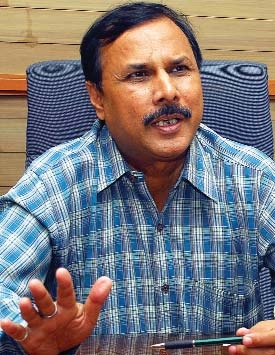
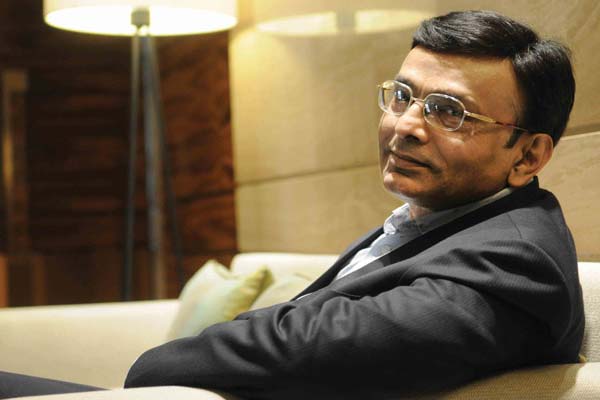
When Akhilesh Kumar Ambasht, a 1987-batch Indian Forest Service officer of the AGMUT cadre, joined the MCD as Assessor and Collector on December 26, 2006, he was shocked to see a fall of Rs 200 crore in annual property tax collection – from Rs 900 crore the previous year to Rs 700 crore. A doctorate in ecology, the officer made it a priority to make property tax collection in Delhi online. A sister concern of Infosys was engaged to develop software. Ambasht provided guidelines at every stage of programming and soon the MCD was ready to go hi-tech. The company was paid Rs 9 lakh for the job. It had charged Rs 1.5 crore from the Delhi Development Authority (DDA) for similar work.
After property tax collection became online from April 1 this year, the revenue collection has gone up to Rs 800 crore and is expected to increase further. “The new system of tax collection is the first of its kind in the country. Besides plugging financial leakage, the online process will save taxpayers from middlemen and harassment. Also, with the complete database of taxpayers, pinning defaulters will be just a mouse click away,” says the happy Ambasht.