














On June 1 this year, Business Standard had a story headlined “Unit Scheme 64: RIP” with a slug saing “India’s first MF scheme ends its 43 years journey”. Thereby hangs a tale aboutgovernment’s media communication and policymaking.
Unit Trust of India was started by the Central government in 1964, offering an equity-linked savings scheme for the first time in India. My elder brother, who had retired as a college teacher, was able to pay for the marriage of his daughter after selling UTI-64 units in 1994. There were millions like him who benefited from their UTI investments, which offered guaranteed returns.
As it mopped up a lot of funds from people across the country, it also acquired sizeable equity stakes in both safe and unsafe firms. Being a government monopoly, UTI also gained considerable political clout and was never a free agent either in its purchases of stocks or in their disposal. An official probe report in 1999 showed that, of the 1,426 companies UTI invested in, only 81 showed an appreciation (of just Rs 429 crore till November 1998). The remaining 1,345 depreciated to nearly half. UTI was also used by the powers that were for buying and selling other assets, including real estate in a not so transparent manner that cost UTI dearly.
It was widely suspected that UTI had also attracted sizeable investments from corporate entities. It was common knowledge that they used UTI investment as a tax shelter and massively engaged in dividend stripping. As a populist scheme, UTI sometimes offered to unit holders additional units at highly discounted value and its tax-free dividends outperformed the stock market by many times.
Governments use publicity as a substitute
for policy and performance. Often, official
media campaigns are launched without
setting out clear, achievable objectives
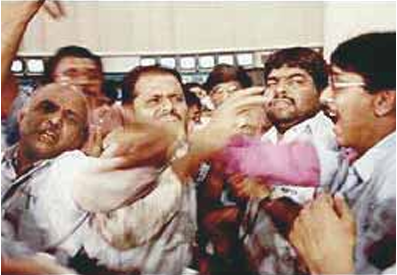
After the Harshad Mehta-engineered market scam in 1992, the bourses had turned gloomy and UTI, under pressure from powerful business lobbies, was not allowed to shed stocks in its portfolio due to fears of a further slide in the stock market that would have cast a shadow over the new economic liberalization policies. UTI began to bleed but continued its unsustainable record of paying investors high returns. This free lunch had to end some time.
In May 1998, a BJP-led NDA coalition had come to power. Even while the new government was grappling with an economic crisis that was widely affecting business confidence, the business newspapers began carrying several disquieting stories relating to UTI. It was reported that UTI reserves had turned negative and might not be able to meet the promised high returns. Corporate investors started exiting this sinking ship. The number of investors declined from a whopping 2 crore to about 40 lakh.
As the government’s media adviser, I had sent the relevant media analysis to the concerned quarters. The persistent media reports of a possible UTI failure to meet a possible investors’ run on it could no longer be ignored. Therefore, I met the then Finance Minister in order to prepare the government for responses to media queries on the subject. The then UTI chief also met the Finance Minister. After his meeting, I received a phone call from the Finance Minister’s office telling me that the UTI chief had been asked to meet me to discuss a media relations strategy.
During our meeting, the UTI chief informed me that he had asked his advertising agency to come up with a media (mainly newspapers) campaign plan. When I asked him what UTI would say to investors and how he proposed to salvage credibility with such an advertising campaign, his response was vague. He tended to blame the media for causing the panic.
I requested the UTI chief not to begin any media advertising campaign until I gave the go-ahead. I again met the Finance Minister. I apprised him of my discussion with the UTI chief and also suggested that since a government bail-out was becoming inevitable and could attract political flak, it would be good for the government if a demand for not allowing UTI to collapse and let down the ordinary investors came from the Opposition. I suggested he speak to his two predecessors and persuade them to voice such views. I pointed out that, during the 1992 stock scam, Atal Behari Vajpayee had met the then Prime Minister and demanded that the government come up with measures to protect common investors. There thus appeared to be a bipartisan agreement.
The Finance Minister’s quiet diplomacy worked and statements on the expected lines came from his predecessors to the media. Thus, he worked out a temporary reprieve for UTI. And there was no UTI advertising misadventure.
Governments and PSUs tend to use publicity as a substitute for policy and performance. Often, official media campaigns are launched without setting out clear, achievable objectives.