








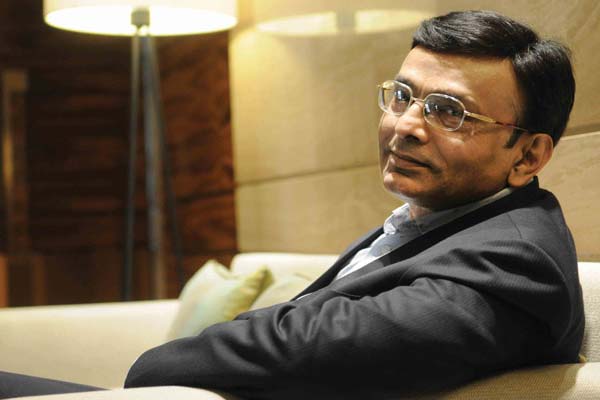

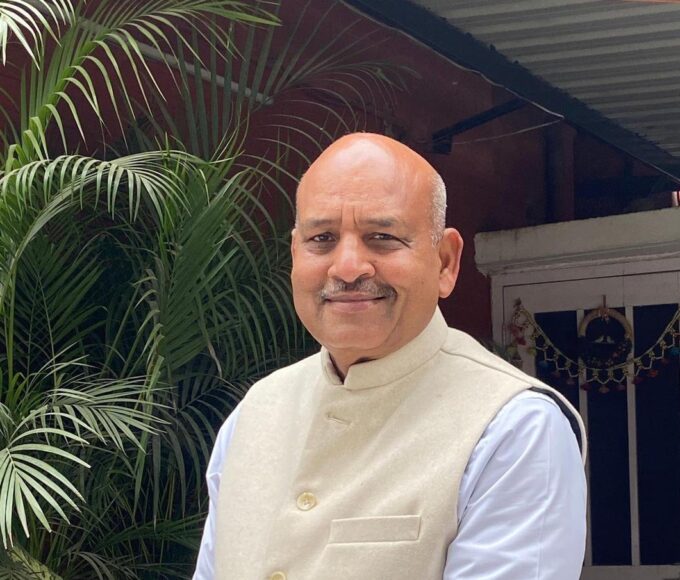







My first contact with an IAS officer took place when I was in Class X, in 1953. The officer was SR Das, 1949 batch, who was then Sub-Divisional Officer of Lalbagh Sub-Division in my home district, Murshidabad, West Bengal. Impressed by him, and encouraged by my father, I later appeared for the Civil Services Examination. On the first attempt, in 1962, I was selected for IPS. I appeared again the next year and got into the IAS. SK Dutta, ICS, was Director, National Academy of Administration, Mussoorie. In his introductory speech, Dutta reminded the IAS probationers that we had joined the civil services of our own volition and added, “Having joined the IAS you have decided to remain poor, and having decided to remain poor don’t think that you can be rich.”
The three-and-a-half decades of my incumbency in the IAS were very eventful politically and economically. The relations between Ministers – both in the Central government and in the state governments – and civil servants were marked by a sense of mutual respect. Sadly, that slowly gave way to personal allegiance, favouritism, nepotism and corruption in high places. In this uneven and unscrupulous “competition”, the main mantra is “act with tact” where tact is nowhere defined; it is left to individual perception. Another mantra is “Nothing succeeds like success”. So-called success is to be achieved at any cost. Integrity, morality, conscience have no place.
When I started my career, civil servants with such an outlook were an aberration and society treated them with the contempt they deserved. After over three decades in service, a confrontation I would have liked to avoid was thrust upon me by a Minister. I was appointed Chairman of the Calcutta Port Trust under the Ministry of Surface Transport, Government of India in September 1993. I painfully realized that the Minister’s priorities and expectations were different from what they ideally should have been. For me, the most important objective was to improve the operation of the port, develop port facilities, increase revenue earning, improve port management and efficiency. While I concentrated on these aspects, the Minister tried to create hurdles by extraconstitutional methods for considerations other than the port’s development.
In the absence of a clear-cut statutory provision demarcating the duties and responsibilities of civil servants vis-à-vis Ministers, as in most West European countries, there is confusion leading to crisis of confidence.
After I assumed the post of Chairman, CPT, on 22 December 1993 the Minister of State of Surface Transport asked me to meet him in Delhi for discussion regarding a CPT tender for hiring a despatch vessel. The Minister wanted me to select AKAM shipping company’s vessel (represented by one Captain Kamboj, who the Minister said was close to him). The Tender Committee, on examination of the “technical bid” of AKAM, rejected it as the vessel did not conform to the technical specification/requirement. When I conveyed this to the Minister, he was annoyed. I expressed my inability to accept the AKAM offer as the Tender Committee selected another company’s vessel after the tender. Subsequently, in early 1994, CPT issued a tender notice asking for a pilot vessel on hire for transporting CPT pilots to the sandhead in the Bay of Bengal. AKAM participated in the tender but was again rejected as it failed to fulfill the conditions.
On May 13, 1994 the Minister phoned me from Delhi at the Airport Hotel, Calcutta where the Secretary of the Ministry was holding a meeting with me and other port officers. He asked why AKAM was rejected again. I replied that its vessel would not serve the purpose. To this, he said angrily, “What are you doing? You can’t oblige your Minister. This time I am not going to listen to anything. See that AKAM’s ship is selected.” The file was then referred to the Ministry for advice and direction. (The file was never returned to CPT.)
While the port was recording an upswing in all respects (during my initial 10-month tenure, the revenue surplus of CPT registered a jump from Rs 44 crore to Rs 88 crore), I was told by the Minister to go on leave on July 20, 1994. The decision was conveyed by the Secretary of the Ministry in a “Strictly Confidential” letter sent on the office fax. I then applied for earned leave for 10 days. Then I sent a number of letters and reminders to the Secretary and tried to contact him over the phone many times in the course of over 15 days, but he did not respond.
‘The Minister said angrily,
“What are you doing? You can’t
oblige your Minister. I am not
going to listen to anything” ‘
Chief Minister Jyoti Basu wrote to the Minister on July 26, 1994: “I am informed (on my return from abroad) Dr BK Sarkar, a very senior IAS officer of the State Cadre now on deputation to the Government of India and posted as Chairman, Calcutta Port Trust, has been peremptorily asked to proceed on leave and that Dr Sarkar in fact has proceeded on leave accordingly. It may kindly be recalled that, keeping in view the importance of the Calcutta Port, we had suggested the appointment of Dr Sarkar as Chairman of CPT and the Government of India had appointed him as such just about ten months ago. During this period, according to my information, the Port has done well and there had been a significant improvement in the performance of the Ports both at Haldia and Calcutta. I have had occasions to discuss with Sarkar major problems relating to the two Ports, especially Haldia Port, and I have also written to you since regarding the need for urgent decisions on dredging, etc. to safeguard the Haldia Port. Under these circumstances, the sudden decision to ask Sarkar to proceed on leave has indeed come to me as a surprise. While the facts or circumstances leading to the present decision are not known to me but still in my view, the performance of the Port in the recent past and our own interest in the healthy growth of the Port, warrant reconsideration of the matter. I shall be grateful if you would kindly reconsider the matter and resolve the current stalemate in the management of the CPT.” (Chief Minister’s DO No 126-CM.)
The Minister did not respond. Basu sent a reminder on August 8, 1994 (DO No 141-CM): “I had written to you vide my DO No 126-CM dated 26.7.94 on the unusual instance of Shri BK Sarkar, IAS, Chairman, CPT being asked to proceed on leave. I have not been favoured with a reply since. In the meantime, I understand that your Ministry has issued fresh instructions virtually replacing Shri Sarkar. Shri Sarkar is a very senior officer belonging to the State Cadre of the IAS and you were good enough to appoint him after consultation with us as Chairman, CPT. My point of writing to you was to see that no injustice is done and the Port management does not suffer. We do not know what are the charges against this officer and possibly even the officer himself does not know as yet. I would, in the circumstances, request you again to reconsider the matter. I shall also be grateful for an early response.”
There was still no response. I was told that, feeling hurt and embarrassed at the Minister’s lack of courtesy in not replying, Basu spoke to Prime Minister PV Narasimha Rao. As a last resort, I approached the Calcutta High Court on August 25, 1994 with a writ petition against the Ministry of Surface Transport and others. I obtained an order setting aside the order of the Ministry asking me to be on leave and was allowed by the High Court to discharge my functions as Chairman, Calcutta Port Trust, according to law without any hindrance to which the Ministry acquiesced. The Minister in question was transferred in September 1995 in a Cabinet reshuffle. I served under two Ministers till I retired in April 1997.
The Prime Minister, if he wants the bureaucracy to function honestly without fear or favour for the development of the country, should spare some thought on the issue of establishing an ideal relationship between ministers and civil servants.
On the day of my superannuation on April 30, 1997, the then Minister of Surface Transport, TG Venkatraman, wrote me a letter praising the financial and physical performance of the Port during my three-and-a-half years of stay. It was not a small reward. All ministers are not the same.
I had got a raw deal, in the hands of a minister gone insane with power. However, the experience has stood me in good stead thereafter – even after retirement.
I got a further chance to serve the people as a member of the 12th and 13th Lok Sabhas.
