







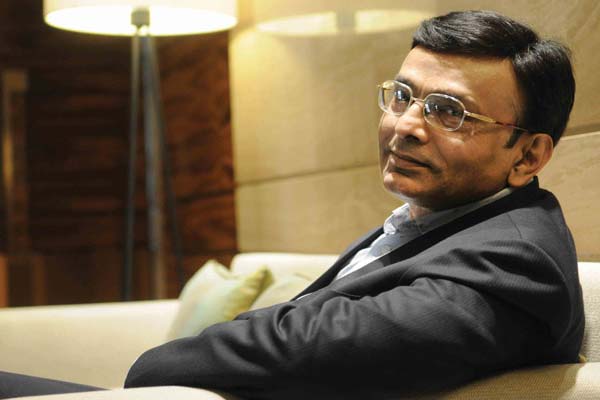








Is KM Chandrasekhar a creature of the Malayali lobby or a man of his own making?
So, finally the country has a new head of the civil services – KM Chandrasekhar (1970, IAS, Kerala). Logically, the appointment of a new Cabinet Secretary should be a matter of course, based on measured yardsticks of seniority, experience, capabilities. The ground reality, however, is that this critical bureaucratic appointment inevitably poses a dilemma for the government in power. Political pulls and pushes, regional compulsions, intra-bureaucratic lobbying – especially in this era of coalition politics – are so intense that governments take the path of least resistance by giving the incumbent an extension.
The Manmohan Singh government followed this time-tested easy-way-out by giving BK Chaturvedi (Chandrasekhar’s batchmate) an extended two-year term. All this bought was a reprieve, though not bereft of an acrimonious uproar. Within the civil service voices spoke out against the “Extension Raj” – that effectively denies deserving officers a move up the competitive career ladder. Former president of the All-India IAS Officers’ Association Reva Nayyar was using an euphemism when she told gfiles: “To appoint a Cabinet Secretary is the prerogative of the government, it is the government’s priority what kind of officers it wants.”
Re-extending Chaturvedi’s term for another two years – that would coincide with the next general election – was a tempting option for the Prime Minister and his South Block mandarins. Many insiders were betting this would happen. But the PMO sensed the ugly mood within the bureaucracy – a big NO to any extension. A hostile bureaucracy, as any Prime Minister knows, can play havoc with implementation of programmes and that can be a big disadvantage for a ruling party when it goes to the hustings.
The big question was: After Chaturvedi, who? No doubt Chaturvedi was hardworking and intelligent, and had shown considerable administrative prowess and initiative in his former avatar as Petroleum Secretary under Mani Shankar Aiyar. The government was looking for an officer with similar capabilities and the appointment compass swung in the direction of two candidates—Prodipto Ghosh and K M Chandrasekhar. Ghosh was a 1969-batch IAS officer, a year senior to Chandrasekhar. In order to avoid any embarrassment arising from a supersession controversy, the government waited for Ghosh to retire in May before giving formal possession of the post to Chandrasekhar.
The appointment was technically correct because the PMO followed the norms of seniority and capability. But questions are still being raised within the bureaucracy about why Ghosh was not immediately selected. Ghosh’s appointment would have given him an automatic two-year extension. And herein lies a tale. Chandrasekhar had a powerful lobby working for him. He is from Kerala and, insiders point out, some of the most influential government officials who form the government’s palace guard are also from this state. They include TKA Nair, Principal Secretary to the PM; MK Narayanan, National Security Adviser; PM Nair, Secretary to the President of India; Vincent George, Secretary to Congress President Sonia Gandhi. Earlier this year, until his retirement and the succession of Ashok Chaturvedi (1970, IPS) – one of the country’s most sensitive posts – chief of R&AW – was held by PKH Tharakan, also from Kerala.
Lobbies may succeed in installing an officer but they cannot rewrite his past record or increase his innate competence. In both these areas, Chandrasekhar stands on his own merit. The way to the Cabinet Secretary’s post was paved when he was appointed Revenue Secretary. Low revenue collection was worrying Union Finance Minister P Chidambaram. Chandrasekhar tightened the nuts and bolts of revenue collection agencies. Total revenue receipt in Budget 2005-06 was only Rs 347,462 crore; in 2006-07 it reached Rs 423,331 crore—an increase of Rs 75,869 crore. Chandrasekhar’s potential was realized and, in the minds of top bosses, he was already designated Chaturvedi’s successor. According to a colleague, he learnt how to manage finances as Finance Secretary to the Kerala government.
A Kshatriya from Trichur in Kerala, Chandrasekhar appears a quiet man outwardly but is a resilient adversary of circumstance. He learnt the art of administration from his father, Madhav Menon, who was Chairman of the Railway Recruitment Board. Though born in Kerala, Chandrasekhar was brought up in Delhi. He graduated with a first division from St Stephen’s College, and then secured an MA in history from University of Delhi followed by a degree in business administration. Thereafter, recalls his uncle, retired bureaucrat IKK Menon, the quiet, studious youth was persuaded by his father to appear for the IAS examination.
In time, he married Jaya – an arranged marriage – and had two daughters, Priya and Pinki. Priya, a journalist, died in an accident while on assignment in Kashmir.
Chandrasekhar’s uncle says he is very religious – like his mother, Thankama – and the household has a separate room for worship – called puma. Chandrasekhar enjoys a daily walk.
The low-profile and publicity-shy bureaucrat has travelled a long way from the start of his career in 1977 as a collector in Idukki. He has been Chairman of KELTRON, a Kerala state electronic company. He was also Secretary, Fisheries, Matsya Federation – an important post in Kerala. He eliminated the middlemen to secure better prices for fishermen. As Chairman, Civil Supplies Corporation, under the leadership of communist leader Chandrasekhar Nair, he established Maveli or Super Bazaar Stores and developed a Public Distribution System of Essential Commodities on competitive prices. He also set up a 95-acre techno park in Kerala.
As Commerce Secretary and ambassador to the World Trade Organization (WTO) in Geneva, he displayed negotiating skills at the Cancun Convention.
The way to the Cabinet Secretary’s post was paved when Chandrasekhar was appointed Revenue Secretary. Revenue receipt in Budget 2006 was only Rs 347,462 crore; in 2006-07 it reached Rs 423,331 crore—an increase of Rs 75,869 crore
LK Joshi, now Secretary, Department of Transport and Highways, is a batchmate of Chandrasekhar and speaks warmly of how the new Cabinet Secretary is a wonderful human being and a good administrator.
Chandrasekhar, who has begun his new charge by warning the Secretaries of Ministries and Chairmen of PSUs to pull up their socks, probably has his career’s greatest challenges waiting in the wings. India is going to hold a general election in 2009 and the ruling United Progressive Alliance (UPA) has many expectations of him. His own fraternity is also looking to him for administrative reform. On his shoulders lies the onus of implementing the Sixth Pay Commission recommendations as well as those of the Baijnath Committee on new syllabi for the IAS examination.
Genesis of the Post
Government in India originally dealt with its business by having all matter attended to by the Governor-General-in Council. The Council worked as a joint consultative board. But, as the workload increased, the members of the Council were allocated the business of various departments. This was the beginning of the portfolio system.
However, important matters were looked into by the Governor-General or the collective Council. The Councils Act of 1861 put a legal stamp on this system of work-sharing. The Executive Council of the Governor-General was introduced at this time, under Lord Canning.
The Executive Council had a Secretariat. Its chief was the Viceroy’s Private Secretary. However, he did not attend the sittings of the Executive Council. This changed when Lord Willingdon, when he was Viceroy, asked his Private Secretary to be present at meetings. In November 1935, the Viceroy’s Private Secretary officially became Secretary to the Executive Council also.
A new designation was bestowed on the Secretariat of the Executive Council after the formation of the interim government in September 1946. It now became known as the Cabinet Secretariat and its chief the Cabinet Secretary. However, after Independence, the work of the body altered – from merely circulating documents among ministries to coordinating between them.

Editor, gfiles