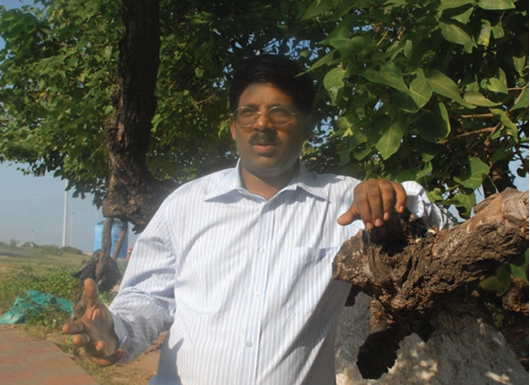








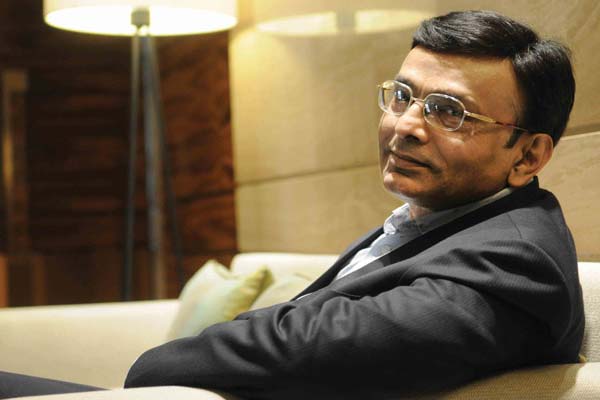









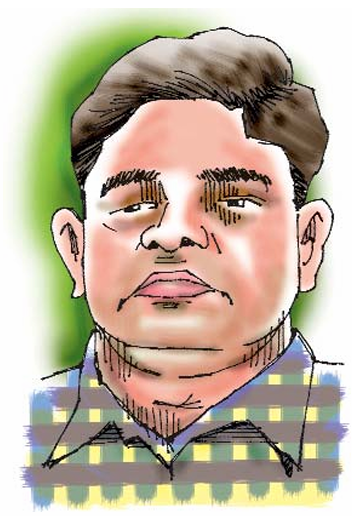
WHEN G Prakash,a 2000 batch IAS officer, took up his job as District Collector of Tirunelveli in Tamil Nadu,he decided to focus on the problems of differently-abled persons who need help even in their daily routines.He had earlier drawn admiration for his contribution in the relief and rehabilitation work for victims of the tsunami in Kanyakumari district, where he was Additional Collector In Tirunelveli, he said, he was startled to find that there were 28,000 differently-abled persons in the district but only 8,000 with national identity cards.“This prompted me to conduct special campaigns in every Assembly constituency,” he says.
Unlike the schemes under NREGA, which are essentially wage employment schemes, the national ID cards offer umbrella benefits especially designed for the differently-abled.The cardholders are entitled to pension, aids and appliances, micro-credit and other welfare measures announced from time to time by the government In Tirunelveli,those without the cards remained outside the purview of the various welfare measures meant for them.To identify and distribute cards to these 20,000 people was a stupendous task. To achieve it,the enormous administrative machinery was educated and streamlined and a concerted campaign launched.To create awareness about the campaign, media advertising was undertaken and officials and MLAs were roped in.This saw the participation of thousands of people in a series of camps organised all over the district. In the camps, medical teams picked out differently-abled people from among the participants.They were then issued national identity cards on the spot.
The campaign faced many hurdles, not the least of which were overheating of sensitive instruments and the absence of government officials at the first camp However, arrangements for replace ment of instruments were made and, following the first camp, officials began to understand and appreciate the value of the work.They pitched in at subse quent camps.
The first camp was held at Radhapuram, 75 km from Tirunelveli town, where 2,200 cards were issued. Eight camps have been organized and 22,000 cards issued,which also brought up to date the administration’s list of differently abled persons. The mass coverage within such a short period makes the effort unique among similar programmes.
Prakash believes that training of the parents or guardians of such people should be an integral part of any welfare measure meant for them.He points out that physically challenged people do not necessarily require an entirely different set of schemes in all aspects. In certain schemes,the general design will suit them while in others, like micro credit and economic assistance,a special package will benefit them more. “Helping the poor and the underprivileged,which is the core of government service, has been my guiding principle,” says the young officer as he looks back at the success of the project. On Independence Day,he was presented with the award for the best collector in Tamil Nadu by Chief Minister M Karunanidhi.