
















The visitors’room adjacent to the Cabinet Secretary’s chamber has a board listing the names of people who have occupied this post since Independence.It has something instructive. The first few incumbents served three- to five-year stints, time enough for them to settle down and provide leadership to the entire bureaucracy Since the retirement age in the Indian Civil Service (ICS) was 60 years – unlike the Indian Administrative Service (IAS) and other services – ICS-wallahs tended to be younger when they rose in their careers,and had long tenures.It was also the practice in those days to choose the younger from among the competing officers and allow them three to five years in each post, thus obviating the need for extending their tenures. There was a rare case of a Cabinet Secretary taking up another assignment and then returning to the post. When younger and junior officers were chosen, the bypassed seniors sought prema ture retirement without a fuss.
In the recent past, officers selected on the basis of seniority have served in the post for barely 12 months. The principle of giving a fixed tenure of two years was first mooted by Prime Minister Rajiv Gandhi when the age of retirement was 58 years. That, even after it was increased to 60 years, the government had to think of two-year tenures for the incumbent shows the mismanagement of the civil services.
The Cabinet Secretary is the interface between the Council of Ministers and the civil service. Besides being the chief coordinator among departments and ministries, he is also the leader of the entire civil services, not just the IAS. Until 1966, his position in the civil service was unique. There was no competing power centre.This changed when LK Jha was chosen by Prime Minister Lal Bahadur Shastri as his secretary and given a rank equal to Cabinet Secretary. Jha’s successor,PN Haksar, continued in the post well after his formal retirement from the Indian Foreign Service. Subsequently, Principal Secretaries moved physically closer to the PM by acquiring an office in the PM’s secretariat. In 1977 Prime Minister Morarji Desai re-designated the Secretariat as the Prime Minister’s Office (PMO) but this did not in any way change the power equation in favour of the Cabinet Secretary. As the Principal Secretaries hold their office coterminously with their Prime Ministers, they have tended to enjoy longer tenures as well,if their boss serves a full term. With the institution of this new bureaucratic power centre, there has been a palpable dilution in the role and influence of the Cabinet Secretary. Even junior functionaries in the PMO are perceived to be a notch higher than the head of the civil services.
Until 1966, the Cabinet Secretary’s position in the service was unique. This changed when L.K Jha was chosen the PM’s secretary and given a rank equal to Cabinet Secretary
Except for Rao Saheb Krishnaswamy Rao, who first became Principal Secretary and was later appointed Cabinet Secretary, all other Principal Secretaries were retired bureaucrats. Only Prof. PN Dhar, who succeeded Haksar,came from outside this charmed circle.When Prime Minister Chaudhry Charan Singh wanted a retired IAS officer to become his Principal Secretary,the chosen officer gave him sagely advice to appoint a serving bureaucrat so that he would not become an ECA (extra-con stitutional authority), and suggested the name of Rao Saheb.
Room with a view
One of the wings of Rashtrapati Bhawan has a committee room where the Viceroy’s council met regularly. This is the Cabinet Secretariat’s actual home. After Independence, the Union Cabinet assembled in this stately chamber. But it has not been used for years, as the Cabinet Secretary is no longer expected to be in day-to-day contact with the President. The Cabinet now meets in the Cabinet room in South Block or at “RCR” – 7 Race Course Road, the residence of the PM. During Parliament sessions, it meets at 6.05 pm in Parliament House.
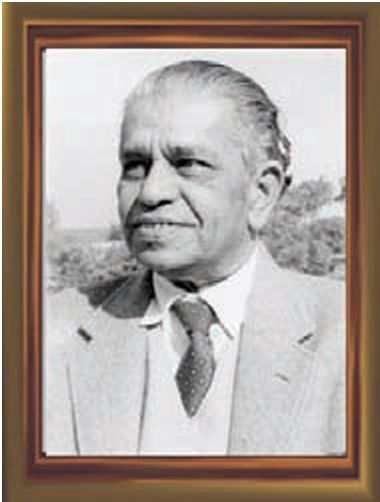
Except Bhairav Dutt Pande, ICS, who was Cabinet Secretary for nearly five years and tried to practise an inclusive strategy for enhancing civil services efficiency, very few Cabinet Secretaries have functioned as leaders of the entire civil service. So, the vision of the gov ernment does not get adequately com municated within the system. None of the recent incumbents have done any thing significant to break the caste system prevailing in the civil services.The Cabinet Secretary is expected to be the captain of a ship containing nearly 60,000 civil servants but they tend to work for the less than 3,000-member closed shop union of the IAS. An attempt was made in 1993 under the promptings of the then PM to make the senior officers of all streams interact with him so that he could share his political vision.This was subtly foiled to preserve the steel frame cordon carefully thrown around the political leadership.