


















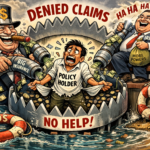

The era of the nation-state is over and the role and work of governments has consequently altered
IN the aftermath of decoloniza- tion, following World War II, the nature and the character of the state itself has evolved and undergone important transformation.The post- colonial state, with its many national, ethnic, religious, linguistic and cul- tural groups, does not fit the mould of the nation-states as they first emerged in northwestern Europe. Many of the new states are not nation-states but rather multi- national, multi-lingual, multi-ethnic and multi-religious entities; and a popular consensus on what is ‘national’ is yet to develop fully. One size clearly does not fit all.
Consequently, the government’s ability to formulate national laws or policies is greatly circumscribed by the fact that they are likely to have differential impact on the diverse sections of society. Not surprisingly, each group seeks to pre- serve its own special interests and often makes demands on the government that may be at variance or even in conflict with the demands of another group.The diversity and multicultural composition of our societies also means that govern- ment policies can no longer be imple- mented through federal edict or fiat but must be mediated by citizens and inter- est groups.
The expectations of the citizens too have changed. They no longer accept the state as doing things for them. Rather, they want governments to enable them to manage their own affairs. An awakened and empowered citizenry considers the business of gov- ernance too important to be left to the government. Free and easy flow of information means that citizens no longer depend on the government as a source of information. Censorship, the most potent instrument of tyrants, is obsolete and the growth of an informed public has increased the pressures on governments to be more transparent.
At the same time the gap between the rulers and the ruled has widened with no signs of that divide being bridged. The two may live in the same country but often they traverse in different uni- verses. Between elections the citizens are consigned to hibernation. The elected leaders largely cease to be accountable to the voters.The influence of campaign finance, special interest groups and the dominance of big business further con- strains the freedom of action of the elected representatives. The gradual but persistent roll-back of the welfare state, the onslaught on affirmative action, and influence of campaign finance in determining the outcome of the election results shook the faith of the liberals in the government’s role as the guarantor of social justice.
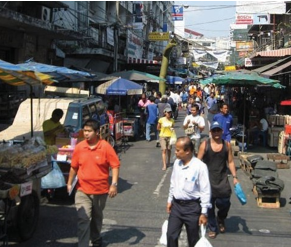
Diverse societies alter government’s role
The economic well-being of the citizens still remains a responsibility of the government but with eco- nomic liberalization that role of gov- ernments in managing the econom- ic life of their citizens has diminished. Governments are moving away from their earlier role as operators and managers of the economy to becom- ing the regulator, facilitator and enabler. It is obvious that many of the functions that were once provided by the government can now be left to the market or private entrepreneurs or to the civil society public service providers.
The escalating cost of the government also emerged as a major source of pop- ular concern.The ever-bloating bureau- cracy had got out of control and was using a large proportion of the tax rev- enue merely to keep itself in place.In the three decades after World War II, taxa- tion increased significantly – in large part to rebuild the war-shattered econ- omy but also to create a welfare state so as to “build a home fit for heroes” returning from war. But in the last quar- ter of the century there has been a pop- ular revolt against high taxation.
Taxation has become a dirty word in the electioneering lexicon. No party can hope to win an election on a platform that proposes higher taxation.While cit- izens from all spectrums of politics wanted to rein in the runaway cost of government, there was no consensus on where the cuts would be imposed.The conservatives attacked the spending on welfare and demanded a reduction in the taxes; and the liberals, while also opposing tax hikes, did not at the same time want cuts that would risk the welfare state.The dilemma for the government was real: how to provide better and more extensive services with dimin- ished resources.The government would have to do more with less.
The diversity and multicultural composition of our societies means government policies can no longer be implemented through federal edict or fiat but must be mediated by citizens and interest groups