


























As we await the Sixth Pay Commission’s report, it is encouraging to read the assertion by its Chairman in the October 2007 issue of gfiles that financial prudence will be a key factor governing its recommendations. The report of the last Pay Commission, submitted when I was Chief Secretary of Uttar Pradesh, was disastrous. In almost all the states, the Pay Commission’s recommendations are adopted for state government servants, those serving in the local bodies, teachers, and the public sector corporations. The financial burden becomes heavy for the state as neither the local bodies nor the public sector corporations have adequate resources, but the same pay scales are implemented. Last time, taking into account all the states, the wages rose by a whopping 74 per cent from Rs 51,548 crore to Rs 89,813 crore!
Uttar Pradesh has over 10 lakh government servants and one lakh teachers. In the state, as well as in several others, the treasury went almost bankrupt following the adoption of the new pay scales. Salaries fell in arrears and were often delayed by two or three months. There was general unrest among the employees. It took two to three years for the situation to stabilize.
What compounded the problem was that the financial implications of the recommendations could not be worked out properly. They were not worked out correctly at the Centre or in the states. What was written between the lines was interpreted liberally. And the Centre refused to help the states as it was itself in dire straits financially.
India has only 1.8 crore public sector employees
for a population of 102 crore – less than 2 per cent.
In no country is the number of government employ
ees less than 4-6 per cent of the population
The total number of public servants at the Centre and in the states numbers over a crore and 80 lakh. This includes the judiciary as well as university teachers and employees of local bodies. The Pay Commission must realize that its recommendations will not be confined to Central government servants but will include all public employees. It must work out not only the financial implications for the Centre but also for each state and see whether the Central and state governments can bear the burden. Alternatively, it must recommend devolution of funds from the Centre to the states to meet the burden.
It has often been stated that the pay of government servants must be commensurate with their productivity. Criticism of their output will continue until we find a standard to measure their productivity. A suggestion that could be thought of is the growth in GDP, which is now a well-defined calculable index. Can the growth in salaries be linked to the GDP? Perhaps the Pay Commission can look into this.
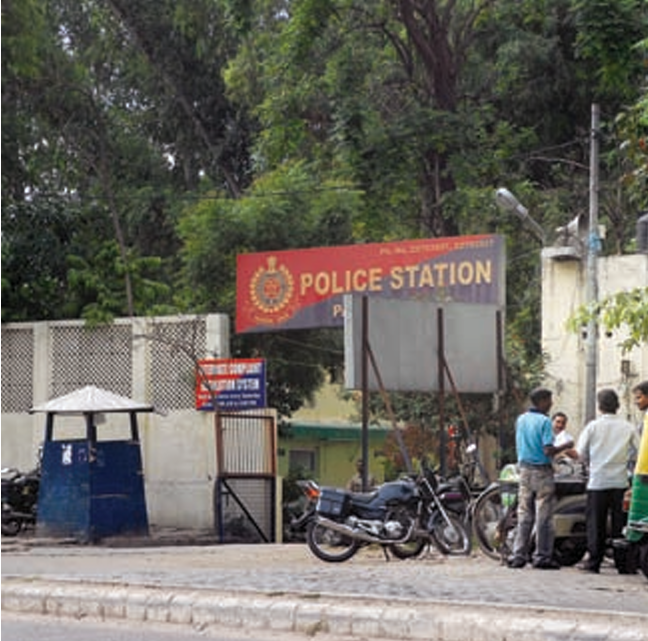
The previous Pay Commission felt the government is overstaffed and recommended reduction. However, this was an erroneous assumption and has led to reduced efficiency and supervision, and more corruption. We have only 1.8 crore public sector employees for a population of 102 crore – less than 2 per cent. In no country is the number of government employees less than 4–6 per cent of the population. The result in India is that the system is collapsing at the lower level. The criminal administration system is on the verge of breakdown. The number of constables is so low that they are supposed to be on duty 24 hours. There are no shifts in most police stations, especially rural ones. The number of judges is disproportionate to the number of cases filed. The Chief Justice of India has said that he requires 1,539 High Court judges and 89,479 subordinate judges to clear the backlog in one year.
There were 38.7 lakh Central government employees in 2001. After the recommendation of the last Pay Commission was implemented, the figure has come down to 31.64 lakh – a decrease of 18.37 per cent. With every budgetary allocation, new government schemes and fresh programmes for development are proposed. It is becoming increasingly difficult to carry out government policies.
I hope that the Sixth Pay Commission does not make that mistake. We do not need any additional strength in the Secretariats, but we do need more staff in the “merit” sector of education and health, and in the criminal administration system.