








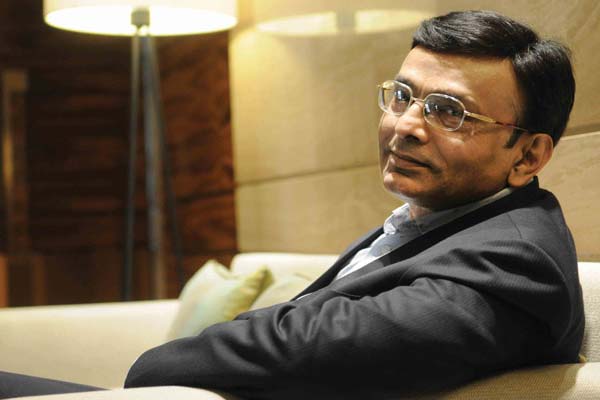








THE best moment of my foreign service career is related to the hijack of August 24, 1984. Seven young terrorists hijacked an Indian Airlines flight from Chandigarh to Srinagar with 100 passengers aboard. The plane was first taken to Lahore and then via Karachi to Dubai. I was Additional Secretary (West Asia) and enjoyed a good rapport with the rulers of the United Arab Emirates. It was a tough job to bring about a peaceful and honourable settlement of the hijack drama.
I passed out from Cambridge in 1949, and had many options. Unilever and Burmah Shell were both offering me jobs. But my father, Amar Nath Bhandari, then Chief Justice of Punjab High Court, advised me to appear for the Indian Administrative Services exam. I was selected and chose to be an IFS officer—a decision I still regret. I believe one can serve the country in a better way as an IAS officer. I tried to shift to the IAS cadre but was not allowed to do so.
I came back to India for two reasons: one, India had been liberated, and, two,Prime Minister Jawaharlal Nehru was inspiring the youth to work for the country. At the beginning of my career, I was private secretary to VK Krishna Menon, who became minister without portfolio in 1956. I knew him very well from my student days and I also served him when he was Defence Minister. The crucial debate on Kashmir was on in the country and, working with Krishna Menon, I learnt the intricacies of the Kashmir problem. I got a first-hand experience of the Defence Ministry’s handling of foreign affairs.
The Soviet Union had shifted to keeping an equidistance from India and Pakistan.. Our job was
to tilt the balance in favour of India again
I conceptualized the role and impor-tance of having a separate economic diplomacy department in the External Affairs Ministry. Since then, this depart-ment has been playing a very important role in economic cooperation especially in African countries. I also served as Deputy Chef de Mission in Moscow when DP Dhar was Ambassador. We were deeply involved in the Indo-Soviet Treaty. I also served as Ambassador to Thailand and Iraq and was instrumental in getting the big construction compa-nies business in Iraq. In 1977, I became Additional Secretary (Administration & West Asia) and later Secretary (Economic Affairs). In 2002, I retired as Foreign Secretary.
The IFS is a challenging job nonethe-less. When I was in Moscow, the Soviet Union had shifted to a new policy of keeping an equidistance from India and Pakistan during the Brezhnev regime. Our job was to tilt the balance in favour of India as before—a tough job that we performed with aplomb. I must, howev-er, admit that I could sense a gradual shift in the social policies of the Soviet Union way back in 1969. Individuals were allowed to own cars and dachas (farm-houses).
But no one imagined that the ultimate change would come so fast Gorbachev is misjudget he was expecting changes, he could feel the pulse of the people. But the change was abrupt.
The Nehru and Indira eras were markedly different from the present time. Civil servants were truly inde-pendent and there was hardly any case of corruption against any civil servant. We are used to hearing and reading about corruption in irrigation and public works departments. But, in the foreign service, there has never been a single instance of corruption except in the visa section. Our colleagues in the External Affairs Ministry are very honest, com-mand respect and are assigned due weightage.
There is a fundamental change in the approach of South Block. Earlier, it was cautious, cool and very conscious. Our main focus was that India’s interest should not be altered anywhere as envis-aged and planned by South Block.
What is required of an IFS officer is that he should remain free from undue pressures from any quarter and refuse to serve vested interests. The fundamental principle underlying foreign relations is that an individual’s interests should not influence policies and decisions.
I have also been Governor of Uttar Pradesh, Tripura and Goa, and Lt-Governor of Delhi. I am now disillu-sioned with politics. But my objective to serve the common man is not fulfilled. I consider my stint in Delhi as Lt-Governor the most fruitful. I coined a slogan, Meri Dilli Meri Shaan, and pre-pared the road map of the Metro and technological facilities. Illumination of historical monuments and cleansing of the Yamuna by setting up local effluent treatment plants were initiated. Sadly, the Yamuna scheme could not be imple-mented fully and the Yamuna became Delhi’s shame.
People criticized my stand as UP Governor that having the single largest party is not the criterion for inviting a leader to form the government. Later, the President of India vindicated my stand and now other Governors are fol-lowing in my footsteps Good governance calls for a positive attitude—nation first, self later.

