























The process is trapped in the Bofors-HDW-Kargil coffins straitjacket
Higher defence management is a complex national governance challenge in most democracies and the Indian experience has been very distinctive. At the outset it must be noted that the military as an institution has provided the core stability to the Indian democratic trajectory and this is in sharp contrast to the experience of many post-colonial states where the military has transgressed into domains outside its constitutional mandate. The supremacy of the elected representative and the primacy of the civilian government have been central to the professionalism and apolitical nature of the Indian military.
However, from the bitter humiliation of the 1962 Sino-Indian war to the more recent 1999 Kargil intrusion, it is evident that higher defence management in India is in need of a major review and certain structural changes are called for- but this, alas, has not happened. The most comprehensive study on the subject in the public domain is that of the Kargil Committee Report (headed by K Subrahmanyam) which was submitted to the NDA government, but it has not been implemented as envisaged. Consequently, many of the recommendations remain on hold and the structural deficiencies persist.
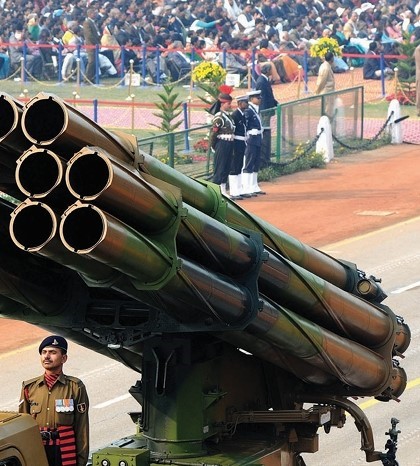
The Indian military inventory is in urgent need of significant infusion of new platforms and attendant new technologies. There has been block obsolescence in the past due to a stasis in decision-making compounded by severe fiscal constraints and this backlog is to be cleared in the shortest possible timeframe. Yet the Indian defence procurement process is caught in the metaphoric Bofors-HDW-Kargil coffins straitjacket and hence is among the most time consuming among comparable democracies.
What has been the impact of this orientation as far as the management of higher defence and national military capability is concerned? The example of the Advanced Jet Trainer (AJT) is illustrative. First mooted in 1982, the AJT was projected as an urgent and inescapable training requirement to enable young fighter pilots to make the transition from the propeller-driven trainer aircraft to the fighter-jet. The IAF’s need was never in doubt but it took 20 years before the AJT deal was finally approved – in September 2003. In the interim, many young pilots lost their lives and the quality of the IAF’s pilot training and operational ability suffered grievously.
It took 20 years before the AJT deal was finally approved – in September 2003. In the interim, many young pilots lost their lives
Yet there is no sign that the procurement procedures have become more nimble or sensitive to operational requirements. The more recent controversy over the attack helicopters for the Indian Army and the purported cancellation of a certain French contract are cases in point. Post-Kargil, the government has revamped its procurement procedures and detailed guidelines have been issued to ensure transparency and rectitude. The buzzword is “offsets” though there still is a phobia about the so-called “middle man” or arms agent, which appears to be misplaced. Global military sales the world over are intrinsically opaque and complex technostrategic and politico fiscal considerations come into play. Certain rhythms and HR patterns are domain-specific and while Indian negotiators are respected for their astute contractual skills, the balance between the quality of the product, timely deliveries including life-cycle support, transfer of technology and price negotiations must be maintained. The more recent controversy over the Russian origin aircraft carrier, the Gorshkov, slated to join the Indian Navy is another case in point.
India is gradually becoming a major buyer of arms and advanced military technology and it is significant that, in the Asian context, China and India are the two major militaries that are increasing their respective profiles – both quantitatively and qualitatively. While China allocates about $40-60 bn – as much as two to three times the annual Indian defence expenditure, Delhi is not doing too badly. As per my estimates, over the next 30 years, current GDP growth rates being stable, the cumulative defence expenditure will be closer to $3 trillion equivalent at today’s prices. Of this imposing total, it may be fair to infer that about $900 billion will be allocated towards procurement/acquisition and modernization of our military inventory.
This kind of fiscal muscle calls for very astute strategic planning between the various actors who comprise the Indian higher defence management mosaic. The inadequacies in the prevailing system that pertain to governance procedures must be objectively identified and redressed so that procedural rectitude is harmonized with the rigour of fiscal and operational audit and accountability.