


























gfiles: What is the Ministry doing in the face of the meltdown and what are your views regarding revival?
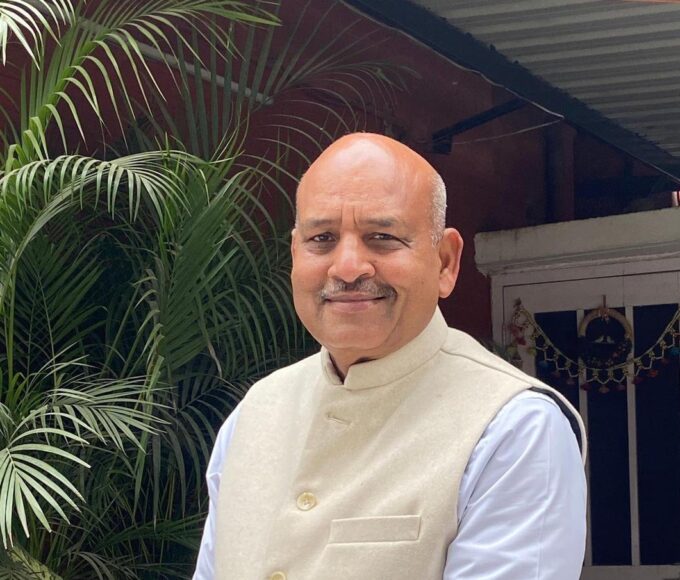
Satyanarayana Dash: The manufacturing sector contributes about 26 per cent of the GDP and constitutes 80 percent of the industrial production. It is a force multiplier and creates employment, promotes agriculture and service sector and spins a cycle of wealth creation. The capital goods sector is inextricably linked with manufacturing.
In order to ensure steady growth and to enhance the competitiveness of the industry in the context of increasing globalization, we need to ensure the growth momentum is sustained and the key impediments to growth are removed or negated. The department of heavy industry has recommended removal of inverted duty structure, anomalies in customs and excise duties, and weighted deduction of expenses for R&D activities to the Finance Ministry.
The department mainly looks after 32 operating central PSEs, the auto sector and some segments under the capital goods sector. So far as the PSEs are concerned, the national Common Minimum Programme clearly states that sick industry shall be revived. Accordingly, sick/loss-making PSEs were referred to the Board for reconstruction of Public Sector Enterprises. So far, out of 27 such PSEs under the department, the government has approved revival/restructuring in case of 13 by cleaning up the balance sheet and infusing funds. Eight have since started making profits. As regards the auto sector, a meeting of the Development Council is being called. All issues affecting the industry’s performance will be discussed. The capital goods industry is also showing signs of a slowdown. A scheme for providing fresh impetus to this important sector is under formulation.
Our Ministry is taking the following steps to counter the effects of the global meltdown:
In a situation of global economic crisis with prices of oil, cement and steel falling sharply, the focus has to be infrastructural investment where about $500 billion is to be spent over five years. Hence CPSEs in our department operating in infrastructure, like Bridge and Roof, Engineering Projects (India) Ltd, Braithwaite Burn & Jessop Ltd (BBJ), Braithwaite & Co. Ltd (BCL) are asked to put thrust on completion of projects undertaken in time in order to derive maximum benefits.
The global meltdown will not hit the power sector in India as the domestic demand will be high and our targets are set at 78577 MW for the Eleventh Five-Year Plan (2007-2012) and 82000 MW for the Twelfth Five-Year Plan (2012-2017). The global meltdown presents an opportunity for sourcing hi-tech supercritical power equipment and high-end high voltage transmission equipment and technology (765 KV and above) at a cheaper price since near-saturated markets abroad may lead to slower growth.
The growth in the power equipment manufacturing sector in the nuclear power arena will also help since the signing of the nuclear deal has presented an opportunity for BHEL and other CPSEs like Heavy Engineering Corporation, Ranchi, Instrumentation Ltd, Kota to bag substantial orders. The target is to achieve 20,000 MW annual nuclear capacity by 2020 (against 4120 MW now).
In this scenario, where export orders are going down, CPSEs have to focus on the big domestic market with untapped rural markets (18 per cent of villages don’t have power). There are large possibilities in development of the food processing sector connecting to rural markets and development of the cold chain infrastructure.
Hence the basic strategies in this scenario would be to focus on the domestic market, maximizing core competence of the industries, concentrate on infrastructure sectors and tap whatever potentialities exist in the export market. The liquidity crunch prevailing in the economy as a result of the meltdown will be sorted out by the monetary policies undertaken by the RBI. Our CPSEs are being sensitized on these aspects.
gfiles: Is the capital goods industry growing at the expected rate in relation to GDP?
SD: The Eleventh Plan period foresees a 9 per cent GDP growth and the capital goods sector, which is at the core of the manufacturing sector, should grow at around 18 per cent.
The growth target fixed for the capital goods sector is 20 per cent for the next 10 years for achieving the target of 9 per cent growth in GDP. The NMCC, in its report ‘National Strategy for Manufacturing for Achieving the Identified Goals’ has stressed the need for R&D and Technology Upgradation, Skill Development, Adopting Best Manufacturing Practices and Production Techniques, achieving globally acceptable quality levels, export generation, establishment of technology parks and infrastructure development.
The growth in the capital goods sector during the first five months of the current financial year has been only 9.2 per cent against the annual growth rate of 16.9 per cent in 2007-08.
gfiles: Will it be possible or feasible to revive sick PSUs in view of the liquidity crisis?
SD: The revival of sick PSUs is continuing as per the Common Minimum Programme. A major portion of the revival schemes involve cleaning up the balance sheet. Therefore, the liquidity aspect is not affecting revival majorly. Marginal fresh funding is being done through government budgetary support. In case of 13 PSEs of the department, where revival has been approved by the government, out of about Rs 5,800 crore, a major chunk (about 72 per cent) involves waivers/conversions and government guarantees and the like which are in the form of non-cash assistance. The liquidity crunch will be taken care of by RBI’s monetary and credit policies.