








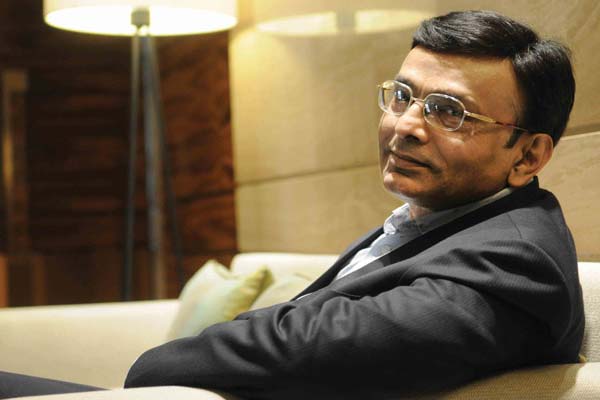






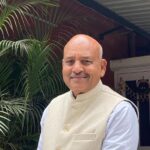




Election Commissioner SY Quraishi has never been afraid of challenges. An IAS officer of the Haryana cadre (1971 batch), he realized when he was appointed Doordarshan Director General that the national broadcaster was making far too few programmes inhouse. During his brief innings of 15 months, he was able to ensure that over 30 per cent of DD programmes were produced inhouse. He also gave DD News a new identity by introducing a gamut of fresh young faces, the majority of which, he points out regretfully, has since been poached by private networks. Quraishi, who has a doctorate from Jamia Millia Islamia University, New Delhi on “The Role of Communication and Social Marketing in Development of Women and Children”, was also Director General of NACO. There too he caused some heartburn by challenging the HIV/AIDS statistics on India that were being bandied around by foreign donor agencies as being grossly inflated. The world community was The world community was forced to revise the figures and today India has three million HIV/AIDS-affected people instead of the exaggerated five million. An alumnus of St Stephen’s College, Quraishi has a number of publications to his credit, including the two-volumed Haryana Rediscovered – Bibliographical Area Study. He is also a linguist, having studied Persian, German and Arabic.
gfiles: With the growing politicization of our institutions, will the Election Commission continue to remain an independent entity? Former Election Commissioner TN Seshan used to say that once he retired, the EC would revert to being a political football to be kicked around by successive governments
SY Quraishi: The Election Commission has only gone from strength to strength. It is one institution that has established its credibility beyond all doubt. People approach us with all kinds of complaints and demands. Before taking a decision, we get inputs from all possible sources like the bureaucracy, NGOs,Civil society and, of course, the media. The media remains our biggest ally because it keeps us in the loop about what is happening on the ground. Once we come to know that there is some malfunctioning taking place somewhere, we even send our own video teams to provide us with a first-hand appraisal of the details. Take the forthcoming elections in Himachal Pradesh and Gujarat. In the case of the former, the Chief Minister has asked for a postponement, while in the latter state there has been some criticism about our decision to transfer police officials. All this is part of the democratic process.
‘The ruling and the
opposition parties
realize, especially
when out of power,
just how much they
stand to gain from
our interventions’
gfiles: It seems as though the political party in power invariably emerges as the biggest critic of the Election Commission
SYQ: That is true. Our experience is that while the party in power is almost invariably unhappy with us, the opposition parties love us. But once the opposition party becomes the ruling party, the roles get reversed. Our aim is to provide a level playing field and this tends to annoy the party in power. The fact of the matter is that ruling parties have access to government funds and other facilities which they like to use but we do not permit Take the case of Mulayam Singh Yadav when he was Chief Minister of UP. After the state elections, he went around issuing statements that he had not lost to Mayawati but to the Election Commission. The state of Uttar Pradesh has just witnessed three byelections. Though his party won one bypoll, the other two were won by Mayawati’s party. This time, he expressed complete satisfaction with the way the Election Commission had conducted the polls. Every state, whether Bihar, UP or Uttarakhand, has felt the heat at different times. Both the ruling and the opposition parties realize, especially when they are no longer in power, just how much they stand to benefit from our interventions. We address every single grievance that we receive and we ensure that the polls are conducted in a fair and transparent manner.
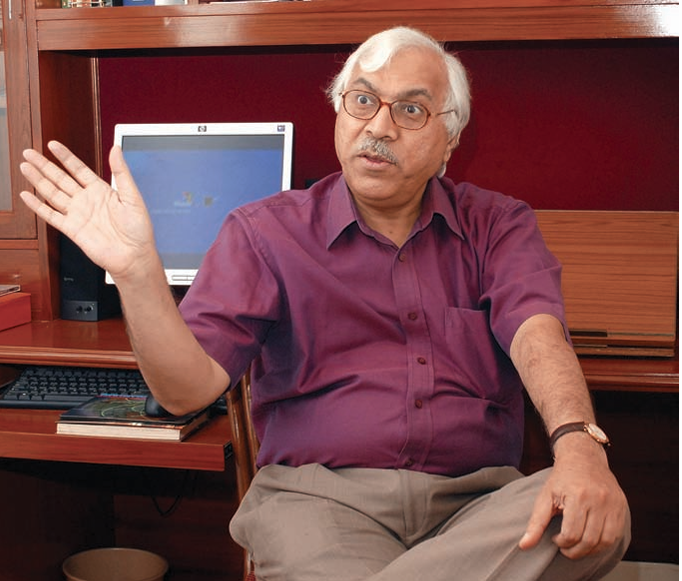
gfiles: Isn’t it difficult to address every grievance that comes your way?
SYQ: There is an increasing need to micro-manage the elections. This is because public expectation has grown enormously. For instance, they expect an observer to be stationed everywhere. But then it is because of this increasing micro-management that, during the UP elections, there were only four reports of repolling and that too because the presiding officers pressed the wrong button on the EVM (Electronic Voting Machine). All these were cases of human error. Within half-an-hour of this development, we had the EVM replaced. The system has become efficient. During the earlier election, the same state of UP was witness to over 100 murders during the election period.
gfiles: The Election Commission now has a huge machinery working under it?
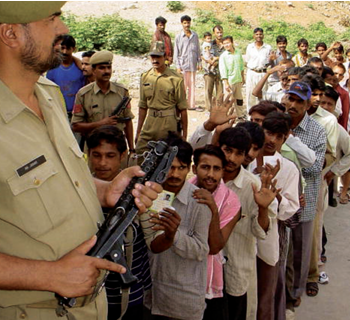
SYQ: Yes, we have a huge infrastructure of 70 lakh government officials working under us during a general election. We have seven lakh voting booths and one million EVMs on which the votes are cast. It is the biggest democratic operation in the world. For every polling station, there are five people inside the booth and another five outside for security and other duties. Of course, our role ends with the elections.
gfiles: What is the procedure that is followed if you want to transfer a bureaucrat that you find unsuitable?
SYQ: The procedure is quite simple. If we feel someone is unsuitable, we ask the state government to supply us a roster of alternative names. We then check the bona fides of the proposed names and select the most suitable officers.
‘The bureaucracy is often linked to
the government in power. We follow all
complaints very carefully. If we receive a
complaint (against a bureaucrat) from
a political party or civil society,
we investigate it immediately’
gfiles: You exercise an enormous amount of power during an election. The CRPF, the BSF, magistrates and SDMs are all under your control. How do you ensure that this power is not misused?
SYQ: The framers of the Constitution foresaw these problems and laid the ground rules in such a manner that the Commission could withstand government pressure. They also put in place sufficient checks and balances to ensure there was no misuse of power. The biggest in-built check is that there are three of us [Election Commissioners] and each has an equal vote and all decisions are taken by a majority vote. I would say that 99.9 per cent of the time, our decisions tend to be unanimous. That has been my experience during the 15 months that I have been here. The Commission has been constituted in such a manner that no one can take an arbitrary decision. If any one member were to try and attempt such a thing, the other two are present to correct the situation.
gfiles: But how do you all ensure that the bureaucracy does not overtake you while you are in the process of taking a decision?
SYQ: The bureaucracy is often linked to the government in power. We follow all complaints very carefully. If we receive a complaint (against a bureaucrat) from a political party or civil society, we investigate it immediately. We also monitor all media reports; if we feel something is not right, we go ahead and take action.
gfiles: Which would you describe as being exceptionally difficult states to monitor?
SYQ: Every state has its own problem. Jammu and Kashmir and the north-eastern states face the problem of militancy. UP and Bihar faced a great deal of rigging and booth capturing which we have helped to end. Other states have faced communal and caste tensions.
gfiles: Do you feel former Commissioners like TN Seshan, MS Gill and JM Lyngdoh have helped to strengthen the institution?
SYQ: Yes, they have helped to strengthen the EC but one cannot overlook the key role that our founding fathers played when they drafted the Constitution.
gfiles: Are you happy with the functioning of the EVMs? There was some initial scepticism over their introduction
SYQ: Their performance is entirely above board. If something has gone wrong in the past, it is generally linked to human error. It took the EC 20 years to get them accepted by all parties. Now they are in demand even in local body elections and student elections.
gfiles: Is the disqualification of candidates controversy behind the EC?
SYQ: As opined in the Constitution, when the EC has to decide on disqualification of a candidate, we sit like a court before which top lawyers come and argue the matter. Our status is that of a Supreme Court judge. After the hearings are completed, we give our opinion. This legal verdict is then sent to the President as an “opinion”. Of course, with Parliament having passed a Bill on this issue, the situation has now altered.


